How to breed dubia roaches comes down to four things: a smooth-sided plastic tub, egg crates for surface area, steady warmth around 85 to 90F, and dry food plus a water source that cannot drown them. Start with mostly females, keep the colony warm, and within a few months you have a steady supply of feeders.
For anyone with tarantulas, scorpions or centipedes, a dubia roach colony saves money, ends the weekly trip to buy crickets, and gives you feeders that are quiet, slow, meaty and unable to climb out of a plastic tub. This guide covers whether you can legally keep them, setup, the breeding ratio, temperature, food and water, how long it takes to get going, harvesting, and the problems that stall a colony.
Before You Start: Are Dubia Roaches Legal Where You Live?
Blaptica dubia comes from South America. Because it could establish in warm climates, it is restricted in some places.
- Florida does not allow dubia roaches to be kept or imported without a permit, and that rule has been enforced.
- Canada does not allow the general public to import them.
- Some other US states and countries restrict non-native roaches too.
Check your local rules before buying a starter colony. Where dubias are not allowed, red runners, discoid roaches or crickets may be legal alternatives, depending on the area.
Why Breed Dubia Roaches?
| Dubia roaches | Crickets | |
|---|---|---|
| Noise | Silent | Chirp constantly |
| Smell | Low | Strong |
| Climbing | Cannot climb smooth plastic | Climb and jump |
| Escape risk | Low | High |
| Lifespan | Adults up to about 2 years | A few weeks |
| Bite a molting pet | Rarely | Often |
| Breeding at home | Easy | Messy, short-lived |
Dubias also hold up well as a staple: they are meaty, easy to gut-load, and come in every size from tiny nymphs for slings to large adults for goliath tarantulas and giant centipedes.
Male or Female?
Telling them apart is easy and matters for the breeding ratio.
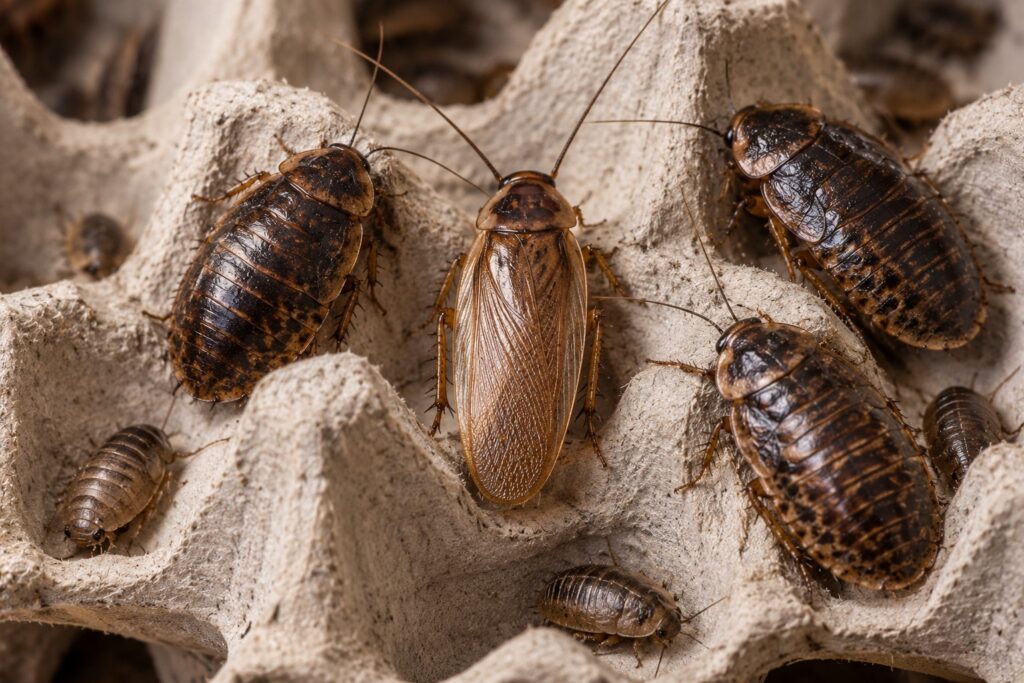
- Males have full wings that cover the whole body. They are slimmer and lighter.
- Females have only small wing stubs, about a quarter of the body length, and a broad, dark, shield-shaped body.
- Nymphs have no wings at all and look like small, flat, grey-brown females.
Adults reach about 1.6 to 1.8 inches long. Males can open their wings to slow a fall, but neither sex can really fly, and neither can climb a smooth, clean plastic wall.
The Dubia Roach Colony Setup
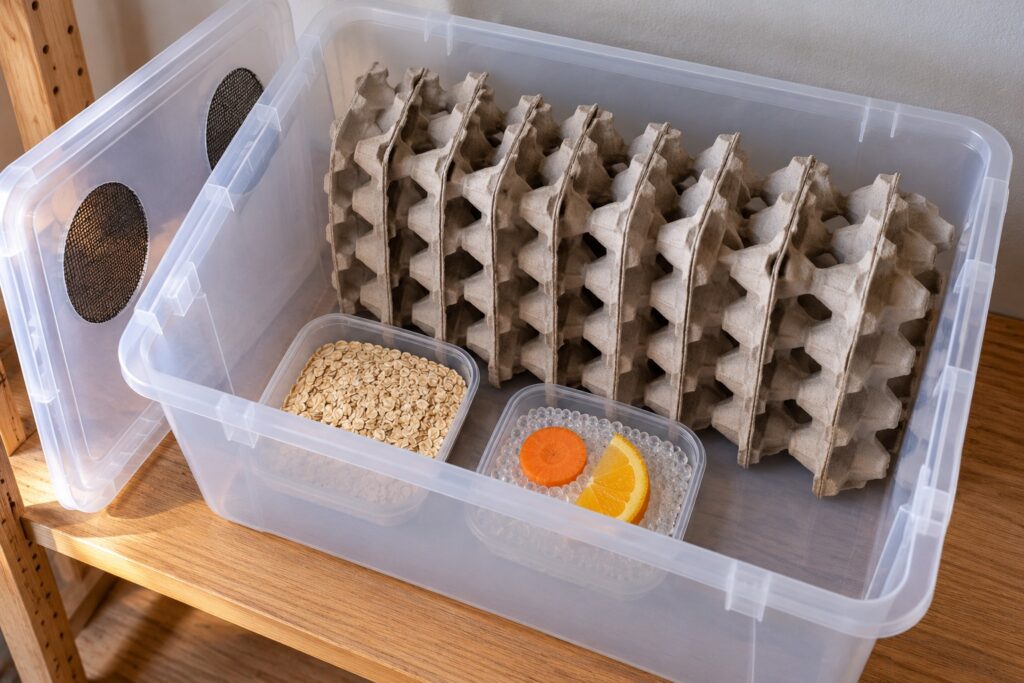
The bin: a plastic storage tote with smooth sides. A 15 to 20 gallon tote holds a starter colony, and many keepers move to a larger tote or several as it grows. Clear or opaque both work; dubias prefer the dark.
Ventilation: cut two or three large holes in the lid and cover them with fine mesh, hot-glued in place. Good airflow keeps the bin dry and stops mold and odour.
Climbing surfaces: stand cardboard egg flats vertically in rows. They give the roaches surface area to hide and spread out, which is what a colony needs to grow.
Substrate: none. A bare floor makes it easy to see and remove frass, the dry droppings and shed skins that build up. Some keepers use a thin layer, but bare floors are simpler and cleaner.
Lid gap check: the walls must stay smooth. Grease or a band of packing tape near the top adds insurance, but a clean, smooth bin is usually enough.
Getting the Breeding Ratio Right
A good starting ratio is one male for every three to five females. Too many males do not help, since one male can mate with many females.
Starter colony size: 50 to 100 adults is a reasonable start, along with some nymphs. More females means a faster start.
Feeding the males first: once the colony is running, use surplus males and adult nymphs as feeders, and hold back the large adult females as your breeders.
Temperature: The One Thing That Decides Speed
Dubias breed best between about 77 and 86F (25 to 30C), and many keepers run colonies a little warmer, up to about 90F, for faster production. Below about 75F, breeding slows to a crawl.
- Room temperature alone is often too cool. That is the most common reason a colony “does nothing” for months.
- Heating options: a heat mat or heat cable on the outside of the tub, under one end or along one side, run on a thermostat, so the colony has a warm end and a cooler end. A heated cupboard or a warm room also works.
- Humidity: moderate, above about 60% is ideal, but not wet. Wet bins grow mold and mites.
This is different from the advice for tarantulas and centipedes, which should never be heated from underneath. Roaches do not burrow away from heat, so warming the floor of a roach bin is fine.
Food and Water
Dry food: a staple of dry, high-quality chicken feed, rolled oats or a commercial roach chow, in a shallow dish.
Fresh food: vegetables and fruit such as carrot, squash, sweet potato, orange slices and leafy greens. Remove leftovers within a day or two before they mold.
Water: never an open dish, which drowns nymphs. Use water crystals, or let moist fruit and vegetables supply the water.
Avoid: meat and high-protein pet foods in large amounts, which raise odour and can cause problems in the colony.
Gut-loading is simply feeding the roaches well before they are fed off. A dubia that has eaten carrot and greens for a day is a better meal for your tarantula or scorpion than a starved one.
How Long Until the Colony Produces?
Dubias are slow breeders compared with crickets. Patience matters more than tweaking.
| Stage | Timing |
|---|---|
| Female carries the egg case internally | About 1 to 2 months, faster when warm |
| Litter size | About 20 to 40 nymphs |
| Nymphs reach adulthood | Several months, about 4 to 6 when warm, longer when cool |
| Adult lifespan | Up to about 2 years |
Female dubias carry their egg case inside the body and give birth to live young. A warm, well-fed female produces a litter roughly every month or two.
Realistic expectations: a new colony usually needs three to six months before you can feed off it heavily without shrinking it. Feed only surplus males and medium nymphs at first, and let the breeders and their young build numbers.
How to Breed Dubia Roaches Faster
Once the basics are right, a few habits speed up breeding dubia roaches without any extra equipment.
- Keep it warm, all the time. A colony that drops to room temperature every night produces far less than one held steady near 85F.
- Feed generously. Keep dry food available at all times and add fresh vegetables two or three times a week. Underfed females produce smaller, less frequent litters.
- Skew towards females. Feed off surplus males and keep every healthy adult female in the bin.
- Do not overcrowd. When every egg flat is packed, add more flats or split the colony into a second tub.
- Leave the small nymphs alone. Feeding off tiny nymphs early is the quickest way to stall growth, since they are next year’s breeders.
- Keep the bin dark and undisturbed. Constant handling and bright light stress the colony.
Many keepers eventually run two tubs: a breeder bin that is never fed from except for surplus males, and a grow-out bin for nymphs that are harvested as feeders.
Harvesting Feeders
- Lift an egg flat and shake the roaches into a clean, smooth container.
- Sort by size for each pet. Prey for most predators should be no longer than the predator’s body.
- Return pregnant females and the largest breeders to the bin.
- Pick out the right sizes for each animal you keep: small nymphs for slings and scorplings, medium nymphs for juveniles, and adults for large tarantulas and centipedes.
How often and how much to feed is covered in our guides to what tarantulas eat and what scorpions eat. Large species such as the goliath birdeater and the giant centipedes in our giant centipede care guide take adult dubias readily.
Cleaning the Bin
- Every week or two: remove leftover fresh food.
- Every month or two: tip out the frass. Move the egg flats and roaches to a spare bin, empty and wipe the old one, then move everything back.
- Replace egg flats when they are soiled or damp.
Frass is dry and has little smell in a well-ventilated, dry bin. A sour smell means the bin is too wet or there is rotting food.
Problems That Stall a Colony
- No babies for months. Too cold. Raise the temperature.
- Adults dying with stuck molts. Too dry. Add more fresh vegetables or water crystals.
- Mold. Too wet, poor ventilation or leftover food. Add vents and clean out food sooner.
- Mites. Usually from damp conditions or wet food. Dry the bin out and clean it.
- Smell. Too wet, or protein-heavy food. Dry the bin and cut back on protein.
- Escapes. A scratched or dirty wall, or a loose lid. Clean or replace the bin.
- Allergies. Roach dust and frass can trigger allergies in some people. Wear gloves and consider a mask when cleaning, and keep the bin out of bedrooms.
FAQ
How long does it take dubia roaches to breed?
Females give birth roughly every one to two months when kept warm, producing 20 to 40 nymphs at a time. Nymphs take several months to mature. Most new colonies need three to six months before they can be fed from heavily.
What temperature do dubia roaches need to breed?
About 77 to 86F, and many keepers run colonies up to around 90F for faster breeding. Below about 75F, breeding slows dramatically, which is the most common reason a colony stops producing.
How many dubia roaches do I need to start a colony?
A starter colony of 50 to 100 adults works well, at a ratio of about one male to three to five females. More females means faster growth. Avoid feeding off the colony until it is well established.
Can dubia roaches climb or fly?
No. They cannot climb smooth plastic or glass, which is why a clean plastic tub keeps them in. Males have wings and can slow a fall, but neither sex can really fly.
Do dubia roaches need water?
They need moisture but not open water, which drowns nymphs. Water crystals and fresh vegetables or fruit supply what they need.
Are dubia roaches legal everywhere?
No. They are restricted in Florida and cannot be imported by the public in Canada, and some other places limit non-native roaches. Check local rules before buying a starter colony.
Feeding the Animals the Colony Supports
A roach colony is only useful if you know who ate what, and when. InvertMate keeps the feeding history for every tarantula, scorpion and centipede you keep, logs refusals and molts so you know who is due a meal, and sends feeding reminders. Free on the App Store and Google Play.