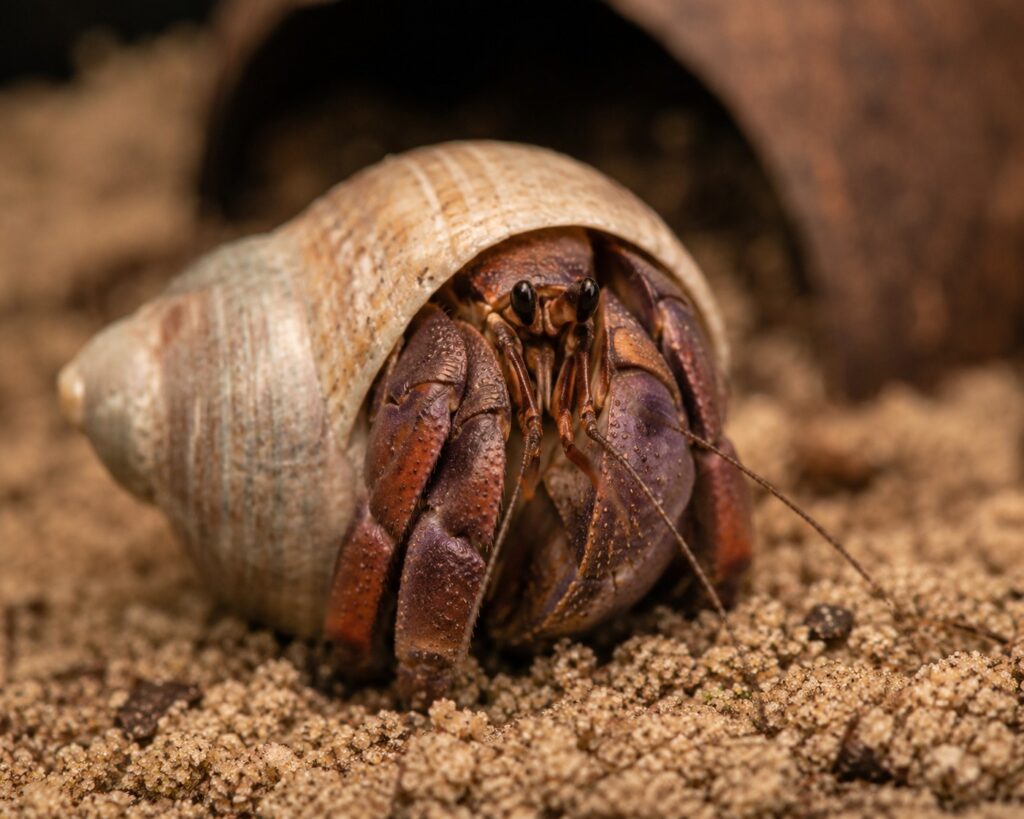
Hermit crab care is one of the most misunderstood topics in the pet world. Most people think they’re disposable boardwalk souvenirs that live a year or two in a plastic box with some gravel and a sponge. The reality? With proper care, hermit crabs can live 20 to 30 years. Some have been documented reaching over 40. The reason most die within months is simple: almost everything pet stores tell you about their care is wrong.
This guide covers what hermit crabs actually need to thrive: a proper habitat (not a wire cage or kritter keeper), deep substrate, specific temperature and humidity ranges, both fresh and salt water, a varied diet, and the patience to let them molt undisturbed. If you’re willing to set things up correctly from the start, hermit crabs are genuinely fascinating, social, and surprisingly low-maintenance pets.
The most common pet species is the Caribbean hermit crab, also known as the Purple Pincher (Coenobita clypeatus). This guide focuses primarily on this species but applies broadly to all land hermit crabs in the Coenobita genus.
Species Overview
Land hermit crabs (genus Coenobita) are tropical crustaceans found across the Caribbean, parts of Central and South America, and throughout the Indo-Pacific. Unlike marine hermit crabs, land hermit crabs spend most of their lives on land but still need access to water (both fresh and salt) and high humidity to breathe. They use modified gills that must stay moist to function.
The most common pet species include the Purple Pincher (Coenobita clypeatus), the Ecuadorian (C. compressus), and the Strawberry (C. perlatus). Purple Pinchers are by far the most widely available in pet stores across North America.
Hermit crabs are social animals. In the wild, they live in colonies of hundreds. In captivity, they should always be kept in groups of at least two or three. A single hermit crab will be stressed and far less active than a group.
They get the name “hermit” from their habit of living inside empty snail shells, which they carry on their backs for protection. As they grow, they need to swap into larger shells, making shell availability one of the most important (and often overlooked) aspects of their care.
| Attribute | Details |
|---|---|
| Scientific name | Coenobita clypeatus (Purple Pincher) |
| Adult size | 2-6 inches (5-15 cm) including shell |
| Lifespan | 10-30+ years with proper care |
| Difficulty | Beginner (once habitat is set up correctly) |
| Temperature | 75-85°F (24-29°C) |
| Humidity | 70-85% |
Habitat Setup
This is where most hermit crab care goes wrong. The painted wire cages and tiny plastic carriers sold at pet stores and beach shops are completely inadequate. They can’t hold humidity, they’re too small, and they’ll kill your crabs slowly through suffocation (their gills dry out in low humidity).
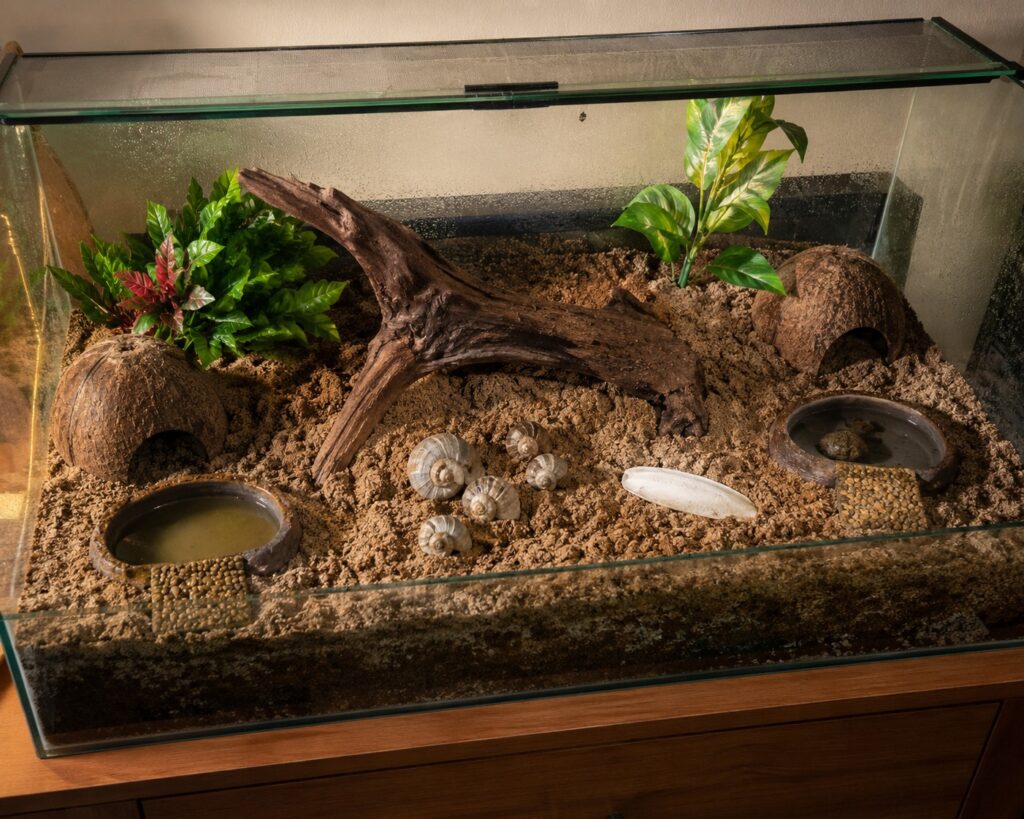
Tank size: A 20-gallon glass aquarium is the minimum for 2-3 small hermit crabs. Bigger is always better. Each additional crab needs roughly 5 more gallons of space. A 40-gallon breeder is ideal for a small colony of 4-6 crabs. Glass tanks retain heat and humidity far better than plastic or wire enclosures.
Lid: A tight-fitting glass or plastic lid is essential to maintain humidity. Some keepers use glass lids with a small gap or a few holes for minimal air exchange. Hermit crabs are also escape artists, so the lid needs to be secure.
Substrate is critical. Hermit crabs bury themselves to molt, and without deep enough substrate, they can’t molt safely and will die.
Use a mix of play sand and coconut coir (roughly 5 parts sand to 1 part coir). The consistency should feel like sandcastle sand: moist enough to hold its shape when squeezed, but not so wet that water drips out. Depth should be at least 6 inches, or three times the height of your largest crab, whichever is deeper. Many keepers go 8-10 inches to give their crabs plenty of burrowing room.
Never use calcium sand, gravel, or wood chips. Calcium sand hardens when wet and can trap molting crabs. Gravel doesn’t allow burrowing. Wood chips mold quickly in the humidity hermit crabs need.
Climbing structures and hides are important for enrichment:
- Driftwood, cholla wood, or grapevine wood for climbing
- Coconut shell halves or cork bark for hides
- Fake or live plants (most live plants will be destroyed by the crabs)
- Rope nets or ladders for vertical climbing
Hermit crabs are surprisingly active at night and will use every inch of vertical space you give them. Creating multiple levels with platforms and branches keeps them engaged.
For a detailed habitat walkthrough, see our hermit crab habitat setup guide.
Temperature & Humidity
Temperature and humidity are the two most critical factors in hermit crab survival, and getting them wrong is the number one reason pet hermit crabs die prematurely. Their modified gills must stay moist to extract oxygen from the air. If humidity drops too low, they slowly suffocate.
Temperature should stay between 75-85°F (24-29°C) consistently. Nighttime drops to 72°F are acceptable, but avoid anything below 70°F. Hermit crabs are ectotherms (cold-blooded) and become lethargic, stop eating, and can die if temperatures drop too low.
An under-tank heater attached to the back wall of the tank (not the bottom, since crabs burrow to the glass floor) is the most reliable heating method. Always connect it to a thermostat with a probe placed mid-tank to prevent overheating. Avoid heat lamps, which dry out the enclosure too quickly.
Humidity must stay between 70-85% at all times. This is non-negotiable. Maintain it by:
- Using a tight-fitting lid to trap moisture
- Keeping the substrate consistently moist (sandcastle consistency)
- Placing natural sea sponges in the water dishes to increase evaporation surface
- Misting the tank if humidity dips
A digital hygrometer and digital thermometer (or a combo unit) inside the tank are essential. Check daily until you have a stable routine, then monitor regularly.
Water
This is another area where pet store advice fails completely. Hermit crabs need two separate water dishes: one with dechlorinated fresh water and one with marine-grade salt water. Both should be available at all times.
Fresh water must be treated with a water conditioner that removes chlorine and chloramine (like Seachem Prime or similar). Tap water straight from the faucet contains chemicals that are harmful to hermit crabs.
Salt water must be made with marine aquarium salt (like Instant Ocean), not table salt. Table salt contains iodine and anti-caking agents that are toxic. Mix according to the package directions for the correct salinity.
Both water dishes should be deep enough for the crabs to fully submerge if they choose, but with an easy way to climb out (a ramp of rocks, a piece of coral, or a rough-textured dish). Hermit crabs can drown if they can’t exit a water dish, especially after molting when they’re weak.
Replace water daily or every other day. Hermit crabs will bathe, drink, and refill their shell water from both dishes. Clean the dishes with hot water (no soap) when you replace the water.
Diet & Feeding
Hermit crabs are omnivorous scavengers with a broad diet. In the wild, they eat fallen fruit, decaying plant matter, carrion, and even droppings from other animals. In captivity, variety is the key to good nutrition.
Commercial hermit crab food can be used as a base, but read the ingredients carefully. Avoid products containing copper sulfate, ethoxyquin, or other preservatives. Many mainstream pet store brands contain harmful additives.
Fresh foods (rotate throughout the week):
- Fruits: coconut, mango, banana, apple, berries, papaya
- Vegetables: carrot, sweet potato, leafy greens, zucchini, squash
- Protein: dried shrimp, freeze-dried bloodworms, unseasoned cooked chicken or fish, boiled egg
- Calcium: cuttlebone, crushed oyster shell, crushed eggshell (boiled and dried)
- Extras: unsweetened coconut flakes, honey, oats, seaweed
Calcium is especially important. Hermit crabs need it to harden their exoskeleton after molting. Keep a piece of cuttlebone in the tank at all times, and offer additional calcium-rich foods regularly.
Foods to avoid: anything with salt, seasoning, butter, citrus, onions, garlic, or pesticides. Avoid metal food dishes, as hermit crabs are sensitive to metal contamination. Use plastic, ceramic, or glass dishes instead.
Feed in the evening (hermit crabs are nocturnal) and remove uneaten fresh food the next morning.
Shells
Shell management is one of the most unique aspects of hermit crab care. As hermit crabs grow, they need to move into larger shells. Without appropriate shell options, a crab may become stressed, fight other crabs for their shells, or be forced to go “naked” (without a shell), which is extremely dangerous.
Always keep a selection of extra shells in the tank. Offer 3-5 shells per crab in a range of sizes slightly larger than each crab’s current shell. Natural, unpainted shells are essential. Painted shells can chip, and the paint or varnish may be toxic.
Good shell types include turbo shells, which are the preferred shape for most Coenobita species. The opening should be round, not oval.
When you add new shells, boil them in dechlorinated water for a few minutes to sterilize them, then let them cool before placing them in the tank. Some keepers soak new shells in salt water overnight to make them more appealing.
Shell fights happen. If you notice crabs rocking each other’s shells or one crab forcefully evicting another, it usually means there aren’t enough suitable shell options available. Add more shells immediately.
Molting
Molting is the most critical and vulnerable period in a hermit crab’s life. They shed their old exoskeleton to grow, and the process happens underground. This is why deep substrate is so important.
Pre-molt signs:
- Eating and drinking more than usual (storing fat and water)
- A dark or gray “fat pouch” visible inside the shell on the left side of the abdomen
- Dull, ashy appearance on the exoskeleton
- Digging down into the substrate and not resurfacing
- Lethargy and reduced activity
Once a crab buries itself to molt, the single most important rule is: never dig it up. Disturbing a molting crab can kill it. The process can take anywhere from a few weeks (for small crabs) to two months or longer (for large adults). Yes, that means your crab may disappear for months. This is normal.
After molting, the crab will eat its shed exoskeleton to reclaim calcium and nutrients. Do not remove the exoskeleton. Other crabs in the tank should ideally be unable to reach the molting crab. If you suspect a surface molt (rare and dangerous), you can gently isolate the crab by placing a cut plastic bottle over it in the substrate to protect it from tank mates.
Molting frequency varies by size: small crabs may molt every 1-3 months, while large adults molt once or twice a year.
Handling
Hermit crabs can be handled, but they’re not cuddly pets. They’re observation animals that are most interesting to watch during their active nighttime hours.
When you do handle them, pick the crab up by the back of the shell (never by the legs or claws). Let it walk across your hands. If a crab pinches you, resist the urge to shake it off, as this can injure the crab. Instead, gently lower it toward a surface so it feels stable and will release on its own. Running the pinched area under lukewarm water can also encourage release.
Newly purchased crabs need a destressing period of at least one week (ideally two) with no handling at all. Just provide food, water, and a proper habitat. Let them adjust. Most pet store crabs are already stressed from poor conditions and transport.
Limit handling sessions to 10-15 minutes and always handle over a soft surface. A fall from even a few feet can crack a shell or injure the crab.
Common Health Issues
Suffocation from low humidity is the leading killer. If your crabs are lethargic, inactive even at night, or gasping near the water dishes, check humidity immediately. It should be 70-85%.
Post-Purchase Syndrome (PPS) is common with newly bought crabs. Symptoms include lethargy, loss of limbs, refusal to eat, and sometimes rapid decline. This is caused by the stress of capture, transport, and pet store conditions. Provide optimal conditions and minimize disturbance. Many crabs recover with proper care, but some are too weakened to survive.
Shell evacuation (a crab leaving its shell) is a sign of extreme stress, mite infestation, or irritation from paint or chemicals on the shell. Provide several clean, unpainted shells nearby and ensure the environment is correct.
Mites appear as tiny moving dots on the crab or substrate. Bathe affected crabs in dechlorinated water, clean the tank, and replace the substrate. Ensure you’re not overfeeding, as excess food attracts mites.
Lost limbs can happen from stress, fights, or rough handling. Hermit crabs can regenerate lost limbs over the course of one or more molts. A small gel-like bud will form at the site, growing larger as the next molt approaches.
FAQ
How long do hermit crabs live?
With proper care, 10-30 years is realistic. The oldest documented pet hermit crab lived over 40 years. Most pet store hermit crabs die within months to a year because of inadequate housing, low humidity, and poor diet. Correct care makes a dramatic difference.
Do hermit crabs need salt water?
Yes. Hermit crabs need both dechlorinated fresh water and marine-grade salt water available at all times. Use aquarium salt (like Instant Ocean), never table salt. Both dishes should be deep enough for the crab to submerge in and have an easy exit ramp.
How many hermit crabs should I keep?
At least two, ideally three or more. Hermit crabs are social animals that live in large colonies in the wild. A solitary crab will be stressed and inactive. More crabs means more interesting behavior, as they interact, swap shells, and forage together.
Why is my hermit crab buried and not moving?
It’s almost certainly molting. Hermit crabs bury themselves in the substrate to molt, and the process can take weeks to months depending on the crab’s size. Do not dig it up. Maintain proper humidity and temperature and wait patiently. This is completely normal behavior.
Can I use tap water for hermit crabs?
Not without treating it first. Tap water contains chlorine and chloramine, which are harmful to hermit crabs. Use a water conditioner (like Seachem Prime) to dechlorinate both the fresh water dish and the water used to mix salt water.
Track Your Crabitat with CrabPod
Stay on top of your hermit crab colony’s needs with CrabPod. Track each crab’s shell changes, monitor your tank’s temperature and humidity, log molting periods, and set reminders for water changes and feeding. Free on the App Store.