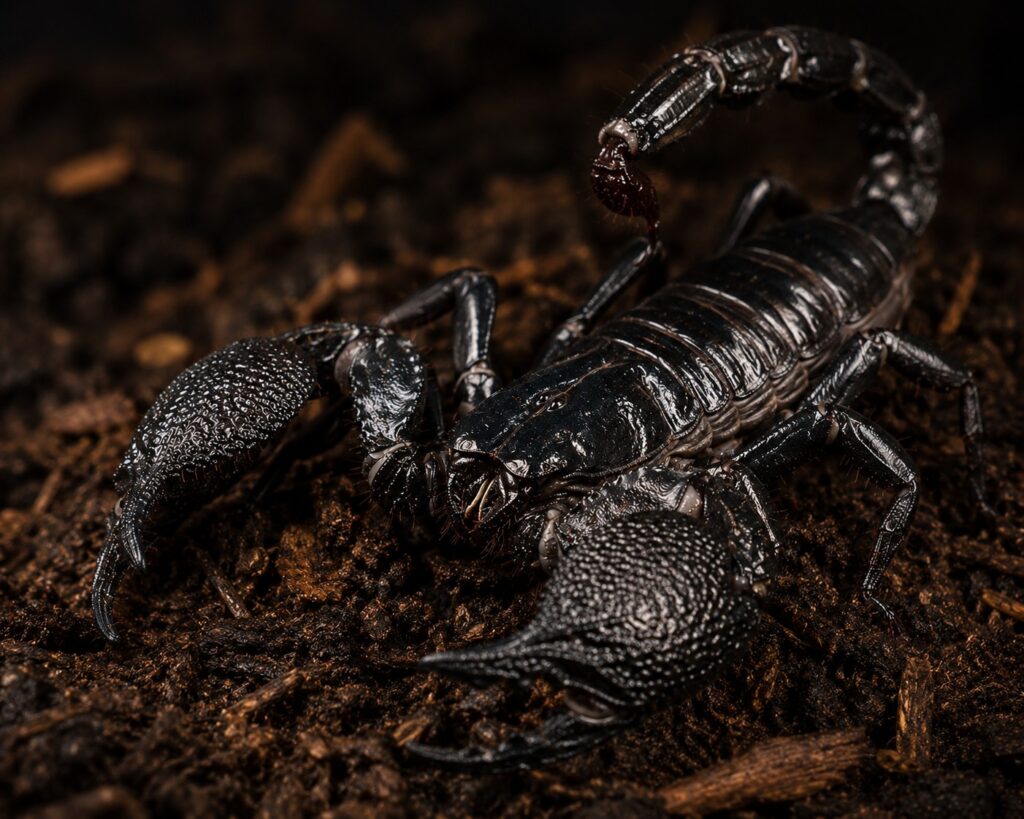
So you’re thinking about keeping a scorpion as a pet. Maybe you saw one at a reptile expo, maybe a friend has one, or maybe you just want something different from the usual cat-or-dog routine. Scorpions are fascinating, low-maintenance, and surprisingly long-lived. But they’re also venomous, nocturnal, and not interested in bonding with you. That’s not a deal-breaker, it just means you need to go in with the right expectations.
This guide covers everything you need to decide whether scorpion keeping is right for you: the best beginner species, what a proper setup costs, enclosure basics, feeding, the reality of handling, and the mistakes that trip up new keepers. If you’ve already decided and want species-specific details, jump to our dedicated care guides. If you’re still on the fence, keep reading.
Why Scorpions Make Great Pets
Scorpions aren’t for everyone, but for the right keeper, they’re one of the most rewarding invertebrates you can own. Here’s what makes them worth considering.
Low maintenance. Once the enclosure is set up correctly, scorpions need very little from you. A weekly feeding, occasional misting (for tropical species), a water dish top-off, and periodic substrate changes. That’s about it. No walks, no grooming, no daily interaction required.
Long lifespan. Most pet scorpion species live 6-8 years in captivity, and desert species like the desert hairy scorpion can live 15-20 years with proper care. That’s a real commitment, but it also means you’re not losing a pet every year or two like you might with mantises or some tarantulas.
Affordable. The scorpion itself typically costs $20-90 depending on species and size. A complete enclosure setup runs $100-250 for everything you need. Monthly costs are minimal: $10-20 for feeder insects and the occasional substrate refresh.
Fascinating behavior. Watching a scorpion hunt, burrow, or glow under UV light never gets old. They’re ambush predators with millions of years of evolutionary refinement on display every time they strike at a cricket. A blacklight placed near the enclosure creates an incredible nighttime viewing experience as their exoskeleton fluoresces vivid blue-green.
Quiet and space-efficient. A single scorpion needs a 10-gallon tank at most. No noise, no odor (when maintained properly), and no damage to your home. They’re ideal for apartments, dorm rooms, or anyone with limited space.
Best Scorpion Species for Beginners
Not all scorpions are created equal when it comes to pet keeping. Species selection is the single most important decision you’ll make. The wrong species can be dangerously venomous, impossibly secretive, or require expert-level care. The right one is hardy, mild-tempered, and forgiving of beginner mistakes.
Emperor Scorpion (Pandinus imperator) is the gold standard for first-time scorpion keepers. They reach 6-8 inches, have mild venom comparable to a bee sting, and are the most tolerant of occasional handling among scorpion species. They can even be kept in small communal groups. The trade-off: emperor scorpions are CITES-protected due to historic overcollection, which makes captive-bred specimens more expensive ($40-80) and sometimes harder to find. For a complete breakdown, see our emperor scorpion care guide.
Asian Forest Scorpion (Heterometrus spp.) is the most commonly available alternative. Similar in size and appearance to emperors, with nearly identical care requirements. They’re more affordable ($20-40) and easier to source. The key difference is temperament: Asian forest scorpions are more defensive and quicker to pinch or sting. Still mild venom, still beginner-appropriate, just feistier. Our Asian forest scorpion care guide covers the details.
Red Claw Scorpion (Pandinus cavimanus) is a close emperor relative sold at a lower price. Smaller at 4 to 5 inches and noticeably more defensive, it is usually wild caught. The Pandinus cavimanus care sheet explains when it makes sense over an emperor.
Desert Hairy Scorpion (Hadrurus arizonensis) is the best beginner option if you want a desert species. They’re the largest scorpion native to North America (up to 5.5 inches) with an incredibly long lifespan of 15-20 years in captivity. They require dry, arid conditions rather than the tropical humidity that forest scorpions need. More defensive than emperors, but their venom is still mild. Our desert hairy scorpion care guide covers the arid setup in detail.
Flat Rock Scorpion (Hadogenes troglodytes) is a unique, flat-bodied species from southern Africa that wedges itself into rock crevices. They’re docile, have very mild venom, and can live 20+ years. Their flattened body shape makes them visually distinctive. Slightly pricier ($60-90) but an excellent choice if you want something unusual.
Worth knowing: tailless whip scorpions (Damon and Heterophrynus spp.) get grouped with scorpions in the hobby but are amblypygids. They have no stinger and no venom at all, which makes them arguably the safest arachnid on this list, though their alien appearance puts some people off.
| Species | Size | Lifespan | Venom | Temperament | Cost |
|---|---|---|---|---|---|
| Emperor Scorpion | 6-8 in | 6-8 years | Mild | Calm | $40-80 |
| Asian Forest Scorpion | 5-6 in | 7-10 years | Mild | Defensive | $20-40 |
| Desert Hairy Scorpion | 4-5.5 in | 15-20 years | Mild | Moderate | $30-60 |
| Flat Rock Scorpion | 6-8 in | 20+ years | Very mild | Docile | $60-90 |
Species to avoid as a beginner: Anything in the genera Androctonus (fat-tailed scorpions), Centruroides (bark scorpions), Leiurus (deathstalker), or Tityus. These have medically significant venom and should only be kept by experienced keepers with proper safety protocols. A general rule of thumb: scorpions with slender pincers and thick tails tend to rely on their venom, while those with large, powerful pincers and thinner tails prefer to pinch. Beginners want the big-pincer species.
Enclosure Setup Basics
All pet scorpions need an escape-proof glass or plastic terrarium with a secure, locking lid. Scorpions are stronger than they look and can push off loose screen tops. Many species also climb silicone seams, so never assume your scorpion will stay on the ground.
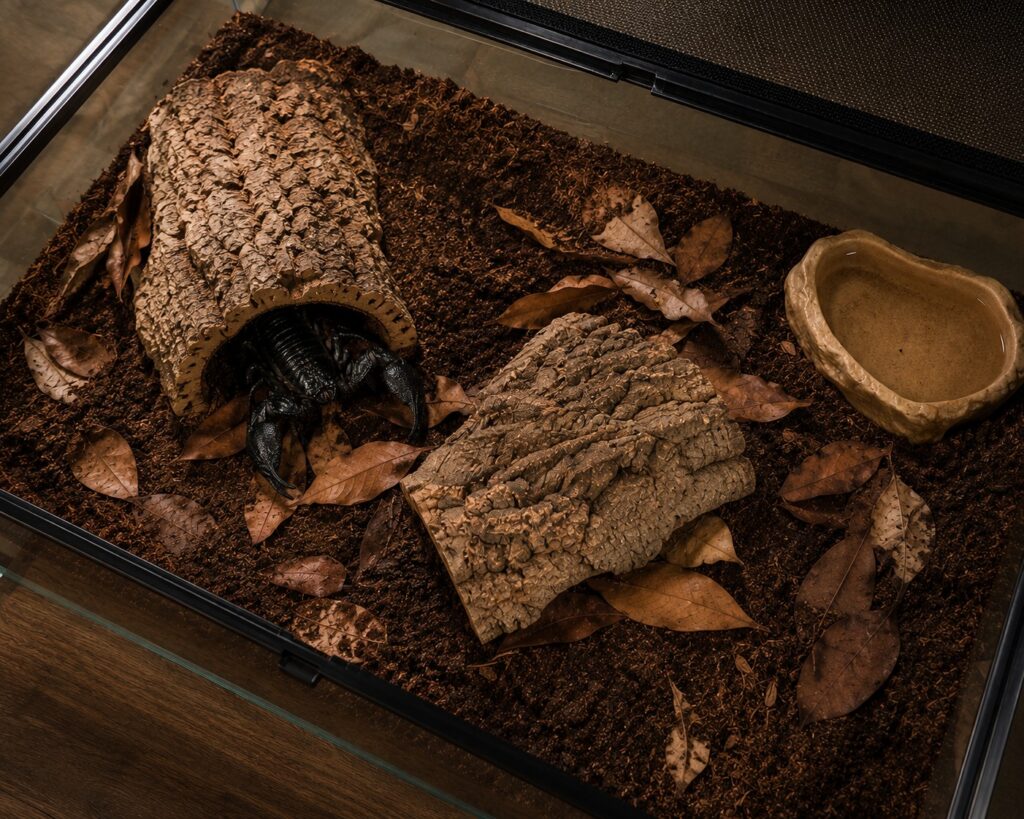
Size: A 10-gallon tank is sufficient for a single adult of most species. Floor space matters more than height for terrestrial scorpions, so a “long” style tank is preferable to a tall one.
Substrate depends on whether you have a tropical or desert species. Tropical scorpions (emperor, Asian forest) need 4-6 inches of coconut fiber or a coco coir and organic topsoil mix, kept damp but not waterlogged. Desert species (desert hairy) need 4-6 inches of dry sand or a sand and soil mix. In both cases, deep substrate is essential because scorpions burrow.
Hides are non-negotiable. Cork bark, half logs, or flat rocks give your scorpion a place to feel secure during the day. Provide at least two hides, one on the warm side and one on the cool side.
Water: A shallow dish for tropical species (they drink from it and sometimes soak). Desert species get their moisture from prey and atmosphere but should still have a small dish available.
Temperature: Most species thrive between 75-85°F. A low-wattage heat mat on the side of the tank (never the bottom, as burrowing scorpions will dig toward the heat and overheat) creates the needed warmth. Always use a thermostat.
Lighting: None required. Scorpions are nocturnal and actively avoid light. Ambient room lighting is fine, but skip any basking lamps or bright overhead fixtures.
Diet and Feeding
Feeding a pet scorpion is straightforward. Crickets and dubia roaches are the staple diet for all commonly kept species. Mealworms and superworms work as supplemental feeders.
Adults eat 2-3 appropriately sized insects once per week. “Appropriately sized” means no larger than the width of the scorpion’s body. Juveniles eat smaller prey (pinhead crickets, small mealworms) every 4-5 days.
Gut-load your feeder insects with fresh vegetables (carrots, sweet potato, leafy greens) for at least 24 hours before offering them. This is how your scorpion gets real nutritional value beyond empty chitin.
Remove uneaten prey within 24 hours. Live crickets left in the enclosure can bite and stress a molting scorpion. Never feed wild-caught insects, which may carry pesticides or parasites.
Don’t panic if your scorpion refuses food for a week or two. Pre-molt fasting is normal, and healthy adult scorpions can go several weeks without eating. Check your temperatures and humidity first, as cold conditions suppress appetite.
Handling: The Honest Truth
Here’s the part most pet guides sugarcoat: scorpions are not handling pets. They don’t enjoy it, they don’t get used to it, and every handling session is a stress event for the animal and a sting risk for you.
That said, some species tolerate brief handling better than others. Emperor scorpions are the most commonly handled species and will often sit calmly on a flat palm. Asian forest scorpions are less predictable and more likely to pinch. Desert species are generally more defensive and shouldn’t be handled at all.
If you do handle your scorpion, some ground rules: let it walk onto your hand rather than grabbing it, keep your palm flat and level, stay seated over a soft surface, and never handle during or after a molt when the scorpion is vulnerable and stressed. Use soft-tipped tongs or the cup-and-cardboard method for routine enclosure maintenance instead.
The venom of beginner-friendly species is mild, roughly comparable to a bee sting, with localized pain and swelling. However, anyone with known insect sting allergies should avoid handling entirely, as allergic reactions to scorpion venom are possible and potentially serious.
The best way to enjoy a pet scorpion is to watch it. Set up a comfortable viewing spot, add a UV blacklight for nighttime observation, and appreciate the animal for what it is: a display pet with millions of years of evolutionary history on full display inside your living room.
Where to Buy
Always buy captive-bred scorpions from reputable breeders or specialty invertebrate dealers. Reptile expos are excellent places to find healthy specimens from knowledgeable sellers who can confirm the species and answer your care questions.
Pet stores (including chain stores) often carry Asian forest scorpions and sometimes emperor scorpions, but species misidentification is common. Emperor and Asian forest scorpions look very similar, and mislabeling happens frequently. Learn to tell them apart before you buy: emperor scorpion pincers have a rough, granulated texture, while Asian forest scorpion pincers are smooth and glossy.
Avoid wild-caught specimens when possible. Wild-caught scorpions may carry parasites, arrive stressed, or be gravid (pregnant) females that surprise you with 20-40 babies. Captive-bred animals are healthier, calmer, and don’t contribute to pressure on wild populations.
Online reptile and invertebrate retailers ship scorpions with live arrival guarantees. Just make sure you’re buying from a seller with strong reviews and a clear return policy.
Common Beginner Mistakes
Heating from below. Scorpions burrow to cool down, so a heat mat under the tank pushes them into the heat instead of away from it. Always mount heat mats on the side.
Using the wrong substrate. Sand for a tropical species causes dehydration. Wet soil for a desert species causes fungal infections. Match your substrate to your species.
Overhandling. Frequent handling stresses scorpions and increases sting risk. Once a week at most for tolerant species, and never for defensive ones.
Keeping dangerous species. That cool-looking small scorpion at the expo might be a bark scorpion with medically significant venom. Always identify the species before purchasing, and stick to beginner-recommended species until you have real experience.
Skipping the lid lock. A screen top resting on the tank is not secure. Scorpions can push it off. Use clips, weights, or a locking lid.
Ignoring humidity. Tropical species dehydrate quickly in dry conditions. Desert species develop fungal infections in damp conditions. A digital hygrometer costs $10 and prevents both problems.
FAQ
Are pet scorpions dangerous?
The species recommended for beginners (emperor, Asian forest, desert hairy, flat rock) all have mild venom roughly comparable to a bee sting. They’re not considered medically dangerous for healthy adults. That said, all scorpions can sting, and individuals with insect sting allergies should exercise extra caution. The truly dangerous species (deathstalkers, fat-tails, bark scorpions) should never be kept by beginners.
How much does a pet scorpion cost?
The scorpion itself ranges from $20-90 depending on species and size. A complete setup (tank, substrate, hides, water dish, heat mat, thermostat, thermometer, hygrometer) runs $100-250. Monthly upkeep is around $10-20 for feeder insects. It’s one of the most affordable exotic pets you can own.
Do scorpions recognize their owners?
No. Scorpions lack the neurological complexity for individual recognition. They respond to vibrations, heat, and chemical cues in their environment, but they don’t distinguish between one human and another. They’re observation pets, not companion animals.
Is it legal to keep a scorpion as a pet?
In most US states, keeping non-native scorpion species is legal without permits. However, some states and municipalities have restrictions on venomous animals, and HOA or lease agreements may prohibit them. Emperor scorpions are CITES Appendix II, meaning international trade is regulated, but owning captive-bred specimens is legal. Always check your local regulations before purchasing.
How long do pet scorpions live?
It varies significantly by species. Emperor and Asian forest scorpions typically live 6-10 years. Desert hairy scorpions can reach 15-20 years. Flat rock scorpions have been reported to live over 20 years. These are long-term commitments, not short-lived novelty pets. Our scorpion lifespan guide breaks this down species by species.
Track Your Scorpion with InvertMate
Keep a detailed care log for your scorpion with InvertMate. Track feedings, monitor enclosure conditions, log molts, and set smart reminders for misting and maintenance. Built for invertebrate keepers who care about the details. Free on the App Store.