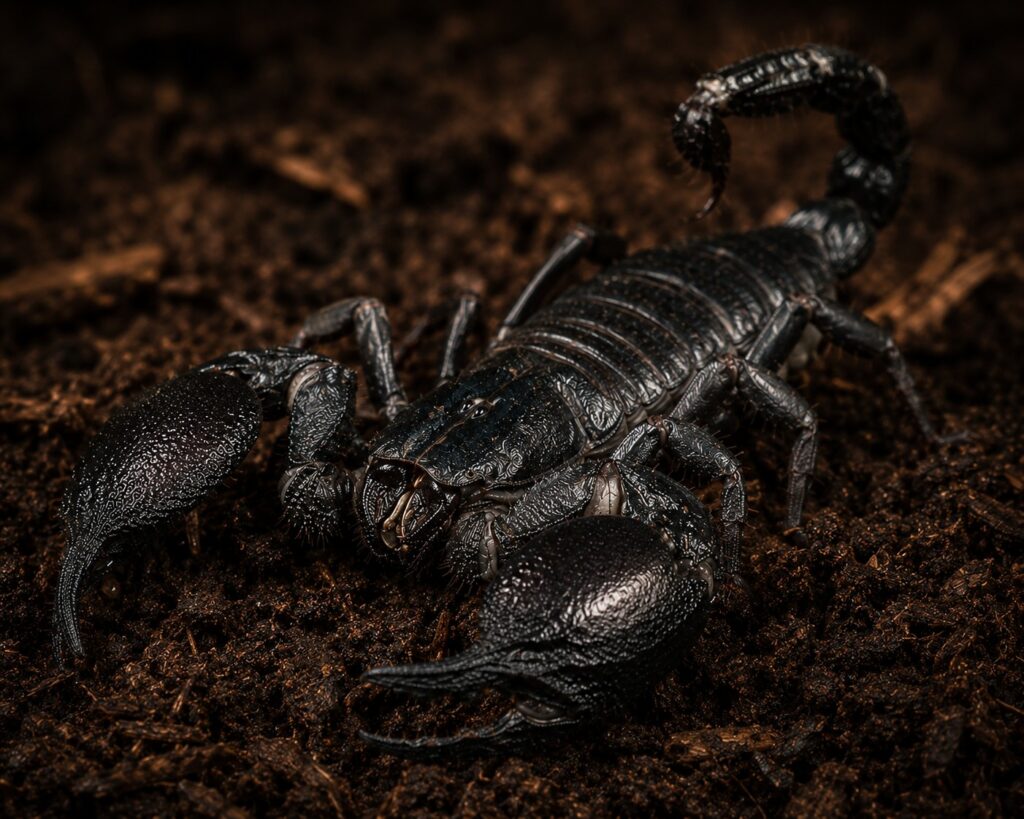
Most pet scorpions live 5 to 8 years, though lifespan varies widely by species. Emperor scorpions typically reach 6 to 8 years, Asian forest scorpions 5 to 8, and desert hairy scorpions 15 to 20. Wild scorpions generally live shorter lives than captive ones.
Scorpion lifespan is one of the first things people ask about before bringing one home, and for good reason. Unlike many invertebrate pets that live only a year or two, scorpions are in it for the long haul. Most pet species live somewhere between 5 and 8 years, and some desert species can survive 15 to 20 years in captivity. That makes scorpions one of the longest-lived invertebrate pets you can keep.
But “how long do scorpions live” doesn’t have a single answer. Lifespan varies dramatically by species, sex, and the quality of care you provide. A desert hairy scorpion can outlive an emperor scorpion by more than a decade, and a well-cared-for captive scorpion often lives far longer than its wild counterparts. This guide breaks down lifespan by species, explains the factors that affect how long your scorpion lives, and shows you how to give your pet the best shot at a long life.
Average Scorpion Lifespan
As a general rule, scorpions live longer than most people expect. Across all commonly kept species, the average captive lifespan falls between 5 and 8 years. This already puts them well ahead of many popular invertebrate pets.
Two patterns hold true across nearly all scorpion species. First, larger species tend to live longer than smaller ones. A small bark scorpion might only live 2-4 years, while a large desert hairy scorpion can reach 20. Second, females generally outlive males. Part of this is biological, and part is circumstantial: in the wild, males are more likely to be eaten during mating or die while roaming in search of mates.
Captivity itself tends to extend lifespan. Wild scorpions face predators, drought, disease, and food scarcity. A captive scorpion with stable temperatures, reliable food, and no predators often lives noticeably longer than the wild average for its species, provided the husbandry is correct.
It’s also worth understanding how scorpions reach adulthood, because growth rate connects directly to lifespan. Scorpions are born live and ride on their mother’s back through their first molt. From there, they pass through a series of developmental stages called instars, molting at each one. Depending on species and conditions, a scorpion reaches adulthood after roughly 5 to 7 molts, a process that can take anywhere from several months to a few years. Slower-growing species often live longer overall, while faster-growing ones may reach maturity quickly but have shorter total lifespans.
Lifespan by Species
Here’s how the most commonly kept pet scorpions stack up. Keep in mind these are captive lifespans with good care. Wild lifespans are typically shorter.
| Species | Captive Lifespan | Notes |
|---|---|---|
| Emperor Scorpion | 6-8 years (up to 10) | Large, docile, CITES-protected |
| Asian Forest Scorpion | 7-10 years | Hardy, more defensive than emperors |
| Desert Hairy Scorpion | 15-20 years | Longest-lived common pet species |
| Flat Rock Scorpion | 20+ years | Exceptionally long-lived |
| Tanzanian Red Claw | 8 years | Striking red pincers, feisty |
| Deathstalker | 5-7 years (up to 25 reported) | Highly venomous, expert only |
| Bark Scorpion | 2-6 years | Small, venomous, not for beginners |
Emperor Scorpion (Pandinus imperator) typically lives 6-8 years in captivity, with exceptional individuals reaching 10. As one of the largest and most popular pet scorpions, the emperor offers a solid lifespan alongside a calm temperament. For full care details, see our emperor scorpion care guide.
Asian Forest Scorpion (Heterometrus spp.) lives 7-10 years with proper care, slightly outliving the emperor on average. These hardy scorpions are nearly identical in care to emperors but a bit more defensive. Our Asian forest scorpion care guide covers everything you need.
Desert Hairy Scorpion (Hadrurus arizonensis) is the lifespan champion among commonly kept species, living 15-20 years in captivity. This North American desert native requires dry, arid conditions rather than tropical humidity. If you want a scorpion that will be with you for a decade or more, this is the species to consider. Our desert hairy scorpion care guide covers the arid setup these need.
Flat Rock Scorpion (Hadogenes troglodytes) can live over 20 years, making it one of the longest-lived scorpions in the hobby. Their flattened bodies and docile nature make them a fascinating long-term pet. Our flat rock scorpion care guide covers the rock-stack enclosure that habit requires.
Red Claw Scorpion (Pandinus cavimanus), often sold as the Tanzanian red claw, lives 5-8 years. It is a smaller, more defensive relative of the emperor, and our red claw scorpion care guide covers how the two compare.
Deathstalker (Leiurus quinquestriatus) has a wild lifespan of 5-7 years, but captive specimens have reportedly lived up to 25 years. This species has medically significant venom and should only be kept by experienced keepers with proper safety protocols.
Tailless whip scorpions (Damon spp.) aren’t true scorpions, but they’re commonly kept alongside them and worth mentioning here. They live around 5-10 years and, unlike true scorpions, never stop molting. See our tailless whip scorpion lifespan guide for the growth stages.
What Affects How Long a Scorpion Lives
Species sets the ceiling for lifespan, but your husbandry determines whether your scorpion reaches it. Several factors make the difference between a scorpion that lives a full life and one that dies prematurely.
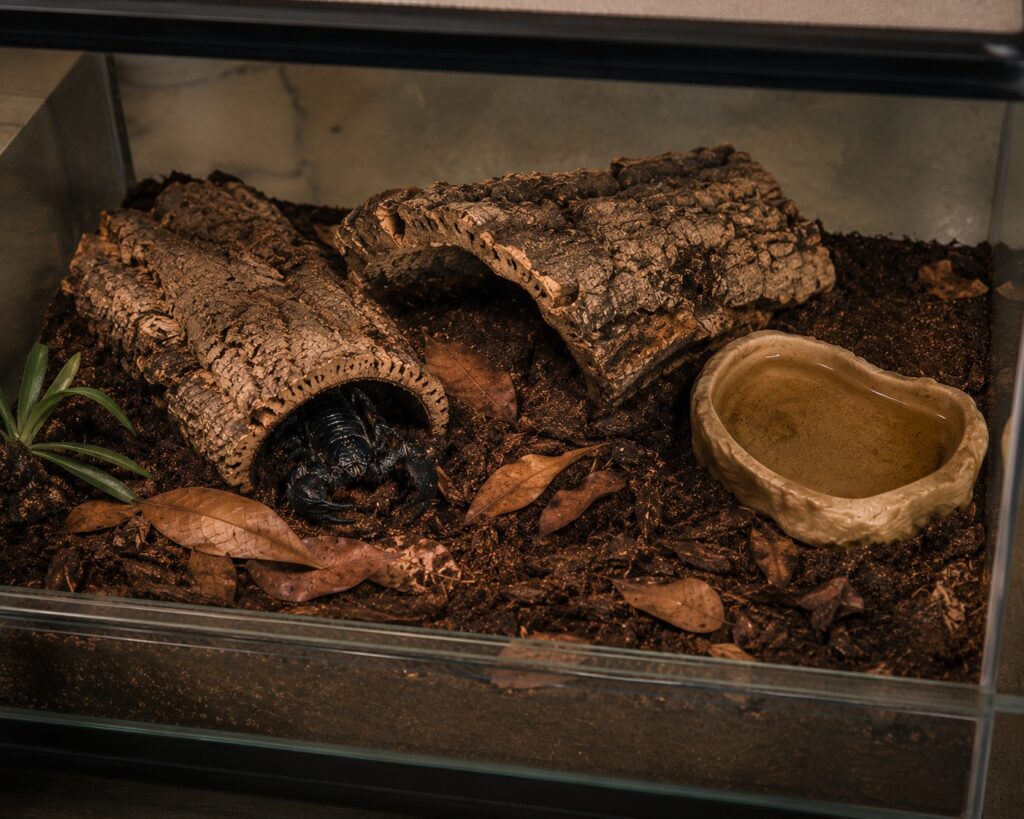
Temperature and humidity. Incorrect conditions are the leading cause of premature scorpion death. Too dry, and tropical species dehydrate. Too wet, and desert species develop fatal fungal infections. Each species has a specific range, and staying within it is the single most important thing you can do. Tracking these conditions over time helps you catch dangerous trends early, before they harm your scorpion.
Diet quality. Gut-loaded feeder insects provide the nutrition a scorpion needs to thrive. A diet of poorly fed crickets offers little nutritional value. Variety and proper feeding frequency support a longer, healthier life.
Molting. Every scorpion must molt to grow, and molting is the most dangerous time in a scorpion’s life. Failed molts, often caused by humidity that’s too low, can be fatal. Maintaining proper humidity during pre-molt periods dramatically improves survival.
Stress and handling. Frequent handling stresses scorpions and can shorten their lives. These are observation animals, not interactive pets. Excessive disturbance, vibration, and bright light all take a toll over time.
Enclosure safety. Falls from height can fatally injure a heavy-bodied scorpion. Escape attempts, fights with cage mates, and exposure to pesticides or chemicals all reduce lifespan. A secure, appropriately designed enclosure protects your pet.
Sex. Females generally live longer than males across most species. If longevity is your priority, a female is often the better choice.
The failure modes are shared across arachnids. Our tarantula molting guide covers what a problem molt looks like.
How to Maximize Your Scorpion’s Lifespan
Giving your scorpion the longest possible life comes down to consistent, species-appropriate care. Research your specific species and match temperature, humidity, and substrate exactly to its natural environment. Desert species need dry conditions and sand-based substrate; tropical species need humidity and moisture-retaining substrate.
Feed gut-loaded insects on an appropriate schedule, remove uneaten prey within 24 hours, and always keep clean water available for species that need it. Never handle your scorpion during or shortly after a molt, and keep handling to an absolute minimum overall. Provide deep substrate for burrowing, secure hides, and an escape-proof enclosure with a locking lid.
Monitor conditions regularly rather than guessing. A digital thermometer and hygrometer cost very little and prevent the temperature and humidity mistakes that kill most pet scorpions. Keeping a record of feedings, molts, and enclosure conditions makes it far easier to spot problems before they become serious.
Common Health Issues That Shorten Lifespan
Most premature scorpion deaths trace back to a handful of preventable problems. Dehydration is the most common, showing up as a shriveled, lethargic scorpion, usually from humidity that’s too low or an empty water dish. Failed molts trap the scorpion in its old exoskeleton, often fatally, and are usually caused by insufficient humidity. Mycosis, a fungal infection appearing as dark patches on the exoskeleton, develops in conditions that are too wet with poor airflow. Falls and trauma can rupture the exoskeleton of a heavy scorpion that climbs and drops. Stress from overhandling and constant disturbance weakens a scorpion over time. Nearly all of these are husbandry problems, which means nearly all of them are preventable.
FAQ
What is the longest living scorpion?
Among commonly kept pet species, the flat rock scorpion (Hadogenes troglodytes) holds the record, regularly living over 20 years in captivity. The desert hairy scorpion is a close second at 15-20 years. Some deathstalkers have reportedly reached 25 years, but they’re a venomous, expert-only species.
Do scorpions live longer in captivity or the wild?
Captivity, in most cases. Wild scorpions face predators, drought, disease, and food scarcity that captive scorpions don’t. With correct husbandry, a captive scorpion typically outlives its wild counterparts, sometimes by several years.
Why do female scorpions live longer than males?
Females generally outlive males for both biological and circumstantial reasons. In the wild, males roam to find mates, exposing them to predators, and are sometimes cannibalized during or after mating. Even in captivity, females tend to have naturally longer lifespans in most species.
How long do emperor scorpions live?
Emperor scorpions typically live 6-8 years in captivity, with well-cared-for individuals reaching 10. They’re one of the longer-lived popular pet scorpions and a great choice for keepers wanting a multi-year commitment.
How can I tell how old my scorpion is?
There’s no reliable way to determine a scorpion’s exact age by appearance. You can estimate maturity based on size and molt count (scorpions reach adulthood after their final molt), but if you bought an adult, its precise age is usually unknown. Buying from a breeder who tracks birth dates is the only way to know for certain.
Track Your Scorpion with InvertMate
Want to keep a detailed record of your scorpion’s molts, feedings, and enclosure conditions? InvertMate lets you log every care activity, monitor temperature and humidity trends, and set smart reminders, helping you give your scorpion the long, healthy life it deserves. Free on the App Store.