What do scorpions eat? Live insects and other small invertebrates. In the wild that means crickets, beetles, roaches, spiders and even other scorpions. Pet scorpions do well on gut-loaded crickets and dubia roaches, two or three a week for adults, with prey no wider than the scorpion’s body.
That is the short answer, and it covers almost every species kept as a pet. The longer answer is more interesting: scorpions cannot chew, they can go months without food, some barely use their sting to hunt, and the biggest feeding mistake keepers make is giving them too much. This guide covers wild and captive diets, how a scorpion actually eats, schedules by age, the pincer-or-sting difference between species, fasting, and the foods to skip.
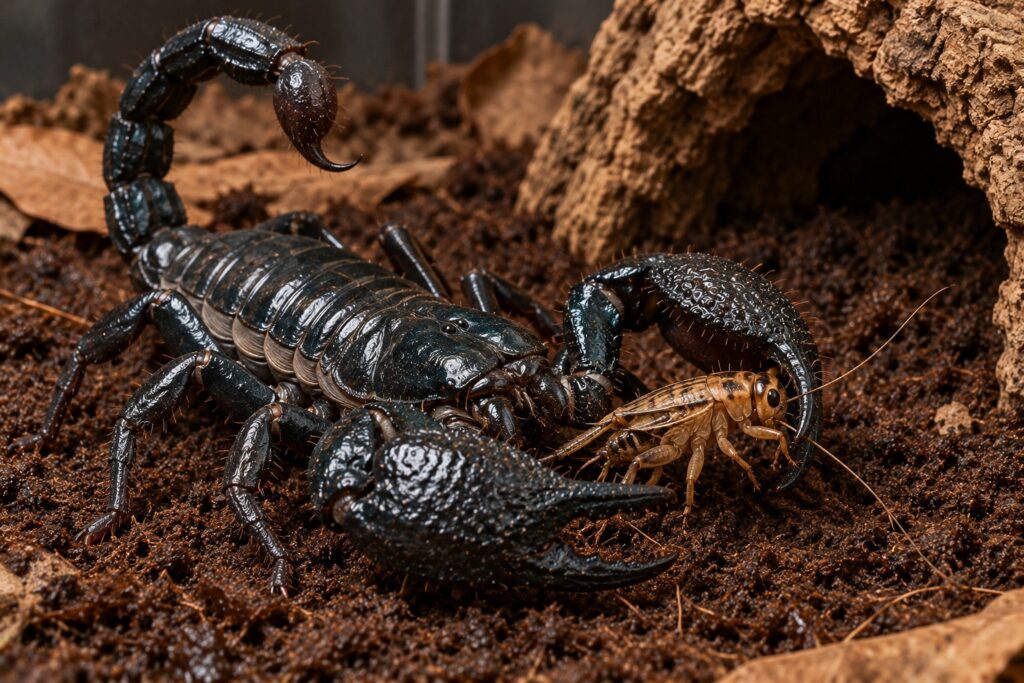
What Do Scorpions Eat in the Wild?
Scorpions are ambush predators. Most hunt at night, waiting near a burrow or under bark until something walks close enough to grab.
Typical wild prey includes:
- Insects: crickets, beetles, cockroaches, moths, termites and grasshoppers.
- Other arachnids: spiders, smaller scorpions and solifuges.
- Other invertebrates: centipedes, millipedes and woodlice.
- Small vertebrates, occasionally: the largest species sometimes catch small lizards, frogs or baby mice, but these are rare meals, not the main diet.
What they eat depends on what lives nearby. A desert scorpion feeds on beetles and crickets that cross the sand at night. A forest scorpion in leaf litter finds roaches, termites and spiders. Cannibalism is common in the wild too, which is one reason most species are kept alone.
How a Scorpion Eats Without Chewing
A scorpion has no teeth and cannot swallow solid food. It eats in stages:
- It grabs the prey with its pincers, called pedipalps.
- It subdues it by crushing with the pincers, stinging, or both.
- It tears the prey apart with its chelicerae, small claw-like mouthparts at the front of the head.
- It digests the food outside its body. The scorpion releases digestive fluids onto the prey, which turn the soft tissue into liquid.
- It drinks the liquid, leaving behind the hard parts.
A single cricket can take an hour or more. What is left at the end is a small, dry ball of indigestible parts, which you should remove so it does not grow mold.
Pincers or Sting: Two Ways to Hunt
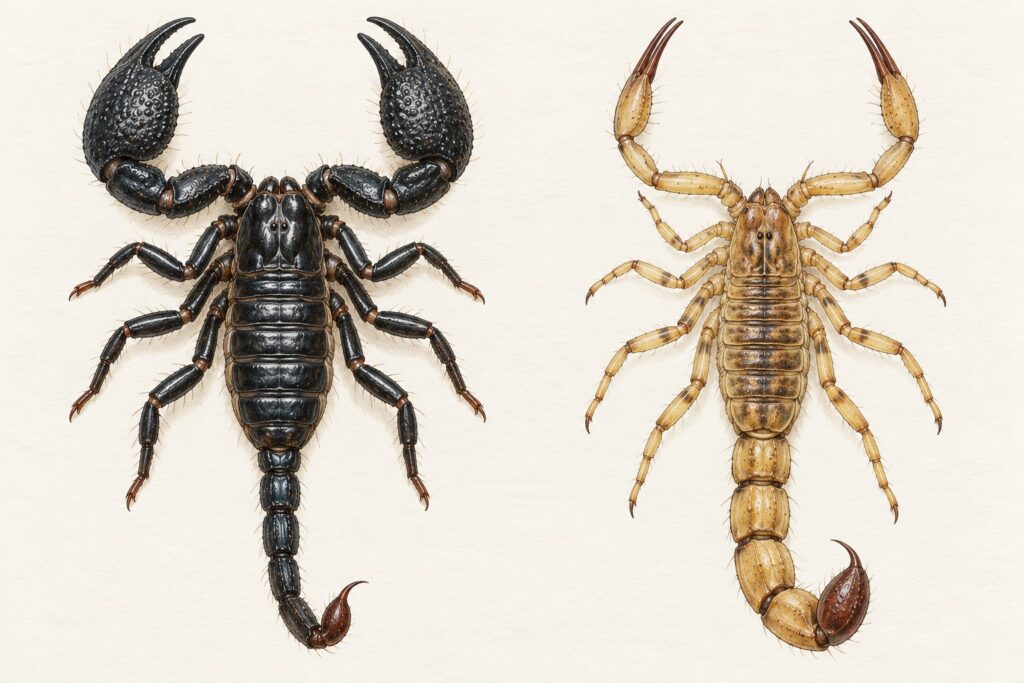
Look at a scorpion’s pincers and you can usually guess how it hunts.
- Thick, heavy pincers and a thin tail, as on emperor and Asian forest scorpions, mean the scorpion mostly crushes prey. These species can take relatively large insects and rarely need the sting.
- Slender pincers and a thick tail, as on many desert and bark scorpions, mean the scorpion relies on venom to subdue prey quickly.
This matters for feeding. Heavy-clawed scorpions handle a vigorous adult cricket or roach without trouble. Slender-clawed species are better matched to slightly smaller prey that they can control and sting.
It is also a rough guide to which species are kept as pets and which need much more care. Heavy-clawed species tend to have milder venom, and the beginner species covered in our guide to scorpions as pets are almost all in that group.
What to Feed a Pet Scorpion
| Feeder | Use it for | Notes |
|---|---|---|
| Crickets | The standard staple | Gut-load first. Remove leftovers within 24 hours |
| Dubia roaches | Staple, adults and juveniles | Quiet, meaty, cannot climb smooth plastic. Restricted in some places |
| Red runner roaches | Staple, especially for fast hunters | Active, good feeding response |
| Mealworms | Occasional | Can burrow and surface during a molt. Crush the head first |
| Superworms | Occasional, large adults only | Strong jaws. Crush the head first |
| Waxworms | Treat | Very fatty |
| Pinhead crickets | Scorplings and small juveniles | Or pre-killed pieces of larger crickets |
| Pinkie mice, lizards | Skip | Messy, bacterial risk, nothing insects lack |
| Wild-caught insects | Skip | May carry pesticides or parasites |
Most keepers rotate two or three insects. Variety is good practice, but a scorpion kept on crickets and roaches alone does well for its whole life. The same feeders work for spiders, and our list of feeders for tarantulas covers storing and choosing them in more detail.
How Much and How Often
| Life stage | How often | How much |
|---|---|---|
| Scorplings, first instars | Every 3 to 5 days | One pinhead cricket or a small pre-killed piece |
| Juveniles | Every 4 to 5 days | One or two small prey items |
| Adults | Once a week | Two or three prey items |
| Gravid females | Once a week, may eat less near birth | Two or three prey items |
Prey size: no wider than the scorpion’s body, not counting the pincers. Large, heavy-clawed species can manage more. Small or slender-clawed species should get less.
Judge by the abdomen. A plump, rounded abdomen with the pale membrane visible between the plates means the scorpion is well fed, and you can skip a week. A thin, shrunken or wrinkled abdomen means it needs food and, more urgently, water.
Overfeeding is the bigger risk. Scorpions have slow metabolisms. An overfed scorpion becomes sluggish, can have trouble molting, and gains nothing in health. Our emperor scorpion care guide has the same advice for the most commonly kept species.
Gut-Loading: Feed the Feeders
Feeder insects are only as nutritious as what they last ate. Gut-loading means feeding crickets or roaches fresh vegetables, oats or a commercial insect diet for at least 24 hours before offering them.
- Good gut-load foods: carrot, sweet potato, squash, leafy greens, oats.
- Keep feeders hydrated with a slice of vegetable or water crystals, not an open dish they can drown in.
- Skip calcium powders. Scorpions do not need dusted prey.
Water: Food Is Not Enough
Scorpions get some water from their prey, but a pet scorpion should still have water.
- Tropical species such as emperor and Asian forest scorpions need a shallow water dish and damp substrate.
- Desert species such as the desert hairy scorpion get much of their moisture from food and the substrate, but should still have a small, shallow dish available. Our desert hairy scorpion care sheet explains the balance.
A dehydrated scorpion often refuses food, which can be mistaken for a feeding problem. Check water first.
How Long Can a Scorpion Go Without Eating?
A long time. Scorpions have some of the lowest metabolic rates of any arthropod, which lets them survive long periods without food in the wild. Healthy adults routinely fast for several weeks in captivity, and many go for months with no harm.
That is why food refusal is rarely an emergency. The common reasons:
- Pre-molt. The scorpion stops eating before a molt, sometimes for weeks.
- It is full. A plump abdomen means it does not need to eat.
- It is too cold. Low temperatures slow metabolism and suppress appetite.
- It is too dry. Dehydration reduces feeding.
- It is stressed. A new enclosure, recent rehousing or constant disturbance can stop feeding for a week or two.
- A gravid female may eat less as she nears birth.
What to do: offer food, remove it within 24 hours if ignored, and try again a week later. Check temperature and water. Worry only if the abdomen shrinks noticeably or the scorpion is weak or unsteady.
Over a fast lasting months, it is easy to lose track of the last meal. Recording each offer and refusal in InvertMate tells you the real interval, which is usually longer than it feels.
Feeding Around a Molt
Scorpions are soft and defenceless right after molting, and a live cricket can injure them.
- Remove all live prey as soon as you see pre-molt signs, such as refusal to eat and hiding.
- Leave the scorpion alone during the molt.
- Wait at least a week after the molt before feeding, until the new exoskeleton has hardened enough to grip prey.
- Start with smaller prey for the first meal after a molt.
Feeding Communal Species
A few species, notably the Asian forest scorpion, which tolerates company, can be kept in groups. Feeding them is where trouble starts.
- Offer enough for everyone, one prey item per scorpion or more.
- Watch the first few feedings to make sure smaller scorpions are not being pushed out.
- Separate any scorpion that is molting. A soft scorpion in a group can be eaten.
Hungry scorpions are more likely to fight, so underfeeding a group is riskier than underfeeding a single animal. Most keepers house even communal species alone once they are adults, and feed each one separately with tongs.
Five Foods to Leave Out
- Fruit, vegetables and meat. Scorpions are strict predators and cannot use plant food. Feed vegetables to your crickets instead.
- Pinkie mice and lizards. They are messy, a bacterial risk, and unnecessary.
- Wild-caught insects. Garden insects can carry pesticides or parasites.
- Prey larger than the scorpion. It can injure or stress the scorpion, especially near a molt.
- Old dead insects. Pre-killed prey should be freshly killed.
FAQ
What do pet scorpions eat?
Live insects, mainly gut-loaded crickets and dubia roaches, with occasional mealworms or superworms. Adults eat two or three prey items once a week, and juveniles smaller prey every four to five days. Prey should be no wider than the scorpion’s body.
How often should I feed my scorpion?
Adults once a week, juveniles every four to five days, and newborn scorplings every three to five days. Adjust by the abdomen. If it is plump and rounded, skip a feeding. Overfeeding is a more common problem than underfeeding.
How long can a scorpion live without food?
Healthy adults can go several weeks without eating and often months with no harm, thanks to a very slow metabolism. Water matters more than food over a long fast, so always keep water or damp substrate available.
Do scorpions eat other scorpions?
Yes. Cannibalism is common in the wild and in captivity, especially when scorpions are hungry, crowded or molting. Most species should be kept alone, and even communal species need plenty of food and space.
Can scorpions eat fruit?
No. Scorpions are strict carnivores and cannot digest plant matter. Give fruit and vegetables to your feeder insects a day before offering them, so the insects pass on the nutrition.
Why is my scorpion not eating?
Usually because it is about to molt, it is already full, or the enclosure is too cold or too dry. Remove the prey, check temperature and water, and try again in a week. A scorpion with a plump abdomen can safely skip many meals.
Two Crickets, Then Nothing for a Month
That pattern is normal for a scorpion, and it is hard to judge without a record. InvertMate logs every feeding and refusal, tracks molts so you can spot a pre-molt fast, and sends feeding reminders set for each animal. Free on the App Store and Google Play.