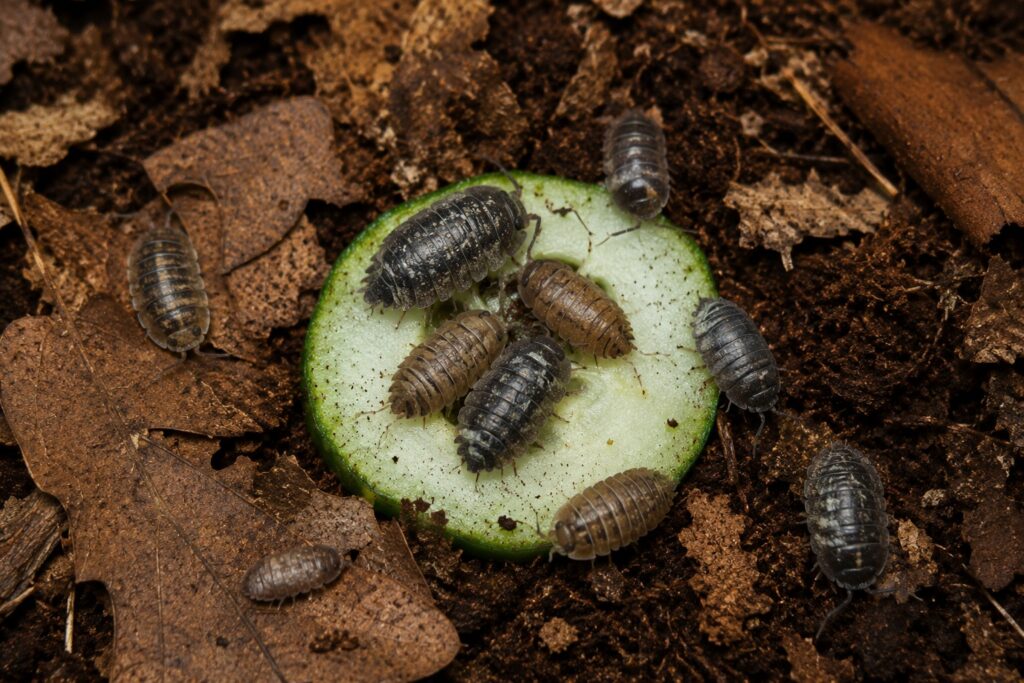
What do isopods eat? The short answer: decaying organic matter, mostly leaves and wood. The longer answer is more interesting, because getting the diet right is one of the biggest factors in how fast your colony grows, how well your isopods breed, and how healthy they stay through molts.
Isopods are detritivores. In the wild, they spend their lives breaking down dead plant material on the forest floor, recycling nutrients back into the soil. In captivity, your job is to replicate that diet while adding a few supplements that make a real difference in colony health. This guide covers everything: leaf litter (the foundation), vegetables, protein, calcium, feeding schedules, species-specific differences, and the foods you should never offer.
Leaf Litter: The Foundation of Every Isopod Diet
Leaf litter is the single most important food source for pet isopods. It should always be present in the enclosure, covering the substrate in a thick layer. Your colony will graze on it constantly, day and night, breaking it down into smaller and smaller pieces over time.
Best leaf types:
- Oak (the gold standard for most keepers, widely available, slow to decompose)
- Magnolia (thick, long-lasting, excellent for larger species)
- Indian almond / catappa (popular in the hobby, contains tannins that may have antimicrobial benefits)
- Beech, maple, and birch (all work well)
You can also use cottonwood, elm, willow, poplar, and many other hardwood leaves. The key is variety. Studies have shown that isopods eat more and breed better when offered a mix of leaf types rather than just one. Rotate between two or three leaf species if you can.
Collecting leaves: Gather fallen, naturally dried leaves from areas you’re confident haven’t been treated with pesticides, herbicides, or fertilizers. Avoid leaves from roadsides or manicured lawns. If you’re unsure about contamination, you can sterilize leaves by baking them in the oven at 200°F for 20-30 minutes or boiling them briefly and letting them dry.
Avoid: softwood needles from pine, cedar, spruce, or fir. These contain resins and aromatic oils that are toxic to isopods. Also avoid freshly fallen green leaves, which are harder to digest and can mold quickly in a humid enclosure.
Keep the leaf litter layer thick enough that you can barely see the substrate underneath. When the layer gets thin and mostly broken down into fragments, add more on top. Think of it like restocking a pantry: it should never run empty.
Decaying Wood
Along with leaf litter, decaying hardwood is a natural food source that many isopod species consume regularly. In the wild, isopods are constantly nibbling on rotting logs and bark, extracting nutrients from the decomposing wood fibers and the fungal colonies growing within them.
In captivity, you can provide this with:
- Cork bark (widely available at pet stores and online)
- Flake soil (decomposed hardwood that’s been processed by fungi, popular in the beetle and isopod hobbies)
- Rotted hardwood pieces (white-rot wood is ideal, as it’s been softened by fungal decomposition)
Place a piece of cork bark or rotted wood in the enclosure and the colony will slowly graze on it over weeks and months. You’ll notice the surface getting rougher and developing tiny grooves where the isopods have been feeding.
This is especially important for species in the Cubaris genus, which rely more heavily on decaying wood and flake soil than many Porcellio or Armadillidium species.
Vegetables and Fruits
Fresh vegetables are the most popular supplemental food among isopod keepers. They provide additional moisture, vitamins, and micronutrients beyond what leaf litter and wood offer.
Best vegetables (offer 2-3 times per week):
- Cucumber (a colony favorite for almost every species)
- Zucchini / courgette
- Squash (butternut, acorn, yellow squash)
- Sweet potato (cooked or raw, both work)
- Carrot (raw is fine, cut into thin slices for easier access)
- Mushrooms (a great option many keepers overlook)
Fruits (offer sparingly, once per week at most):
- Apple (peeled or unpeeled)
- Banana
- Melon / watermelon
- Mango
- Berries
Fruits provide a quick energy boost but their high sugar and moisture content means they mold fast in a humid enclosure. Always offer small portions and remove uneaten fresh food within 24 hours to prevent mold outbreaks and pest issues like fruit flies or fungus gnats.
A practical tip: many keepers find that isopods prefer vegetables and fruits that are slightly past their prime. That softening cucumber you were going to throw out? Your isopods will love it. The breakdown process has already started, making the nutrients more accessible.
Protein
Protein is an often-underestimated part of the isopod diet. While leaf litter and vegetables provide carbohydrates and fiber, protein is essential for growth, reproduction, and healthy molting. Without enough protein, colony growth slows and some species (particularly Porcellio laevis, including the high-protein dairy cow morph) may become aggressive toward tank mates in bioactive setups.
Good protein sources (offer 1-2 times per week):
- Dried shrimp or freeze-dried shrimp (one of the most popular choices)
- Fish flakes or high-quality fish food pellets
- Freeze-dried bloodworms
- Dried mealworms or black soldier fly larvae
- Spirulina powder (sprinkled on food)
- Dried gammarus shrimp
A small pinch of dried shrimp or a few fish flakes placed on the substrate once or twice a week is all a typical colony needs. The isopods will swarm protein foods much more aggressively than they swarm vegetables, which tells you something about how much they value it.
How much protein? This varies by species. Fast-breeding, surface-active species like Porcellio laevis and Porcellionides pruinosus (powder blue isopods) have higher protein demands than slow-growing species like Armadillidium vulgare. If you notice your colony growing slowly despite good conditions, try increasing protein frequency.
Calcium: The Non-Negotiable Supplement
Calcium is absolutely essential for isopods. Their entire exoskeleton is built with calcium carbonate, and demand spikes every time an isopod molts (which, in a growing colony, is happening constantly across dozens or hundreds of individuals). Without a steady calcium supply, you’ll see failed molts, thin or brittle exoskeletons, and slower reproduction.
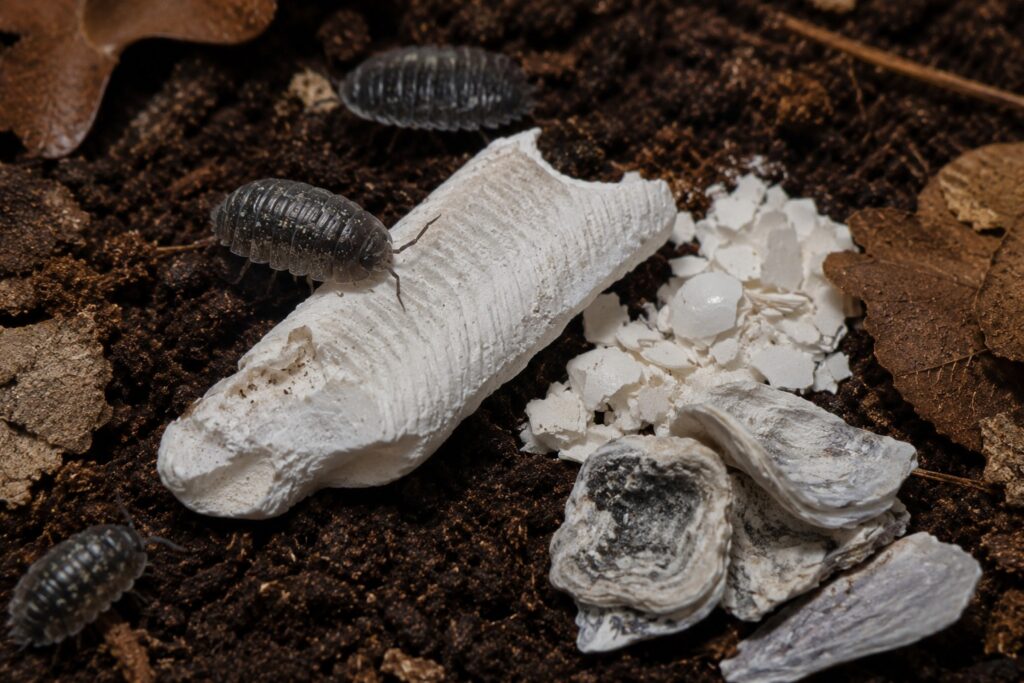
Best calcium sources (always available in the enclosure):
- Cuttlebone (the most popular choice, sold in the bird section of pet stores). Break it into pieces or leave a whole bone wedged into the substrate. The colony will graze on it continuously.
- Crushed oyster shell (available as poultry grit at farm supply stores, very affordable in bulk)
- Crushed eggshell (boil first to sanitize, then dry and crush into small pieces)
- Calcium carbonate powder (can be mixed directly into the substrate)
Many keepers use multiple calcium sources at the same time. A piece of cuttlebone plus some crushed oyster shell sprinkled on the substrate covers all your bases.
Never let the calcium run out. In large, fast-growing colonies, isopods can consume a piece of cuttlebone surprisingly fast. Check calcium levels weekly and replace as needed. If you’re ever unsure whether your colony has enough calcium, the answer is to add more.
Feeding Schedule
Isopods don’t need daily feeding from you, because their primary diet (leaf litter, decaying wood, calcium) should always be present in the enclosure. What you’re adding on a schedule is the supplemental stuff: vegetables, protein, and occasional treats.
A practical weekly schedule:
- Always available: Leaf litter (thick layer), cork bark or rotting wood, cuttlebone or other calcium source
- 2-3 times per week: A small piece of fresh vegetable (cucumber, zucchini, carrot, etc.)
- 1-2 times per week: A small portion of protein (dried shrimp, fish flakes, bloodworms)
- Once per week (optional): A small piece of fruit as a treat
Portion size: Start small. A colony of 20-30 isopods doesn’t need a whole cucumber slice. A thin piece about the size of a coin is plenty. If it’s gone within a few hours, you can offer a bit more next time. If it’s still sitting there after 24 hours, reduce portion size and remove the uneaten food.
Overfeeding itself won’t harm the isopods, but leftover food attracts mold, grain mites, and fungus gnats. Feed conservatively and remove leftovers promptly. If keeping track of the schedule is the hard part, that’s what CrabPod is for.
Species-Specific Dietary Notes
While the core diet above works for the vast majority of pet isopod species, some groups have slightly different preferences or requirements worth knowing about. Our guide to isopod species covers 15 of the most commonly kept options if you want the full picture on any of these.
Porcellio species (P. laevis, P. scaber, P. ornatus): Strong appetite, surface-active feeders, higher protein demand than average. These are the species most likely to show aggression in bioactive setups if protein is insufficient.
Porcellionides pruinosus (powder blues and variants): Very fast metabolism and reproduction rate. Benefits from frequent protein supplementation to fuel rapid colony growth.
Armadillidium species (A. vulgare, A. maculatum, A. klugii): Tend to be less aggressive feeders, slower growing, and less protein-hungry than Porcellio. They rely more heavily on leaf litter and calcium.
Cubaris species (C. murina, “Rubber Ducky,” “Panda King“): These premium species often prefer decaying wood and flake soil as a larger portion of their diet compared to Porcellio or Armadillidium. Providing high-quality flake soil mixed into the substrate is especially important for Cubaris. Rubber duckies push this further than most, since their limestone cave origin means calcium carbonate needs to be permanently available alongside the wood.
Dwarf species (dwarf whites, dwarf purples): Eat the same foods as larger species but in tiny amounts. Their small size means they can drown in water droplets on fresh vegetables, so offer thin, flat pieces and monitor moisture.
Foods to Avoid
Not everything is safe for isopods. Some foods are directly toxic, and others create problems in the enclosed, humid environment of an isopod bin.
Never feed:
- Citrus fruits (oranges, lemons, limes, grapefruit): The acidity and essential oils can harm isopods
- Onions and garlic: Toxic to most invertebrates
- Anything salted, seasoned, or processed: No chips, crackers, bread with preservatives, or seasoned meats
- Softwood (pine, cedar, spruce, fir): Resins and aromatic oils are toxic
- Pesticide-treated produce: Always wash vegetables or buy organic
- Potatoes (debated, but many keepers avoid them): Decomposing potato shoots produce carbon dioxide levels that can be dangerous in a sealed enclosure
Use caution with:
- Highly acidic fruits (tomatoes, pineapple): Some keepers offer these sparingly, others avoid them entirely
- Dairy products: Not toxic but mold quickly and can attract pests
- Raw meat: Rots fast in humid conditions, attracts mites and flies. Stick to dried protein sources instead
When in doubt, stick to the safe list. Leaf litter, vegetables from the approved list, dried protein, and calcium covers everything your colony needs.
FAQ
How often should I feed my isopods?
Leaf litter and calcium should always be available. Add fresh vegetables 2-3 times per week and protein 1-2 times per week. Remove uneaten fresh food within 24 hours. A well-stocked leaf litter layer ensures your colony always has something to eat between supplemental feedings.
What is the best food for isopod breeding?
Protein and calcium together drive the fastest colony growth. Dried shrimp or fish flakes offered 1-2 times per week, combined with a constant calcium source like cuttlebone, gives your colony the building blocks for healthy reproduction. Warmer temperatures and consistent moisture also play a role.
Can isopods eat fruits and vegetables?
Yes. Cucumber, zucchini, squash, sweet potato, carrot, and mushrooms are all excellent choices. Fruits like apple, banana, and melon can be offered sparingly as treats. Avoid citrus, onions, and anything treated with pesticides. Remove uneaten portions within 24 hours to prevent mold.
Do isopods need calcium?
Absolutely. Calcium is essential for building and maintaining their exoskeleton, and demand increases during molting and reproduction. Keep a piece of cuttlebone, crushed oyster shell, or crushed eggshell available in the enclosure at all times. In a growing colony, calcium consumption can be surprisingly high.
Why are my isopods not eating?
Check your conditions first: temperature, humidity, and substrate moisture. If those are correct, the food itself may be the issue. Try a different vegetable, or offer protein if you’ve been feeding only plant matter. Some species are pickier than others. Also, isopods are most active at night, so they may be eating when you’re not watching. Check food levels in the morning for a more accurate picture.
Track Your Colony with CrabPod
Stay on top of your isopod colony’s feeding schedule and growth with CrabPod. Log care activities, monitor enclosure conditions, set feeding reminders, and track population changes over time. Free on the App Store.