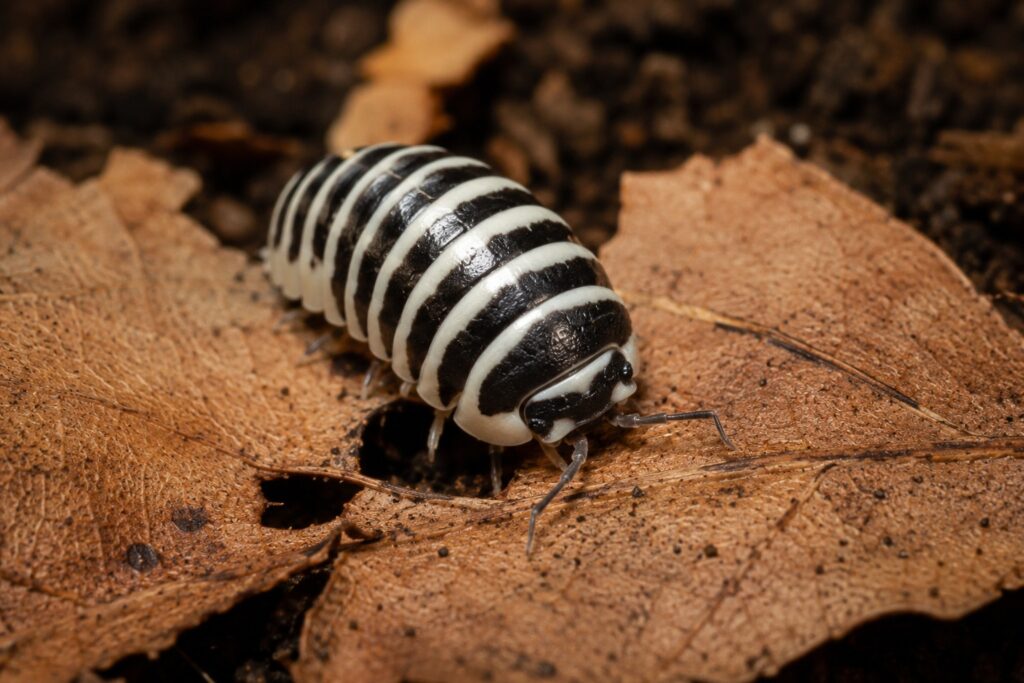
With hundreds of isopod species available in the hobby, choosing your first colony can feel overwhelming. Do you go with something cheap and hardy? Something colorful? Something rare? The answer depends on your experience level, budget, and what you want to get out of keeping them.
This guide profiles 15 types of isopods that are well-suited for beginners, ranging from dirt-cheap starter species to affordable “fancy” morphs that look impressive without requiring expert-level care. Each entry includes size, difficulty, cost range, and what makes that species worth keeping. If you’re brand new to isopods, start by reading our isopod enclosure setup guide so you have the habitat ready before your first colony arrives.
Beginner-Friendly Species (Easy, Affordable)
These are the species most commonly recommended for first-time keepers. They’re hardy, forgiving of mistakes, and breed reliably.
1. Powder Blue Isopod (Porcellionides pruinosus)
The powder blue is many keepers’ first isopod and for good reason. They’re cheap, incredibly prolific, and tolerate a wide range of conditions. Their soft blue-gray coloration is subtle but attractive, and they’re one of the most active surface-dwelling species, so you’ll actually see them. Colony growth is explosive: 10 starters can become hundreds in a few months.
Size: 1.0-1.5 cm | Difficulty: Beginner | Cost: $5-15 for 10-15 | Breeding: Very fast
Powder blue isopod care guide →
2. Powder Orange Isopod (Porcellionides pruinosus “Powder Orange”)
Same species as the powder blue, just a different color morph. Everything about their care is identical, Powder orange care follows the powder blue guide →. The warm orange coloration makes them slightly more visually appealing to some keepers, and they’re equally prolific breeders. Often sold at a similar price to powder blues.
Size: 1.0-1.5 cm | Difficulty: Beginner | Cost: $5-15 for 10-15 | Breeding: Very fast
3. Dairy Cow Isopod (Porcellio laevis “Dairy Cow”)
One of the most popular beginner species in the hobby. Dairy cows are bold, surface-active, and have a striking black-and-white spotted pattern that makes them easy to identify and fun to watch. They’re larger than powder blues and have more personality. The one thing to keep in mind: they have higher protein needs than most species.
Size: 1.5-2.5 cm | Difficulty: Beginner | Cost: $8-20 for 10-15 | Breeding: Fast
4. Common Pill Bug (Armadillidium vulgare)
The classic roly-poly you probably played with as a kid. Wild-type A. vulgare are gray and unassuming, but they’re one of the hardiest isopod species on the planet. They tolerate a huge range of temperatures and humidity levels, they roll into a perfect ball when disturbed, and they breed steadily. A great “learn the basics” species before moving on to fancier morphs.
Size: 1.2-1.8 cm | Difficulty: Beginner | Cost: $3-10 for 10-15 (or free if you collect wild ones) | Breeding: Moderate
5. Rough Woodlouse (Porcellio scaber)
Another extremely hardy, widely available species. P. scaber comes in several color morphs: wild gray, orange (“Lottery Ticket”), calico, and dalmatian. They’re active, visible, and breed well. Slightly smaller and less flashy than dairy cows, but just as easy to keep. A solid choice if you want variety without spending much.
Size: 1.0-1.5 cm | Difficulty: Beginner | Cost: $5-15 for 10-15 | Breeding: Moderate to fast
6. Dwarf White Isopod (Trichorhina tomentosa)
The go-to cleanup crew isopod for tropical bioactive terrariums. Dwarf whites are tiny (2-5 mm), reproduce through parthenogenesis (no males needed), and breed incredibly fast. They’re not much to look at, but their functional value in a vivarium is unmatched. If you’re building a bioactive setup for dart frogs or geckos, this is the species you want seeding your substrate.
Size: 2-5 mm | Difficulty: Beginner | Cost: $5-12 for 15-25 | Breeding: Very fast
Dwarf white isopod care guide →
7. Giant Canyon Isopod (Porcellio dilatatus)
One of the largest commonly kept species. Giant canyons are wide, flat, and easy to see, which makes them satisfying for keepers who don’t want to squint at tiny animals. They’re drought-tolerant and adaptable to a wide temperature range, making them excellent for arid bioactive setups. Their heavy burrowing and substrate-feeding behavior keeps enclosures clean.
Size: 1.8-2.5 cm | Difficulty: Beginner | Cost: $10-20 for 10-15 | Breeding: Moderate
Giant canyon isopod care guide →
8. Lava Isopod (Porcellio scaber “Lava”)
A mottled orange and charcoal morph of the common rough woodlouse, which is why they are so forgiving. They breed fast, tolerate a wide temperature band, and cost a fraction of what the fancy Cubaris morphs do. The one quirk is the lid, since Porcellio climb smooth plastic well.
Size: 1.2-1.5 cm | Difficulty: Beginner | Cost: $15-30 for 10-15 | Breeding: Fast
Intermediate Species (Slightly More Care, More Visual Appeal)
These species are still accessible for newer keepers but benefit from a bit more attention to humidity, diet, or substrate. They reward that extra effort with more striking appearances.
9. Magic Potion Isopod (Armadillidium vulgare “Magic Potion”)
One of the most visually striking Armadillidium morphs. Magic potions display vibrant yellow and white mottled patterns that vary between individuals. Same base care as regular A. vulgare but with slightly higher calcium needs due to their heavily armored exoskeleton. They breed true (offspring keep the coloring), making them a great first “fancy” isopod.
Size: 1.2-1.8 cm | Difficulty: Beginner to Intermediate | Cost: $25-60 for 10-15 | Breeding: Moderate
Magic potion isopod care guide →
10. Zebra Isopod (Armadillidium maculatum)
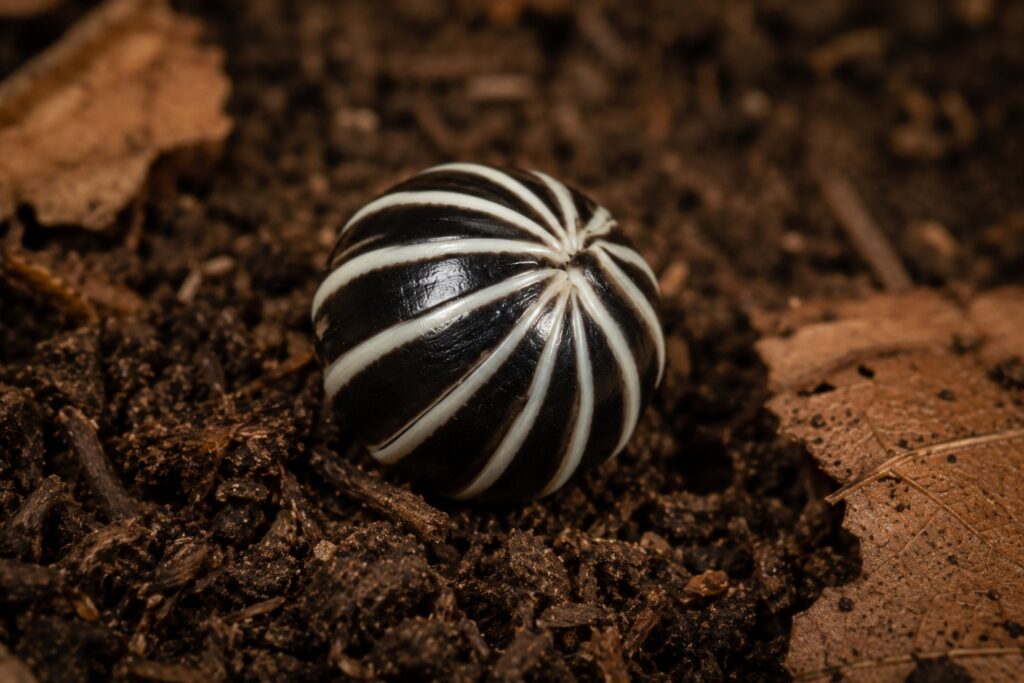
Bold black-and-white striped patterning across each segment makes the zebra isopod one of the most visually distinctive species in the hobby. They’re calm, surface-active during the day, and have the classic Armadillidium ball-rolling defense. Care is similar to other Armadillidium species: moderate humidity, good calcium, and a stable environment.
Size: 1.5-2.0 cm | Difficulty: Beginner to Intermediate | Cost: $15-35 for 10-15 | Breeding: Moderate
11. Papaya Isopod (Cubaris murina “Papaya”)
A popular Cubaris species with warm orange and cream coloring. Papaya isopods are hardier than many other Cubaris species, making them a good entry point into the genus. They prefer higher humidity and benefit from flake soil in the substrate but are otherwise straightforward. Active and relatively visible compared to more secretive Cubaris species.
Size: 1.0-1.5 cm | Difficulty: Intermediate | Cost: $20-40 for 10-15 | Breeding: Moderate
12. Panda King Isopod (Cubaris sp. “Panda King”)
One of the most sought-after Cubaris species. Their jet-black and clean white banding is immediately recognizable and consistently stunning. They need higher humidity, less ventilation, and more flake soil than Porcellio species. They breed faster than many Cubaris species once established, which makes them a good first premium isopod.
Size: 1.0-1.5 cm | Difficulty: Intermediate | Cost: $30-80 for 10-15 | Breeding: Moderate (once established)
Panda king isopod care guide →
Display and Collector Species (Higher Investment, Higher Reward)
These species cost more and may have slightly more specific care requirements, but they’re still achievable for keepers who’ve learned the fundamentals. They’re the ones that make people stop and say “wait, that’s an isopod?”
13. Rubber Ducky Isopod (Cubaris sp. “Rubber Ducky”)
The most famous fancy isopod in the hobby. Their rounded, yellow-and-gray bodies genuinely resemble tiny rubber ducks, and they’ve been a social media sensation for years. They’re slow breeders (the slowest on this list) and need high humidity, minimal disturbance, and patience. Prices have come down significantly, but they’re still a significant investment.
Size: 1.5-2.0 cm | Difficulty: Intermediate to Advanced | Cost: $80-200 for 10-15 | Breeding: Slow
14. Ember Bee Isopod (Armadillidium sp. “Ember Bee”)
Striking orange and dark brown banding gives ember bees a warm, fiery appearance. They’re an Armadillidium species, so care follows the standard pill bug template: moderate humidity, good calcium, and a stable environment. Their visual appeal combined with Armadillidium hardiness makes them a great collector species that isn’t difficult to keep.
Size: 1.2-1.5 cm | Difficulty: Beginner to Intermediate | Cost: $30-60 for 10-15 | Breeding: Moderate
15. High Yellow Isopod (Porcellio ornatus “High Yellow”)
A large, eye-catching species with bright yellow markings along the body edges against a dark base. Porcellio ornatus are big (up to 2 cm), active, and breed well under standard Porcellio care. Their size and coloration make them excellent display animals. Care is similar to dairy cow isopods with a bit more emphasis on humidity.
Size: 1.5-2.0 cm | Difficulty: Beginner to Intermediate | Cost: $15-30 for 10-15 | Breeding: Moderate to fast
How to Choose Your First Species
If you’re completely new, start with one species from the beginner category (numbers 1-7). Don’t overthink it. Powder blues, dairy cows, and common pill bugs are all excellent first colonies. They’ll teach you the fundamentals of humidity, feeding, substrate, and colony management without punishing mistakes.
Once your first colony is stable and breeding, add a second species. This is where the intermediate options (numbers 8-12) become appealing. Magic potions, zebra isopods, and panda kings all offer a visual upgrade while still being manageable.
The collector species (numbers 13-15) are best saved for when you’re confident in your setup skills and willing to invest more money and patience.
A few practical tips:
- Buy from reputable breeders, not pet stores. Healthier animals, better genetics, and actual species identification.
- Start with at least 10-15 individuals. Smaller groups are slower to establish and more vulnerable to losses.
- Set up the enclosure first, then add the isopods. Don’t buy the animals before the habitat is ready.
- Keep different species in separate containers unless you’re running a large bioactive vivarium. Mixed-species bins usually end with one species outcompeting the other.
- The damp-tolerant species are also the ones that work in a crabitat cleanup crew, since hermit crab tanks sit at 75 to 85% humidity year round.
- Once you’re running more than one colony, keeping them straight in your head stops working. CrabPod handles per-colony logs, which is the point at which most keepers start wanting one.
For a complete feeding guide that covers all species, see our isopod feeding guide. For lifespan expectations across different types, check our isopod lifespan guide.
FAQ
What is the best isopod for a first-time keeper?
Powder blue isopods (Porcellionides pruinosus) and dairy cow isopods (Porcellio laevis) are the two most commonly recommended starter species. Both are cheap, hardy, breed fast, and tolerate a range of conditions. Powder blues are smaller and faster; dairy cows are larger and bolder.
How many types of isopods are there?
Over 10,000 isopod species have been identified worldwide, including terrestrial, freshwater, and marine species. In the pet hobby, roughly 50-100 species and morphs are commonly available, with new varieties being imported and bred regularly.
What is the most expensive isopod?
Rare Cubaris species and newly imported morphs can cost $100-300+ for a small starter colony. Rubber Ducky isopods were once the most expensive hobby isopod (reaching $300+ per individual at peak demand), but prices have dropped significantly as captive breeding has increased.
Can you mix different types of isopods together?
You can in large bioactive vivariums, but it’s generally not recommended in culture bins. One species will almost always outcompete the other over time. If you want multiple species, keep them in separate enclosures and enjoy each colony on its own terms.
Are isopods good pets for kids?
Absolutely. Isopods are low-maintenance, safe to handle, inexpensive to keep, and fascinating to observe. Beginner species like common pill bugs and powder blues are practically indestructible by pet standards. They’re an excellent way to introduce children to animal care and biology.
Track Every Colony with CrabPod
Managing multiple isopod species? CrabPod lets you track each colony separately: log population counts, monitor enclosure conditions, set feeding reminders, and watch your collections grow over time. Free on the App Store.