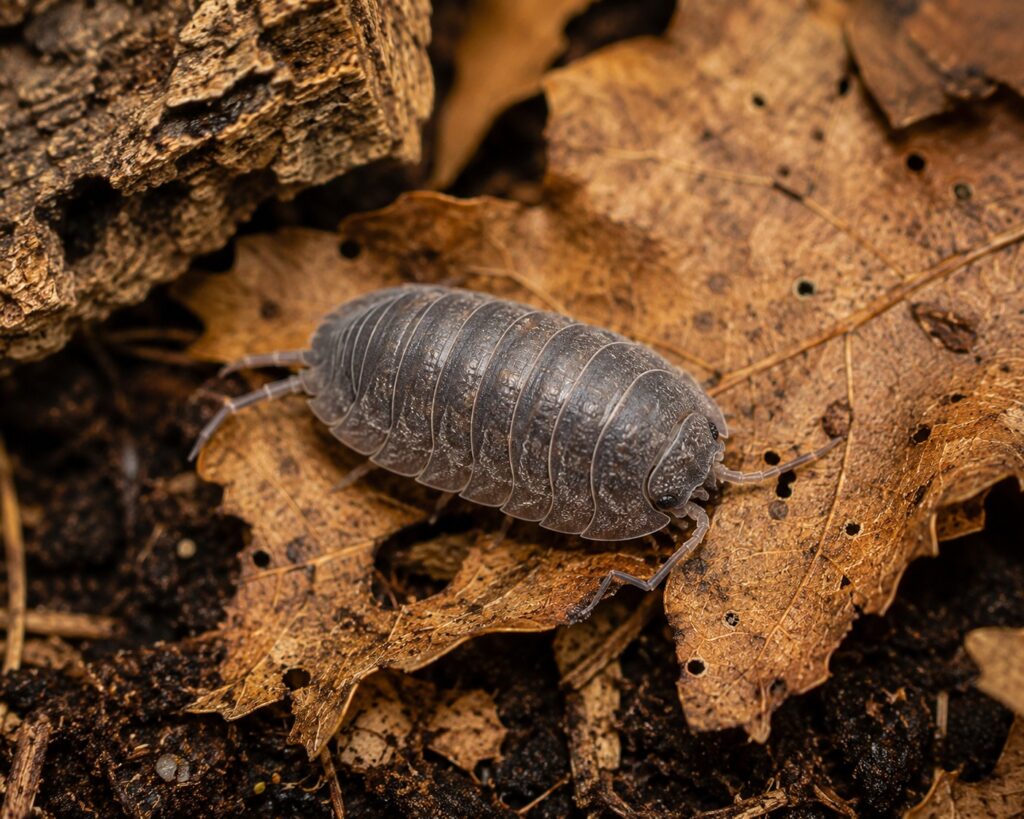
How long do isopods live? The short answer is 1-5 years for most pet species, with the typical range landing around 2-3 years for the majority of commonly kept isopods. But that number varies significantly depending on species, care quality, and environmental conditions.
The more interesting answer is that while individual isopods have limited lifespans, a well-maintained colony can effectively live forever. New generations continuously replace older individuals, and a healthy colony grows and sustains itself indefinitely as long as conditions remain stable. So the real question isn’t just “how long does one isopod live?” but “how long can I keep a colony thriving?” (The answer to that second question: as long as you want.)
This guide breaks down isopod lifespans by species group, explains the factors that shorten or extend life, and covers what to expect at each stage of an isopod’s development.
Isopod Lifespan by Species
Not all isopods are created equal when it comes to longevity. There’s a general pattern in the hobby: faster-breeding species tend to have shorter individual lifespans, while slower-breeding species often live longer. Here’s a breakdown of the most commonly kept groups.
Porcellio Species (1-3 years)
Porcellio species are the workhorses of the isopod hobby. They grow fast, breed prolifically, and have relatively short individual lifespans.
- Porcellio laevis (dairy cow, orange isopods): 2-3 years
- Porcellio dilatatus (giant canyon isopods): 2-3 years
- Porcellio scaber (common rough woodlouse): 2-3 years
- Porcellio ornatus (high yellow): 2-3 years
- Porcellio hoffmannseggi: 2-3 years
The trade-off for their shorter lifespan is explosive colony growth. A well-maintained P. laevis colony can double in population every few months, so even though individual isopods are dying of old age, the colony as a whole is always growing.
Porcellionides Species (1-2 years)
These are the fastest breeders and the shortest-lived common pet isopods.
- Porcellionides pruinosus (powder blue isopods, powder orange): 1-2 years
Powder blues and their color variants live fast and breed faster. They reach reproductive maturity in just 2-3 months and can produce multiple large broods in their relatively short lifetime. A starter colony of 10-15 can grow to several hundred within a few months, which offsets the shorter individual lifespan entirely.
Armadillidium Species (2-4 years)
Armadillidium species tend to live slightly longer than Porcellio, with slower but steady growth.
- Armadillidium vulgare (magic potion isopods, wild type): 2-4 years
- Armadillidium maculatum (zebra isopod): 2-4 years
- Armadillidium klugii: 2-3 years
- Armadillidium nasatum: 2-3 years
The heavier calcification of Armadillidium exoskeletons may contribute to their slightly longer lives. They’re built like tiny tanks, and that armor seems to translate to durability. Their breeding rate is moderate, not as explosive as Porcellio but reliable and consistent.
Cubaris Species (2-5 years)
Cubaris species are generally the longest-lived commonly kept isopods, which makes sense given their slower breeding rates and more cautious lifestyles.
- Cubaris sp. “Panda King” (panda king isopods): 2-4 years
- Cubaris sp. “Rubber Ducky”: 3-5 years
- Cubaris murina and variants: 2-4 years
The longer lifespan of Cubaris species means individual isopods contribute to the colony for a longer period before dying. But it also means that colony growth is slower, and losing individuals (from care mistakes, shipping stress, or environmental problems) has a proportionally bigger impact on the colony than it would with fast-breeding Porcellio.
Dwarf Species (1-2 years)
Dwarf isopods live shorter lives but compensate with rapid, consistent reproduction.
- Trichorhina tomentosa (dwarf white): 1-2 years
- Nagurus cristatus (dwarf purple): 1-2 years
These tiny species are most commonly used as bioactive cleanup crews rather than display animals. Their short lifespan and constant reproduction makes them self-sustaining in most enclosures.
Lifespan Comparison Table
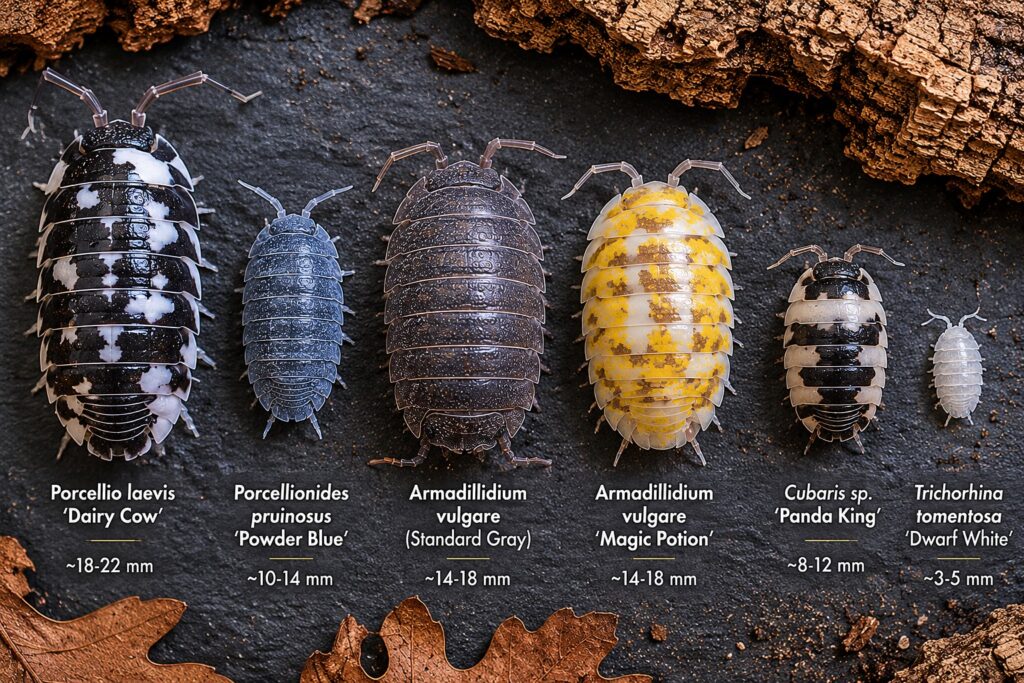
| Species | Typical Lifespan | Breeding Speed | Best For |
|---|---|---|---|
| Porcellio laevis (dairy cow) | 2-3 years | Fast | Display, bioactive |
| Porcellionides pruinosus (powder blue) | 1-2 years | Very fast | Bioactive, feeders |
| Armadillidium vulgare (magic potion) | 2-4 years | Moderate | Display, collection |
| Cubaris sp. “Panda King” | 2-4 years | Moderate | Collection, display |
| Cubaris sp. “Rubber Ducky” | 3-5 years | Slow | Collection |
| Trichorhina tomentosa (dwarf white) | 1-2 years | Very fast | Bioactive cleanup |
Factors That Affect Isopod Lifespan
Several variables influence how long your isopods live beyond just their species.
Temperature
Warmer temperatures speed up metabolism, which accelerates growth, reproduction, and aging. An isopod kept at the upper end of its temperature range (say 82-85°F) will grow faster and breed sooner but may have a slightly shorter overall lifespan than one kept at 72-75°F. This is a common trade-off across ectothermic animals.
If you want maximum colony growth, keep temperatures in the warmer half of the recommended range. If you want individual isopods to live as long as possible, keep things a bit cooler.
Humidity
Chronic low humidity is the number one environmental killer of pet isopods. Isopods breathe through modified gill-like structures that must stay moist. If humidity drops too low for too long, they slowly suffocate. A single dry spell can wipe out vulnerable individuals (freshly molted isopods, mancae, and elderly isopods are most at risk).
Maintaining a proper moisture gradient in your enclosure is the single best thing you can do for colony longevity. Our enclosure setup guide covers how to build one in step four.
Diet and Calcium
A well-fed isopod with access to consistent calcium lives longer and breeds better than a nutritionally deprived one. Calcium is especially critical because isopods molt throughout their entire lives, and each molt demands significant calcium to build the new exoskeleton. Without enough calcium, molts fail, and failed molts are often fatal.
Keep calcium available at all times. Feed a varied diet with regular protein supplementation. For a full feeding breakdown, see our isopod feeding guide.
Colony Density
Overcrowded colonies experience more stress, more competition for food and calcium, and higher rates of aggression (especially in protein-hungry species like P. laevis). All of these factors can shorten individual lifespans. If your colony has outgrown its enclosure, split it into a second bin.
On the flip side, colonies that are too small can also struggle. Isopods are social animals, and very small groups (fewer than 5-6 individuals) may be slower to breed and show less normal behavior.
Disturbance
Constant handling, frequent lid-opening, and digging through substrate all cause stress. Stressed isopods breed less, eat less, and are more vulnerable to disease and failed molts. The keepers who report the healthiest, longest-lived colonies are almost always the ones who disturb their bins the least.
Life Stages of an Isopod
Understanding the isopod life cycle helps you know what to expect from your colony at each stage.
Mancae (newborn): Isopods are born as fully formed miniatures called mancae. They emerge from the mother’s marsupium (brood pouch) already looking like tiny adults, just smaller, paler, and often without their adult coloration. Mancae are the most vulnerable life stage: they’re tiny, soft, and easily desiccated. Mortality is highest in the first few weeks of life.
Juvenile: After their first few molts, isopods enter the juvenile stage. They grow rapidly, molting every 2-4 weeks. Coloration develops and intensifies with each molt. Juveniles are active foragers and relatively hardy compared to mancae.
Sub-adult: Growth slows and the isopod approaches its adult size. Molting frequency decreases to every 4-8 weeks. Reproductive organs mature during this stage.
Adult: The isopod reaches full size and reproductive maturity, typically at 3-6 months of age depending on species and temperature. Adults continue to molt periodically (every few months) for the rest of their lives, unlike many insects which stop molting at adulthood. Females can produce multiple broods throughout their adult life.
Senior: In the final months of life, isopods may slow down, eat less, and become less active. Molting may become less frequent or stop entirely. There’s no dramatic “old age” decline in most cases. Isopods that die of old age are usually simply found dead in the enclosure one day, often under a hide or in the substrate.
Colonies Live Forever (If You Let Them)
The most important concept in isopod keeping is that you’re not really keeping individual animals. You’re maintaining a colony. And unlike individual isopods, colonies have no natural expiration date.
A colony established today with good care can still be thriving 10, 20, or 50 years from now. The individual isopods will cycle through their lifespans, but the colony itself renews continuously. Each generation passes on its genetics to the next, and the population sustains itself as long as food, moisture, and space are available.
This is one of the things that makes isopod keeping uniquely satisfying. You’re building a living, self-sustaining system, not just caring for a single pet with a countdown timer. That also makes it worth logging: population changes, molts, and humidity only reveal a pattern when you can see them over months, which is why I built the CrabPod colony tracker.
FAQ
How long do isopods live as pets?
Most commonly kept pet isopods live 1-5 years depending on the species. Fast breeders like powder blues and dwarf whites tend toward the shorter end (1-2 years), while slower-breeding species like Rubber Ducky isopods can live 3-5 years. With proper humidity, diet, and calcium, most species reach the upper end of their expected range.
Do isopods die of old age?
Yes. Isopods have a natural lifespan and will eventually die even with perfect care. You’ll occasionally find dead isopods in your enclosure, which is completely normal in a healthy colony. As long as the overall population is stable or growing, individual deaths are just part of the colony cycle.
How can I make my isopods live longer?
Maintain consistent humidity with a proper moisture gradient, keep calcium available at all times, feed a varied diet with regular protein, avoid overcrowding, keep temperatures stable (slightly cooler extends lifespan), and minimize disturbance. These factors collectively make the biggest difference in individual isopod longevity.
How long does it take for isopods to breed?
Most species reach reproductive maturity at 3-6 months. Fast breeders like powder blues can start producing mancae as early as 2-3 months. Slower species like Rubber Ducky isopods may take 6-12 months to establish and begin breeding. Warmer temperatures and adequate protein accelerate the timeline.
Can an isopod colony live forever?
Effectively, yes. While individual isopods die within a few years, a well-maintained colony continuously produces new generations. As long as food, moisture, calcium, and space are available, there’s no reason a colony can’t sustain itself indefinitely. Many keepers have colonies that are 5-10+ years old and still thriving.
Track Your Colony with CrabPod
Watch your isopod colony grow generation after generation with CrabPod. Log population counts, monitor enclosure conditions, set care reminders, and track your colony’s long-term growth trends. Free on the App Store.