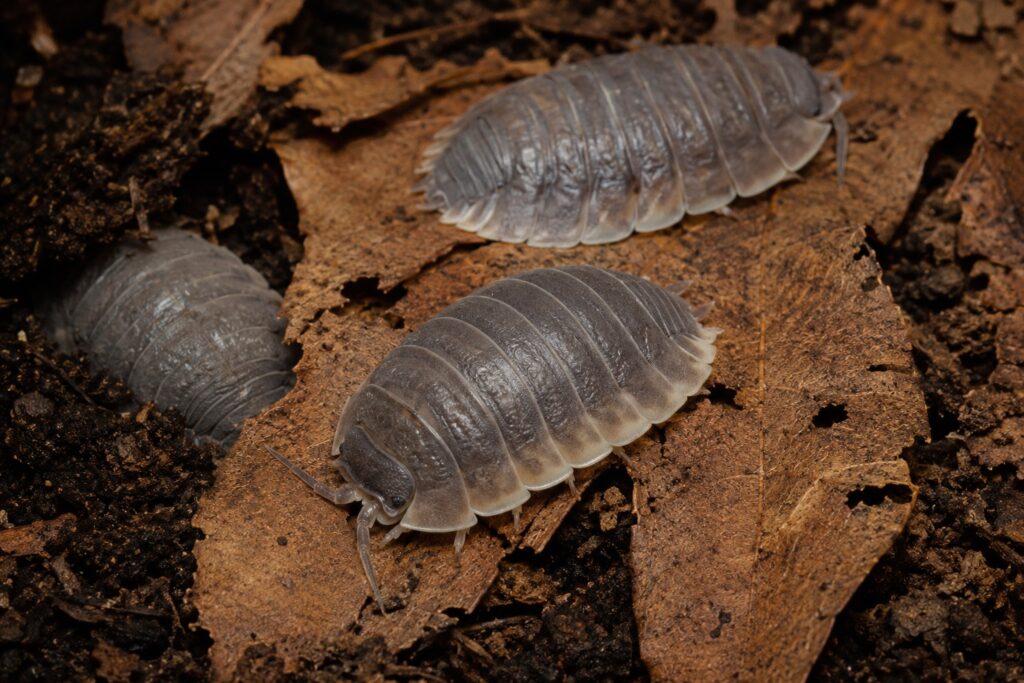
Giant canyon isopods are the tanks of the isopod world. They’re broad, bulky, and among the largest commonly kept isopod species, reaching close to an inch in length. If you’ve been keeping smaller species and want something with more visual impact, Porcellio dilatatus delivers. They’re big enough to actually see clearly without squinting, and their calm, steady temperament makes them satisfying to observe.
What makes giant canyon isopods especially appealing is their adaptability. Originally native to western Europe, they’ve established populations across a wide range of climates, from arid canyonlands to moist coastal areas. In captivity, this translates to an isopod that tolerates a broader range of conditions than most species, making them forgiving for newer keepers while still being interesting enough for experienced hobbyists.
This guide covers everything you need: enclosure setup, substrate (which matters more for this species than you might expect), humidity, diet, breeding, and common issues.
Species Overview
The giant canyon isopod (Porcellio dilatatus) belongs to the Porcellionidae family and is native to western Europe, particularly the Iberian Peninsula. Despite the “canyon” name, they’ve been found across diverse habitats, from dry, rocky terrain to more temperate woodlands. They’re highly adaptable and drought-tolerant compared to tropical species, which is a big part of their appeal.
Adults are impressive by isopod standards. They reach 1.8-2.5 cm (0.7-1.0 inches) in length, making them noticeably larger than dairy cow isopods and significantly bigger than powder blues or dwarf whites. Their bodies are wide, flat, and heavily built with a characteristic gray coloration accented by lighter, off-white edges along the sides (sometimes called the “skirt”). Some individuals show subtle brown or yellowish tones.
Giant canyon isopods are active burrowers. They spend a significant amount of time in the substrate, more so than many Porcellio species, and they’re heavy substrate feeders. They’ll eat their way through organic matter in the soil itself, which means your substrate composition is both habitat and food source.
They’re also one of the better isopod species for arid-style bioactive vivariums housing bearded dragons, leopard geckos, or other dry-climate reptiles, since they tolerate lower humidity better than tropical species.
| Attribute | Details |
|---|---|
| Scientific name | Porcellio dilatatus |
| Adult size | 1.8-2.5 cm (0.7-1.0 in) |
| Lifespan | 2-3 years |
| Difficulty | Beginner |
| Temperature | 60-82°F (15-28°C) |
| Humidity | 50-70% (with moisture gradient) |
For more on isopod lifespans, see our isopod lifespan guide.
Enclosure Setup
Giant canyon isopods are larger and more active burrowers than most beginner species, so they benefit from a slightly more spacious setup.
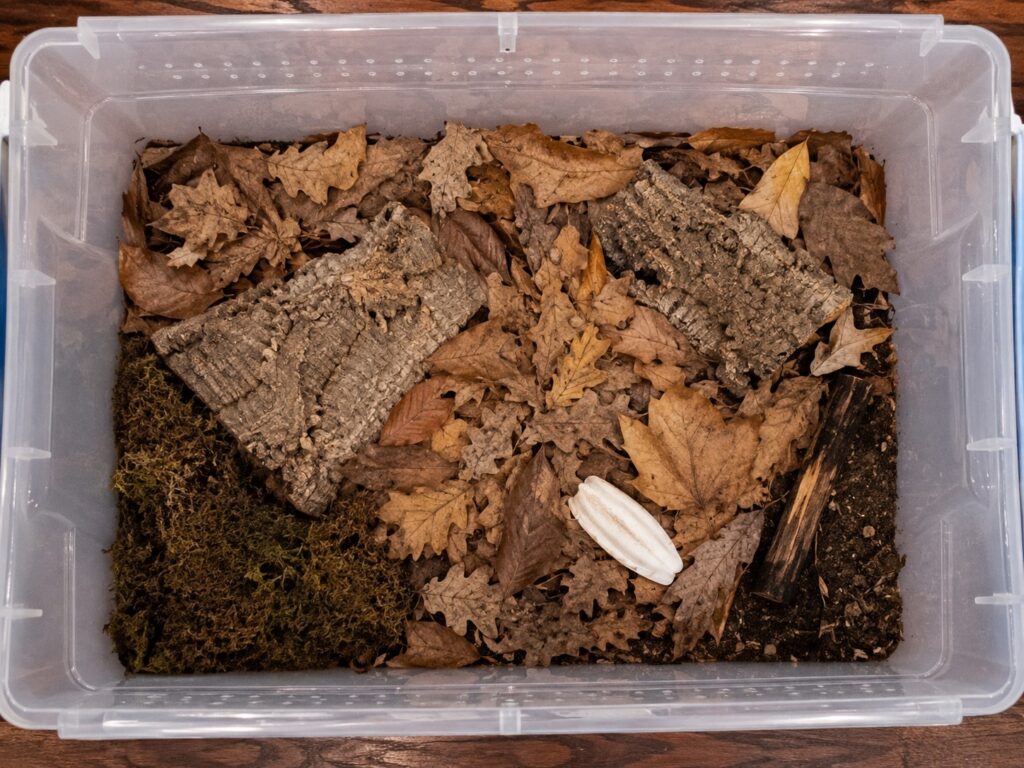
A 15-quart plastic bin is a good starting point for a colony of 10-15 isopods. For a growing colony, a 32-quart bin gives them room to spread out and establish territory. If you’re using them in a bioactive setup, the vivarium itself becomes the enclosure.
Ventilation should be moderate to generous. Giant canyon isopods come from relatively dry habitats and tolerate (even prefer) more airflow than tropical species like Cubaris or dwarf whites. Drill or melt a generous cluster of holes in the lid, aiming for about 15-20% of the lid surface area. Good ventilation prevents the stagnant, overly damp conditions that can cause problems for this species.
Substrate is especially important for giant canyon isopods because they’re heavy substrate feeders. They don’t just live on top of the substrate; they burrow deep and eat the organic matter within it. Provide at least 4-5 inches of depth.
A nutrient-rich substrate mix for this species:
- 50% organic topsoil (pesticide-free)
- 30% coconut coir
- 20% earthworm castings or decomposed leaf mulch
The earthworm castings are particularly beneficial here. They provide nutrition directly in the substrate that the isopods will consume as they burrow. You’ll notice the substrate level gradually dropping over months as the colony eats through it. Replenish as needed.
Mix a light dusting of calcium carbonate powder into the substrate for additional mineral content.
On top of the substrate:
- Leaf litter (oak, magnolia, beech). Thick layer, as always. Giant canyon isopods are heavy eaters and will chew through leaf litter faster than smaller species.
- Cork bark for hides. Place flat pieces on the substrate. They’ll cluster under these during the day.
- Sphagnum moss on one end for the moisture gradient.
- Decaying hardwood pieces for additional food. Cork bark and rotted hardwood both work.
- Cuttlebone or crushed oyster shell for calcium.
For a full enclosure walkthrough, see our isopod enclosure setup guide.
Temperature & Humidity
Giant canyon isopods are remarkably tolerant of a wide temperature range, which is one of their biggest advantages as a pet species.
Temperature can range from 60-82°F (15-28°C). That’s a wider comfortable range than most commonly kept isopods. They handle cooler temperatures better than tropical species, making them suitable for homes that run on the colder side. They’ll be most active and breed fastest in the 70-80°F range, but they won’t suffer at lower temperatures the way Cubaris or dwarf whites would.
Humidity should be maintained at 50-70% with a moisture gradient. This is lower than what tropical species need, which makes giant canyon isopods an excellent choice for arid or semi-arid bioactive setups.
Mist the sphagnum moss end of the enclosure 1-2 times per week. The dry end should stay relatively dry. Because this species is drought-tolerant, you can afford to err on the drier side. Overly wet, swampy conditions are actually more dangerous for giant canyon isopods than slightly dry conditions.
They are not alone in this. Zebra isopod moisture requirements sit in a similar band, 55 to 70% with one damp corner, which makes the two of them the obvious pairing for a drier bioactive setup where tropical species would struggle.
That said, the moisture gradient is still important. Even drought-tolerant species need access to moisture for molting. The damp side gives them that option without forcing the entire enclosure to be wet.
Diet & Feeding
Giant canyon isopods are voracious eaters with a broad appetite. They’re heavier feeders than many similarly-sized species, partly because of their larger body mass and partly because they actively consume the substrate itself.
Primary diet (always available):
- Leaf litter (oak, magnolia, beech, maple)
- Decaying hardwood, cork bark, and flake soil
- Calcium source (cuttlebone, crushed oyster shell, crushed eggshell)
- The organic components of the substrate itself
Supplemental foods (2-3 times per week):
- Vegetables: cucumber, zucchini, carrot, squash, sweet potato, mushrooms
- Protein: dried shrimp, fish flakes, freeze-dried bloodworms (offer 1-2 times per week)
- Fruits (sparingly): apple, banana, melon
Protein is important for this species. Regular protein supplementation supports healthy molting (they have a lot of exoskeleton to build) and faster breeding. A small pinch of fish flakes or dried shrimp once or twice a week is sufficient.
Calcium is critical given their larger body size. More body means more exoskeleton, which means more calcium demand. Always keep cuttlebone or another calcium source available, and consider dusting fresh vegetables with calcium powder for extra intake.
Remove uneaten fresh food within 24 hours.
For a complete feeding breakdown, see our isopod feeding guide.
Behavior & Handling
Giant canyon isopods are calm, slow-moving, and surprisingly docile for their size. They don’t scatter as frantically as powder blues when disturbed, and they’re less skittish than many Porcellio species. This makes them one of the more observable isopod species, as they’ll often continue their normal activity even when you’re watching.
They’re primarily nocturnal burrowers. During the day, expect to find them under cork bark hides or burrowed into the substrate. At night, they surface to forage on leaf litter and any supplemental food you’ve offered. Their burrowing activity is extensive and constant, which is actually beneficial in bioactive setups because it aerates the substrate.
Handling is possible. Their larger size makes them easier to pick up and less fragile than tiny species. Scoop them gently or let them walk onto your hand. They may curl slightly when first picked up but will usually start walking once they feel stable. They’re not fast runners, so the risk of an escape during handling is low.
Molting follows the standard two-stage pattern. Given their larger size, molting takes longer and is more visually noticeable than in smaller species. You might spot a half-light, half-dark giant canyon isopod in the colony. Leave it alone. The colony will consume shed exoskeletons for their calcium.
Breeding
Giant canyon isopods breed at a moderate pace under good conditions. They’re not as explosively fast as Porcellio laevis or powder blues, but they’re significantly easier to breed than slow-growing Cubaris species.
Females carry developing embryos in a marsupium (brood pouch) and release fully formed mancae. Brood sizes are moderate, typically 15-30 mancae per clutch. With good nutrition and stable conditions, females can produce multiple broods throughout their lifespan.
Conditions that encourage breeding:
- Temperatures in the 72-80°F range
- A moisture gradient with reliable access to a damp retreat
- Adequate protein (1-2 times per week)
- Calcium always available
- Deep substrate for burrowing and nesting
- Minimal disturbance
Sub-adults can begin breeding before they reach full size, which speeds up colony establishment. A starter colony of 10-15 individuals typically begins producing mancae within 1-3 months.
Mancae are relatively large compared to dwarf species, making them easier to spot and less vulnerable to the common problems that plague tiny mancae in other species (drowning in water droplets, getting stuck, dehydration).
Common Health Issues
Excess moisture is actually a bigger risk for this species than dryness. Giant canyon isopods are drought-tolerant and handle dry conditions better than most isopods, but stagnant, waterlogged substrate can lead to bacterial infections, mold, and death. If your substrate feels soggy or water pools on the surface, reduce misting and increase ventilation.
Substrate depletion is a unique concern with this species. Because they eat the substrate itself, the organic content gets consumed over time. If the colony seems sluggish or breeding slows despite good surface food availability, the substrate may be nutritionally depleted. Add fresh earthworm castings and leaf litter to replenish it. Substrate depletion is gradual enough that it’s usually diagnosed in hindsight. Logging refresh dates and breeding activity in CrabPod makes the slowdown visible while you can still act on it.
Calcium deficiency shows up as thin, brittle exoskeletons or failed molts. Their large body size demands more calcium than smaller species. Keep cuttlebone available at all times.
Mold is usually caused by overfeeding fresh food in a humid enclosure. Remove uneaten food within 24 hours. Springtails help control mold populations.
Mites can appear if protein or fresh food is left too long. Reduce supplemental feeding temporarily and ensure good ventilation.
FAQ
How big do giant canyon isopods get?
Adults reach 1.8-2.5 cm (0.7-1.0 inches) in length, making them one of the largest commonly kept isopod species in the hobby. Their wide, flat body shape makes them appear even larger. They’re noticeably bigger than dairy cow isopods and roughly twice the size of powder blues.
Are giant canyon isopods good for beginners?
Yes. Their wide tolerance for temperature and humidity variation, combined with their hardy nature and straightforward care requirements, makes them an excellent beginner species. They’re also large enough to observe easily, which is more satisfying for new keepers than trying to spot tiny species. If you’re still deciding, our beginner isopod species guide compares them against the other common starter options.
Can giant canyon isopods live in arid bioactive setups?
Absolutely. This is one of their strongest use cases. Their drought tolerance makes them ideal cleanup crew members for arid vivariums housing bearded dragons, leopard geckos, hognose snakes, and other dry-climate reptiles. They handle lower humidity better than tropical isopod species.
How fast do giant canyon isopods breed?
Moderate pace. Expect 1-3 months for a new colony to begin producing mancae, with broods of 15-30 per clutch. They’re not as fast as powder blues but significantly more reliable than slow-breeding Cubaris species. Adequate protein and a good moisture gradient encourage consistent reproduction.
Do giant canyon isopods eat the substrate?
Yes. They’re heavy substrate feeders that burrow through the soil and consume the organic matter within it. This is why substrate composition matters so much for this species. Use a nutrient-rich mix with earthworm castings, and replenish the substrate as it gets depleted over time.
Track Your Colony with CrabPod
Monitor your giant canyon isopod colony with CrabPod. Track population growth, log enclosure conditions, set feeding reminders, and manage your colonies in one place. Free on the App Store.