
Centipedes as pets suit a specific kind of keeper and disappoint everyone else. They are fast, escape-prone, venomous, and can never be handled. What they offer instead is a genuinely impressive predator, simple husbandry, low running costs, and a lifespan of 5 to 7 years.
The hobby around them is small, and most of the available information is either written for experienced keepers or copied from a caresheet nobody verified. This guide covers who a centipede actually suits, the species worth starting with, the honest risk picture, what they cost, and what daily keeping is like.
Are Centipedes Right for You?
Worth answering before anything else, because the failure mode here is a person who wanted a pet and got an animal they are afraid to be in a room with.
A centipede suits you if: you want an unusual predator, you find watching an animal more interesting than interacting with it, you are methodical about containment, and you accept that you will sometimes not see it for weeks.
A centipede does not suit you if: you want to handle your pet, you share a home with people who would be alarmed by an escape, you have small children, or you would find a painful bite unacceptable rather than merely unwelcome.
The honest comparison: a tarantula does most of what a centipede does with far less risk and far more visibility. If you are choosing between them and have not kept invertebrates before, a docile New World tarantula is the better first animal, and our guide to tarantula groups by hemisphere covers where to start.
What a Centipede Actually Is
Centipedes are predatory arthropods with one pair of legs per body segment. Millipedes, which are frequently confused with them, have two pairs per segment and eat decaying plant matter rather than live prey. The full comparison is in our guide to distinguishing the two groups.
Kept species are almost all Scolopendra, a genus of large tropical and subtropical hunters. They subdue prey with venom delivered through forcipules, modified front legs that function as fangs, and they are quick and precise about it.
Three characteristics define keeping them:
Speed. Faster than any tarantula, with instant direction changes.
Compressibility. A centipede flattens to pass through gaps that look impossible. If the head fits, the animal fits.
Persistence. They actively probe an enclosure for exits rather than settling once housed.
Species Worth Starting With
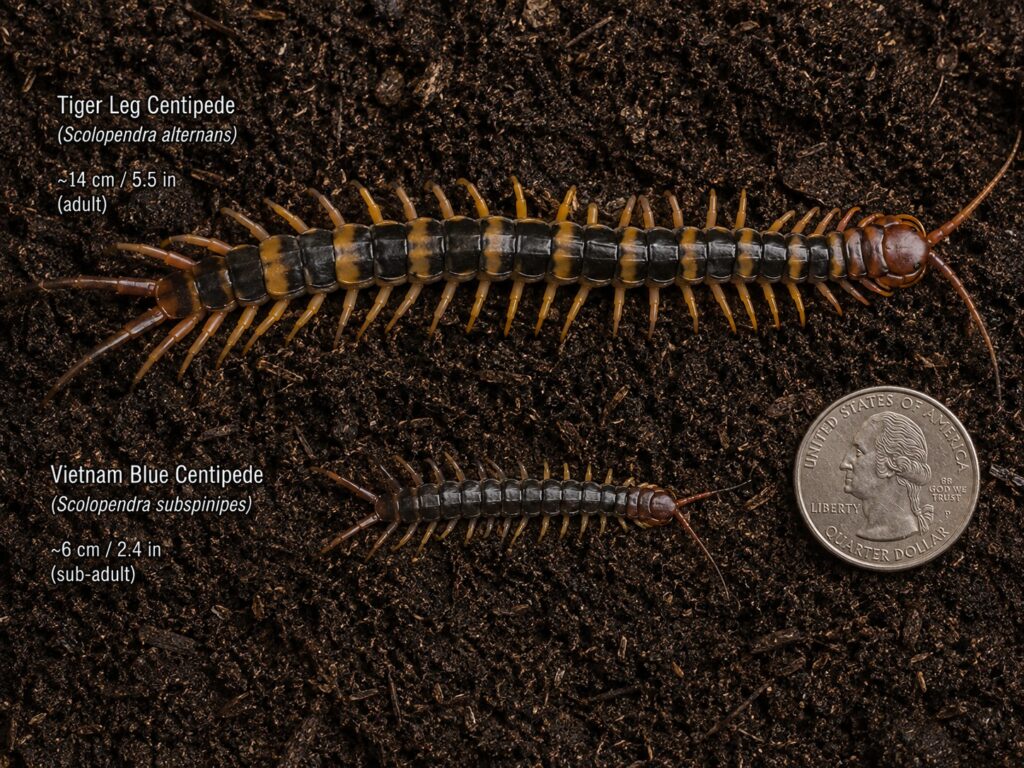
Tiger leg centipede (Scolopendra polymorpha). North American native, 4 to 6 inches, arid-adapted, captive bred stock available, and venom meaningfully milder than the tropical giants. This is the sensible entry point, covered in our tiger leg centipede care sheet.
Vietnamese or giant centipede (Scolopendra subspinipes). The classic large species at 8 inches or more, widely available, spectacular, and with a bite that produces severe pain and swelling lasting days. Not a first centipede. Details are in our giant centipede guide.
Chinese red head (Scolopendra subspinipes mutilans). A colour form of the above, sold separately and often at a lower price. Same care, same risk profile.
What to avoid initially: anything over 8 inches, anything wild caught of unknown species, and anything sold without a scientific name. Trade names in this hobby are inconsistent and a mislabelled animal may have a very different risk profile than the one you expected.
| Species | Size | Difficulty | Bite severity |
|---|---|---|---|
| S. polymorpha | 4 to 6 in | Intermediate | Moderate, hours to a day |
| S. subspinipes | 8 in and up | Advanced | Severe, days |
| S. dehaani | 8 to 10 in | Advanced | Severe, days |
The Risk, Stated Plainly
No centipede kept in the hobby is considered lethal to a healthy adult, and there are no antivenoms in routine use for them. That is the reassuring part and it is where most caresheets stop.
The rest of the picture: a large Scolopendra bite produces intense pain, significant local swelling, and in some accounts systemic effects such as nausea or fever, with symptoms persisting for days. Keepers who have been bitten describe it as among the worst pain they have experienced. Individual reactions vary, allergic responses are possible with any venom, and a bite warrants medical advice rather than stoicism.
The practical consequence is a rule rather than a judgement call: never handle a centipede. Not tentatively, not with gloves, not the calm-seeming one. Experienced keepers move them with a catch cup and a card, and that is the entire acceptable interaction.
The secondary risk is escape, which is arguably the bigger practical concern. An escaped centipede in a shared home is a serious problem, and it is the reason containment discipline matters more here than with any other invertebrate.
If a bite happens, the general advice is the same as for any venomous arthropod sting: wash the site, apply a cold compress, keep the limb still and elevated, and seek medical attention, taking a photograph of the animal rather than the animal itself. Do not cut, suck, or apply a tourniquet. Anyone with a known allergy to insect stings, or who develops symptoms beyond the bite site, should treat it as urgent. This is general guidance rather than medical advice, and a doctor is the right source for anything specific.
Living With Centipedes as Pets Day to Day
Daily: nothing. Glance at the enclosure. The animal is probably not visible.
Weekly: feed an adult roughly every 7 to 10 days, using long tongs through a partly opened lid. Check the water dish. Check substrate moisture.
Monthly: spot clean with tongs, only when you can see where the animal is.
Occasionally: a full substrate change or a rehouse, which is the only time you are near it, done inside a large bin with the door closed.
Realistically, you will see your centipede a handful of times a month, mostly at night or when feeding. Anyone expecting a display animal will be disappointed. The appeal is that when you do see it hunt, it is genuinely striking.
Because sightings are rare and feeding intervals long, the difference between a normal fast and a problem lives entirely in the dates. Logging feeds and refusals in InvertMate gives you something to check against rather than a vague impression that it has been a while.
Setup and Cost
The financial barrier is low, which is part of the appeal.
The animal: captive bred tiger legs are modestly priced, and larger tropical species vary considerably by size and locality. None of them approach the cost of a rare tarantula.
The enclosure: a 5 to 10 gallon tank or a plastic bin with a latching lid. Small and secure beats large. Ventilation holes must be smaller than the animal’s head capsule.
Substrate: 4 to 6 inches of packed coco fibre, topsoil, and sand, with a cork bark or slate hide and a shallow water dish.
Ongoing: feeder insects every week or two, and very little else.
The full build, including the containment details that matter most, is in our centipede enclosure and escape-proofing guide.
Total outlay is comparable to setting up a beginner tarantula, and the running costs are lower than most pets of any kind.
Buying Centipedes as Pets
Check the law where you live. Some jurisdictions restrict venomous invertebrates, and rules vary by country, state, and sometimes city. This is worth confirming before buying rather than after, and a local exotics keeper or reptile society is usually the fastest way to a reliable answer.
Buy on scientific name. Trade names are unreliable and a mislabelled animal may be a different size and risk profile than advertised. A seller who cannot tell you the species is a seller to avoid.
Captive bred where possible. It is available for S. polymorpha and some others. Wild caught animals arrive stressed, frequently carry mites, and are of unknown age, which matters for a species living 5 to 7 years.
Expect shipping stress. A newly arrived centipede may refuse food for weeks and stay buried. Set the enclosure up in advance, transfer it once, and leave it alone.
Buy the enclosure first. Have it built, sealed, and checked before the animal arrives, rather than improvising on the day.
Lifespan and Long-Term Commitment
Most kept species live 5 to 7 years, with some larger animals reported longer. That is a meaningful commitment for an animal that spends most of it out of sight.
Growth is gradual, with adults reaching full size in two to three years. Molting happens underground and takes one to several weeks, during which the animal is soft and defenceless and must not be disturbed.
Wild caught animals arrive of unknown age, which means a specimen bought as an adult may already be well into its life. Captive bred stock, where available, removes that uncertainty and tends to be healthier on arrival.
FAQ
Are centipedes good pets?
For the right keeper, yes. They are cheap to keep, simple to house, and genuinely impressive predators. They suit someone who wants to observe rather than interact, since they can never be handled and are frequently out of sight for weeks.
Are pet centipedes dangerous?
None kept in the hobby are considered lethal to a healthy adult, but large species deliver a bite causing severe pain and swelling that can last days. Individual reactions vary and a bite warrants medical advice. Never handle them.
What is the best beginner centipede?
The tiger leg centipede, Scolopendra polymorpha. At 4 to 6 inches it is smaller than the tropical giants, its venom is meaningfully milder, it tolerates a wide temperature range, and captive bred stock is available.
How long do pet centipedes live?
Typically 5 to 7 years, with some larger species reported living longer. They reach adult size in two to three years and continue molting throughout life, staying buried for one to several weeks each time.
Can you hold a centipede?
No. There is no safe way to handle one and nothing to gain from trying. They move faster than human reflexes, are looking for an exit rather than enjoying the experience, and deliver a genuinely painful defensive bite. Use a catch cup for transfers.
What do pet centipedes eat?
Live prey only: crickets, dubia roach nymphs, red runners, and mealworms, sized no longer than half the centipede’s body. Adults eat once every 7 to 10 days. Refusal for weeks normally signals an approaching molt.
Track Your Centipede with InvertMate
An animal you see a few times a month, that eats every ten days and buries for weeks to molt, is one you keep track of by record rather than observation. InvertMate lets you log feeding dates and refusals, record molts and surface sightings, and monitor the temperature and humidity your enclosure actually runs at. Free on the App Store & Play Store.