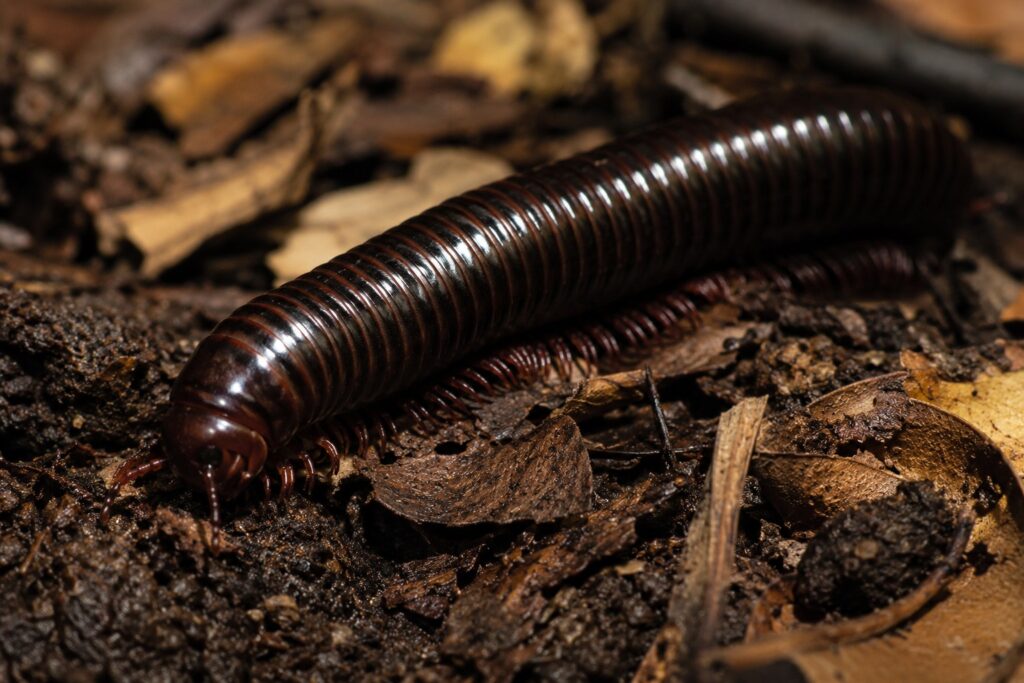
How long do millipedes live is a question worth asking before you bring one home, because the answer is longer than most people expect. Pet millipedes are not short-term novelty invertebrates. A giant African millipede (Archispirostreptus gigas) commonly lives 7 to 10 years in captivity, and smaller species typically manage 2 to 5 years. That puts millipedes among the longer-lived invertebrate pets available, and it makes getting one a genuine multi-year commitment.
Lifespan varies quite a bit depending on species, and it depends even more on the quality of care you provide. A millipede kept in deep, nutrient-rich substrate at the right humidity will comfortably outlive one kept in a dry, bare enclosure. This guide covers millipede lifespan by species, walks through the growth stages from egg to adult, explains the molting process that drives their growth, and outlines exactly what you can do to help your millipede reach the upper end of its potential.
Average Millipede Lifespan
Across the roughly 12,000 described millipede species, lifespan varies enormously. Some tiny soil-dwelling species live barely a year, while the large tropical giants kept as pets can approach a decade.
For the species most keepers actually own, a reasonable expectation is 5 to 10 years. Larger species consistently live longer than smaller ones, which is a pattern that holds across most of the group. Bigger millipedes take longer to reach maturity, molt more times along the way, and enjoy longer adult phases.
Captivity generally extends lifespan considerably. Wild millipedes face predators, drought, seasonal temperature extremes, and unreliable food supply. A captive millipede with stable humidity, consistent temperature, and a permanent supply of decaying wood and leaf litter avoids all of that. It’s common for a captive giant African millipede to outlive its wild counterparts by several years.
One important caveat: millipedes that wander into homes accidentally usually die within 2 to 4 weeks. They aren’t adapted to dry indoor conditions and quickly dehydrate. A millipede found in a basement isn’t a healthy specimen with years ahead of it, it’s an animal in the wrong environment. If you’re not certain what you’ve found is actually a millipede, our guide on millipede vs centipede differences covers how to tell them apart, and our giant centipede care guide covers the other possibility.
Millipede Lifespan by Species
| Species | Captive Lifespan | Notes |
|---|---|---|
| Giant African Millipede | 7-10 years | Largest hobby species, up to 12 inches |
| Bumblebee Millipede | 3-5 years | Striking banded coloration |
| Texas Gold / Ivory Millipede | 5-7 years | Popular, hardy, moderate size |
| Chocolate Millipede | 3-5 years | Smaller, fast-breeding |
| Desert Millipede | 5-8 years | Requires drier conditions |
| Common garden species | 1-3 years | Small temperate species |
Giant African millipede is the benchmark for longevity in the hobby. In the wild these reach roughly 5 to 7 years, but with good captive care 7 to 10 years is typical, and there are credible reports of individuals passing the decade mark. They reach sexual maturity at around one year of age but continue growing well beyond that. If you’re keeping one, our giant African millipede care guide covers the husbandry that gets them there.
Smaller hobby species like chocolate millipedes and bumblebee millipedes generally live 3 to 5 years. They mature faster, breed more readily, and have shorter overall lifespans, which makes them well suited to keepers who want an active, reproducing colony rather than a single long-term individual.
Growth Stages: Egg to Adult
Millipedes grow through a process called anamorphosis, which is genuinely unusual: rather than simply getting bigger with each molt, they actually add new body segments and new legs every time they shed.
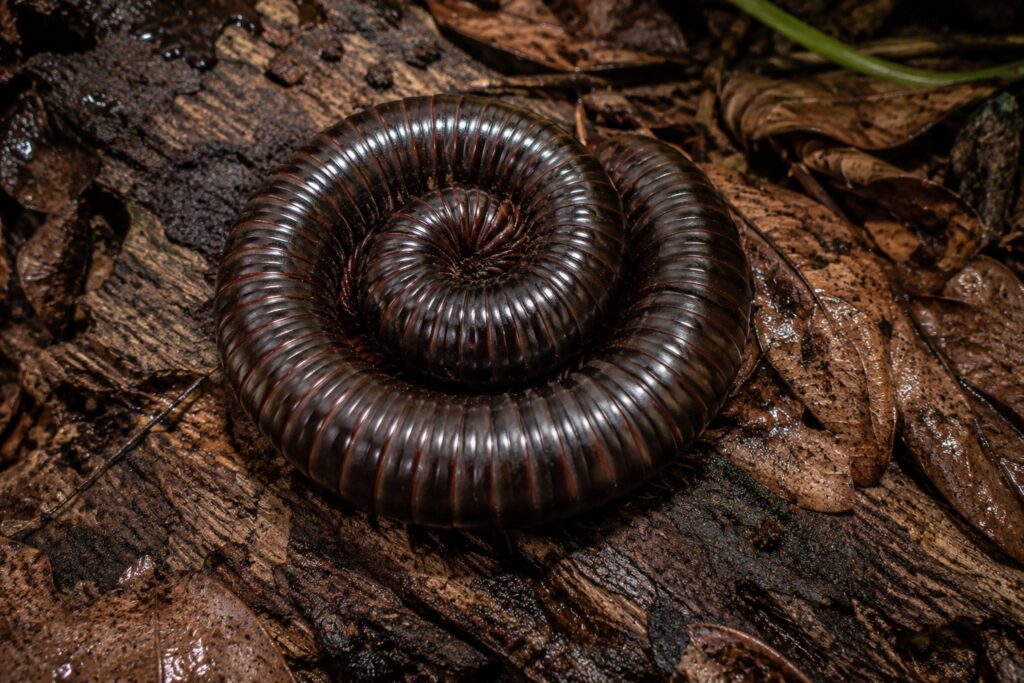
Egg stage. The female lays eggs in moist soil or substrate, sometimes in a constructed nest chamber lined with substrate material. Clutch size varies widely by species, from a few dozen to several hundred eggs. Incubation typically takes several weeks to around three months depending on species and temperature.
Hatching and first instar. Newly hatched millipedes are pale white and tiny, with only a few body segments and just three pairs of legs. They’re extremely vulnerable at this stage. Remarkably, many species molt for the first time within the first 12 hours after hatching. There’s no parental care once the eggs hatch, so the young are on their own immediately.
Juvenile instars. From here the millipede enters a long series of molts. With each one it adds body segments and additional leg pairs, gradually growing toward its adult form and darkening in color. This is where anamorphosis becomes visible: a young giant African millipede with a handful of segments slowly becomes an adult with 30 to 40 segments, each carrying four legs.
Maturity. Giant African millipedes reach sexual maturity at roughly one year, though full adult size takes considerably longer. Smaller species mature faster. Even after reaching maturity, many millipedes continue to molt periodically throughout their adult lives, which is different from many arachnids that stop molting once mature.
Molting: The Key to Growth and Risk
Molting is how millipedes grow, and it’s also the most dangerous period in their lives. Understanding it is essential to keeping one alive long-term.
Millipedes molt underground. They burrow into the substrate and construct a chamber, then remain sealed inside for days or even weeks while they shed the old exoskeleton and the new one hardens. This is why deep substrate matters so much. A general rule is to provide substrate at least as deep as the millipede is long. Without adequate depth, the millipede cannot construct a proper molting chamber, and molts fail.
During this underground period your millipede will simply disappear. New keepers frequently panic and dig up their millipede, assuming it has died or escaped. Do not do this. Disturbing a molting millipede can kill it. If your millipede has vanished into the substrate and conditions are correct, leave it alone and wait.
After a successful molt, millipedes eat their shed exoskeleton to reclaim the calcium and other nutrients it contains. This is normal and important, so never remove a discarded exoskeleton if you find one.
Failed molts are a leading cause of premature death. They’re usually caused by insufficient humidity, substrate that’s too shallow, or a calcium deficiency that leaves the new exoskeleton unable to harden properly.
What Affects How Long a Millipede Lives
Species sets the potential, but husbandry determines whether your millipede reaches it. A few factors do most of the work.
Humidity is the single biggest one. Millipedes lack the waxy waterproof layer that many arthropods have on their exoskeleton, which makes them highly prone to dehydration. Most tropical species need 70 to 80% humidity maintained consistently. Too dry and the animal dehydrates and fails to molt; too wet with poor airflow and you invite fungal problems.
Substrate depth and quality matter enormously, because substrate is simultaneously the millipede’s home, its food source, and its molting chamber. A deep mix of organic topsoil, rotting hardwood, and decaying leaf litter provides all three. Shallow or sterile substrate shortens lifespan dramatically. Our millipede care guide covers substrate mixes and depth requirements in detail.
Calcium availability is often overlooked. Millipedes need calcium to build each new exoskeleton, and a deficiency causes soft, failed molts. Cuttlebone or crushed eggshell in the enclosure solves this cheaply.
Temperature should sit around 70 to 80°F for most tropical species. Extremes in either direction shorten life. Cooler temperatures slow metabolism and growth; excessive heat stresses the animal.
Diet variety supports a healthier, longer-lived millipede. Decaying leaves and wood form the foundation, with fresh vegetables and occasional protein sources supplementing it.
Disturbance takes a toll. Excessive handling, frequent enclosure rearrangement, and digging up a burrowed millipede all add stress. Keeping track of feedings, molts, and enclosure conditions over time makes it much easier to spot the humidity dips and problems that shorten lifespan, without constantly disturbing the animal to check on it.
Common Issues That Shorten Lifespan
Most premature millipede deaths trace back to a short list of preventable problems. Dehydration is the most common, caused by humidity that’s too low or substrate that’s dried out, and it shows as a shriveled, inactive millipede. Failed molts result from shallow substrate, low humidity, or calcium deficiency, and are frequently fatal. Mites can infest a millipede, particularly on wild-caught specimens, and heavy infestations weaken the animal over time. Substrate contamination from pesticides, treated wood, or chemically fertilized soil can poison a millipede, which is why sourcing clean, organic materials matters. Disturbance during molting kills more captive millipedes than most keepers realize.
FAQ
How long do giant African millipedes live?
Giant African millipedes typically live 7 to 10 years in captivity with proper care, and roughly 5 to 7 years in the wild. Some captive individuals have been reported living beyond 10 years. They’re one of the longest-lived invertebrate pets in the hobby.
Do millipedes live longer in captivity or the wild?
Captivity, in nearly all cases. Captive millipedes avoid predators, drought, and food scarcity while enjoying stable temperature and humidity. Provided husbandry is correct, a captive millipede commonly outlives wild individuals of the same species by several years.
Why has my millipede disappeared into the substrate?
It’s almost certainly molting. Millipedes burrow underground and seal themselves into a chamber for days or even weeks while they shed and harden a new exoskeleton. This is completely normal. Do not dig it up, as disturbing a molting millipede can kill it.
Do millipedes keep growing their whole life?
They keep adding segments and legs through a process called anamorphosis with each molt during their growth phase. Many species continue to molt periodically even after reaching sexual maturity, unlike tarantulas and scorpions where adult females molt rarely and adult males stop entirely.
How can I tell how old my millipede is?
There’s no precise method. You can roughly estimate maturity from size and segment count, since millipedes add segments with each molt, but exact age is impossible to determine by appearance. If knowing the age matters to you, buy from a breeder who tracks hatch dates rather than a wild-caught specimen.
Track Your Millipede with InvertMate
Keeping a millipede for a decade means tracking a lot of molts and conditions. InvertMate lets you log each molt, monitor humidity and temperature trends, and set reminders for substrate changes and feeding, so you can give your millipede the long, healthy life it’s capable of. Free on the App Store.