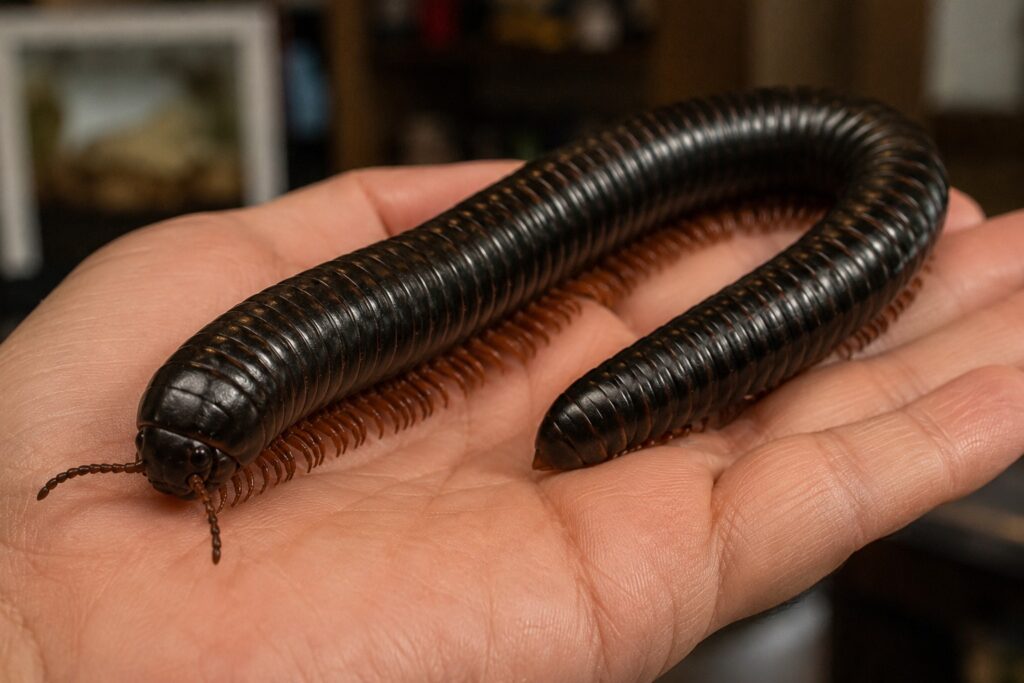
If you’ve never held a giant African millipede, you’re missing out. There’s something unexpectedly calming about a foot-long invertebrate slowly walking across your hand, hundreds of tiny legs moving in a synchronized wave. They can’t bite, they can’t sting, and they have roughly zero interest in hurrying anywhere. They’re the gentle giants of the invertebrate world.
Archispirostreptus gigas is one of the largest millipede species on the planet, reaching up to 12 inches in length, and they make genuinely rewarding pets for keepers of all experience levels. This guide covers everything you need: enclosure setup, substrate (which is more important than you might think), temperature and humidity, diet, handling, breeding, and common health issues.
Not sure whether you’re looking at a millipede or a centipede? They’re very different animals. Our millipede vs centipede guide breaks down the key differences. If it turns out the fast, predatory option is what you’re after, start with our giant centipede care guide instead.
Species Overview
The giant African millipede (Archispirostreptus gigas) is native to the lowland tropical forests and coastal habitats of East Africa, ranging from Mozambique up through Kenya. In the wild, they live on the forest floor among leaf litter, rotting logs, and loose soil, spending their time burrowing, foraging, and breaking down decaying organic matter. They’re one of nature’s most efficient decomposers, playing a critical role in nutrient recycling within their ecosystems.
Adults are impressive. They can reach 10-12 inches (25-30 cm) in length, with some individuals growing even longer. Their bodies are glossy black with lighter brown or orange coloring at the segment edges and on their legs. Each body segment carries two pairs of legs, adding up to around 256 legs in a fully grown adult. Despite the intimidating look, they’re completely docile. Their only defenses are curling into a tight spiral to protect their legs or secreting a mild irritant fluid (containing benzoquinones) from pores along their body. This fluid can stain skin slightly and may irritate eyes or mucous membranes, so washing your hands after handling is always a good idea.
Giant African millipedes are social animals and do well housed in pairs or small groups, which makes them more interesting to keep compared to solitary species. If 12 inches and a 20 gallon tank is more animal than you want, Texas gold millipedes are the smaller native alternative, reaching around 4 inches and needing roughly half the substrate depth.
| Attribute | Details |
|---|---|
| Scientific name | Archispirostreptus gigas |
| Adult size | 10-12 inches (25-30 cm) |
| Lifespan | 7-10 years |
| Difficulty | Beginner |
| Temperature | 72-85°F (22-29°C) |
| Humidity | 70-80% |
For more on millipede longevity and growth patterns, see our millipede lifespan guide.
Enclosure Setup
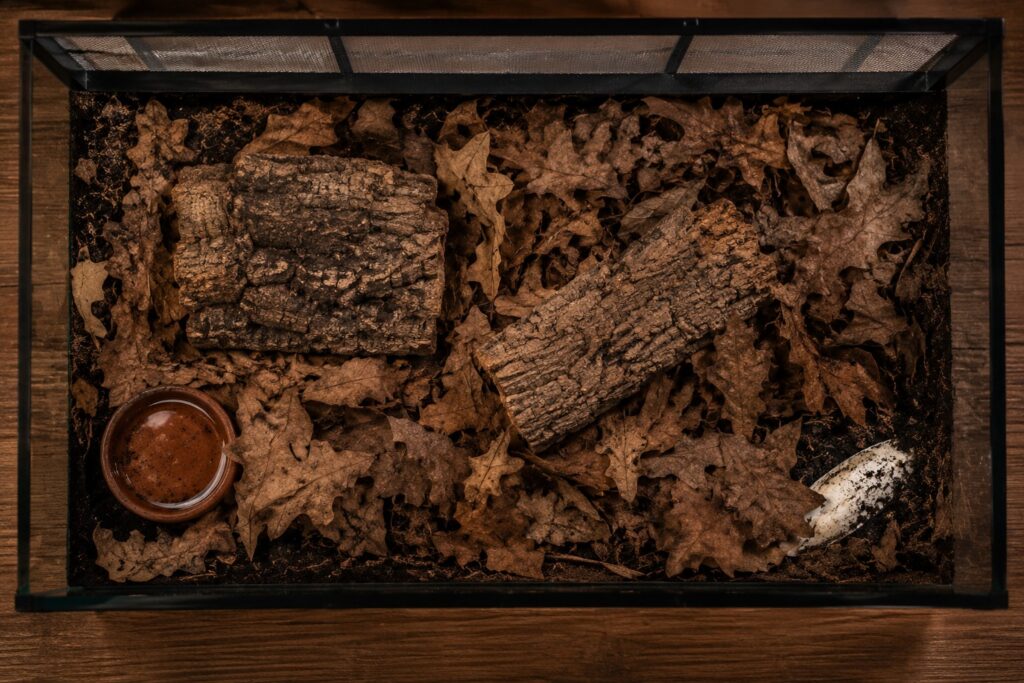
Giant African millipedes are terrestrial burrowers, so your enclosure should prioritize floor space and substrate depth over height. A 20-gallon long aquarium or a similarly sized plastic storage bin works well for one or two adults. If you’re keeping a small group of 3-4, aim for a 40-gallon breeder or equivalent.
Substrate is the most important element of millipede care. These animals don’t just live on their substrate, they live in it and eat it. A good millipede substrate is both their habitat and a significant part of their diet.
Provide a substrate depth of 4-6 inches minimum. The mix should include:
- Base (60-70%): A blend of organic topsoil (pesticide-free) and coconut coir
- Decaying hardwood (20-30%): Rotted hardwood pieces, flake soil, or crumbled white-rot wood. This is a primary food source. Avoid softwoods (pine, cedar) as the resins are toxic.
- Calcium source (5-10%): Crushed cuttlebone, crushed oyster shell, or calcium carbonate powder mixed into the substrate. Millipedes need calcium for their exoskeleton and consume it directly from the soil.
Some keepers also add a thin layer of sphagnum moss on top to help retain moisture.
Leaf litter should cover the entire substrate surface. Oak, magnolia, beech, or maple leaves all work. This serves as both food and cover. Millipedes will graze on leaf litter constantly.
Hides are important. Flat pieces of cork bark, curved bark pieces, or half-logs give your millipedes dark retreats to shelter under during the day. They’ll also burrow into the substrate on their own, so don’t be alarmed if you don’t see them for a day or two.
A shallow water dish should be available at all times. Use something low-profile so the millipede can’t fall in and struggle to get out. A terracotta saucer or plastic jar lid works well.
Lighting is not required. Millipedes are nocturnal and photophobic (they actively avoid light). Room light or indirect daylight provides a natural light cycle without any supplemental fixtures.
For a broader look at millipede enclosure principles, see our millipede care 101 guide.
Temperature & Humidity
Giant African millipedes come from tropical environments, and they need warmth and humidity to thrive. Fortunately, neither is difficult to provide.
Temperature should stay between 72-85°F (22-29°C) during the day. Nighttime drops to 70°F are fine. Most homes fall comfortably within this range without supplemental heating. If your house runs cool, a low-wattage heat mat placed under one end of the enclosure (never covering the entire bottom) can provide a warm zone. Always use a thermostat with any heat mat to prevent overheating, which dries out substrate fast.
Humidity is critical. Aim for 70-80% consistently. Millipedes breathe through spiracles along their body, and dry air can cause respiratory stress and molting problems. Mist the enclosure 2-3 times per week, focusing on the substrate and leaf litter rather than spraying the millipedes directly. The substrate should feel damp to the touch throughout, like a wrung-out sponge: moist but not waterlogged.
Not every millipede wants this. Desert millipedes are the arid-climate counterpart and need a very different setup.
A deep, moisture-retaining substrate does most of the humidity work for you. If humidity still drops too quickly, check your ventilation. Reduce mesh area or cover a portion of a screen lid with plastic wrap to retain more moisture.
A digital thermometer/hygrometer combo inside the enclosure lets you monitor conditions at a glance.
Diet & Feeding
Giant African millipedes are detritivores. They eat decaying organic matter, and in the wild, their diet consists primarily of rotting leaves, decomposing wood, and forest-floor debris. In captivity, you’ll replicate this with a combination of substrate-based foods and supplemental fresh foods.
Primary diet (always available in the enclosure):
- Leaf litter (oak, magnolia, beech, maple)
- Decaying hardwood and flake soil (mixed into the substrate)
- Calcium source mixed into the substrate (cuttlebone, oyster shell)
Your millipede will graze on these constantly. A thick leaf litter layer and calcium-enriched substrate cover the majority of their nutritional needs.
Supplemental foods (2-3 times per week):
- Vegetables: cucumber, zucchini, squash, sweet potato, carrot, mushrooms
- Fruits (sparingly): banana, melon, apple, strawberry
- Small amounts of protein: a pinch of fish flakes or a piece of dried shrimp occasionally
Millipedes tend to prefer food that’s already slightly soft or beginning to decompose. Don’t be surprised if they ignore a fresh piece of cucumber but swarm it two days later when it starts to soften. Remove any uneaten fresh food within 48 hours to prevent mold or pest issues.
Calcium deserves special emphasis. Millipedes need large amounts of calcium to build and maintain their hard exoskeleton, and demand increases dramatically during and after molting. Beyond mixing calcium into the substrate, keep a piece of cuttlebone or a pile of crushed eggshell available on the surface at all times. Dust fresh vegetables with a light coating of calcium powder for extra intake.
Foods to avoid: anything with salt, seasoning, pesticides, or citrus. Avoid softwoods and any wood treated with chemicals.
Behavior & Handling
Giant African millipedes are among the most handleable invertebrate pets you can keep. They’re slow, docile, and show no aggression toward humans. When you pick one up, it will typically walk calmly across your hands, its hundreds of legs producing a gentle tickling sensation that most keepers find oddly relaxing.
Handling tips:
- Let the millipede walk onto your hand rather than grabbing it. Scoop gently from underneath.
- Support the full body. They’re heavy for an invertebrate and can be injured by falls.
- Wash your hands after handling. Millipedes secrete a mild defensive fluid containing benzoquinones that can irritate eyes and mucous membranes. It may also leave a yellowish-brown stain on skin that fades within a day.
- Avoid handling during or immediately after a molt, when the exoskeleton is soft and the animal is extremely fragile.
Burrowing is normal and expected. Your millipede may disappear into the substrate for days at a time, especially leading up to a molt. Don’t dig it up. It will resurface on its own.
Molting happens periodically throughout the millipede’s life. Unlike many arthropods, millipede molts are mostly underground. The animal burrows deep, sheds its exoskeleton, and then consumes the shed skin to reclaim the calcium. You may not even see a molt happen. Signs that a molt is approaching include reduced activity, loss of appetite, and spending more time burrowed.
After molting, the new exoskeleton is pale and soft. The millipede will stay burrowed until it hardens, which can take several days to a week. Do not disturb it during this period, and remove any live feeder insects from the enclosure (crickets can injure a soft, freshly-molted millipede).
Social behavior: Giant African millipedes are gregarious and generally do well in groups. You’ll often find them resting together under the same hide or burrowed next to each other. Aggression between adults is rare.
Breeding
Breeding giant African millipedes in captivity is possible, though it requires patience and the right conditions. Captive breeding of this species is still relatively uncommon, so documented information is limited compared to something like tarantulas or isopods.
Sexing: Males can be identified by their gonopods, modified legs on the 7th body segment that are used for mating. In males, this pair of legs is noticeably smaller or appears as a gap compared to the surrounding leg pairs. Females have normal legs on every segment. Sexing is easiest in adults viewed from the underside.
Conditions for breeding:
- A mature pair (or small group with at least one male and one female)
- Deep substrate (6+ inches) for egg-laying
- Consistent warmth: 75-82°F
- High humidity: 75-80%
- Adequate nutrition, especially calcium and protein
- Minimal disturbance
Mating involves the male depositing a spermatophore, which the female collects. After fertilization, the female burrows deep into the substrate and constructs a small chamber where she lays her eggs. Clutch sizes vary, but 20-50 eggs per clutch have been reported. The female may remain underground with the eggs for an extended period.
Eggs hatch after several weeks (timing depends on temperature), and the tiny nymphs emerge with only a few body segments and legs. They gain more segments with each successive molt. Nymphs are very small and fragile, and should be kept in moist substrate with calcium available. Some keepers report cannibalism among juveniles, so providing adequate calcium and space may help reduce losses.
Growth is slow. It can take 2-3 years for a giant African millipede to reach full adult size.
Common Health Issues
Dehydration is the most common problem. If your millipede’s segments look wrinkled or shrunken, humidity and substrate moisture are too low. Increase misting, check that the substrate is damp throughout (not just on the surface), and make sure the water dish is full.
Mites are almost universal on wild-caught millipedes. You’ll often see tiny mite-like creatures riding on the millipede’s body. Most of these are commensal (harmless hitchhikers, not parasites) and don’t need treatment. However, if mite populations explode or you see mites concentrated around the spiracles (breathing pores), that can be a problem. Reducing humidity slightly and adding springtails to the enclosure helps manage mite populations.
Failed molts can occur if humidity is too low or calcium intake is insufficient. Since molting happens underground, you may not notice a failed molt until the millipede resurfaces looking damaged. Prevention is better than treatment: maintain humidity at 70-80% and always keep calcium available.
Pesticide exposure is a silent killer. Never use soil, wood, leaves, or produce that may have been treated with pesticides, herbicides, or fertilizers. Millipedes are extremely sensitive to chemical residues. Always source organic materials.
Stress from handling is worth mentioning. While these millipedes tolerate handling well, excessive handling (multiple times daily) can cause chronic stress. Keep sessions brief, especially with newly acquired animals that haven’t settled into their enclosure yet.
FAQ
Are giant African millipedes dangerous?
No. They have no venom, no stinger, and cannot bite in any meaningful way. Their only defense is curling into a spiral and secreting a mild irritant fluid. This fluid can irritate eyes and may stain skin, so wash your hands after handling. They’re one of the safest exotic pets you can keep.
How big do giant African millipedes get?
Adults typically reach 10-12 inches (25-30 cm) in length, making them one of the largest millipede species in the world. Some individuals may grow slightly longer. They’re also surprisingly heavy for an invertebrate, with a thick, cylindrical body.
Can you keep giant African millipedes together?
Yes. They’re social animals that do well in pairs or small groups. You’ll often find them resting together under hides or burrowing near each other. Aggression between adults is rare. Just make sure the enclosure is large enough and calcium is always available to prevent any competition.
How long do giant African millipedes live?
With proper care, expect a lifespan of 7-10 years. Some keepers have reported individuals living even longer. This makes them a genuine long-term commitment compared to many invertebrate pets.
Do giant African millipedes need a heat lamp?
Usually not. Room temperature in most homes (72-80°F) is within their comfortable range. If your house drops below 70°F regularly, a low-wattage heat mat on a thermostat placed under one end of the enclosure is the safest option. Avoid overhead heat lamps, which can dry out substrate quickly and create hot spots.
Track Your Millipede with InvertMate
Keep a detailed care log for your giant African millipede with InvertMate. Track molts, log substrate changes, monitor enclosure conditions, and set reminders for feeding and misting. Built for invertebrate keepers who care about the details. Free on the App Store.