The Arizona blonde tarantula is one of the longest-lived pets you can buy. A female can live 24 to 30 years, which means a spider bought today could still be in your care when you retire. It is calm, hardy, happy in a dry room-temperature setup, and native to the deserts of the American Southwest, where hikers see the wandering males crossing roads after the summer rains.
Aphonopelma chalcodes is also one of the slowest-growing tarantulas in the hobby, and it fasts for months at a time. Both of those catch new keepers out. This guide covers size and colour, the long life, a dry desert setup, feeding and fasting, temperament, the wild-caught question, and how it compares with other beginner species.
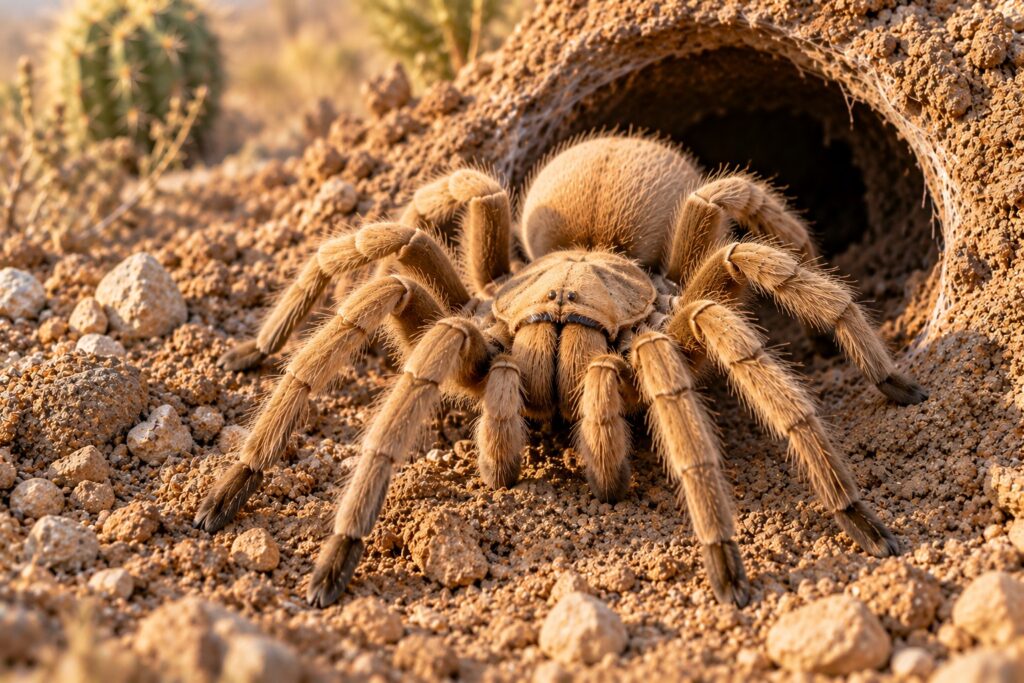
Arizona Blonde Tarantula at a Glance
| Attribute | Details |
|---|---|
| Scientific name | Aphonopelma chalcodes |
| Common names | Arizona blonde, desert blonde, Mexican blonde, western desert tarantula |
| Native range | Arizona, New Mexico and nearby parts of the southwestern US and northern Mexico |
| Habitat | Deep burrows in desert soil, often under stones |
| Adult leg span | About 3 to 5 inches |
| Lifespan | Females 24 to 30 years, males 5 to 10 |
| Type | Terrestrial and burrowing, New World |
| Temperature | 70 to 85F (21 to 29C) |
| Humidity | Low, dry substrate with a full water dish |
| Growth | Very slow |
| Difficulty | Beginner |
Blonde Female, Dark Male
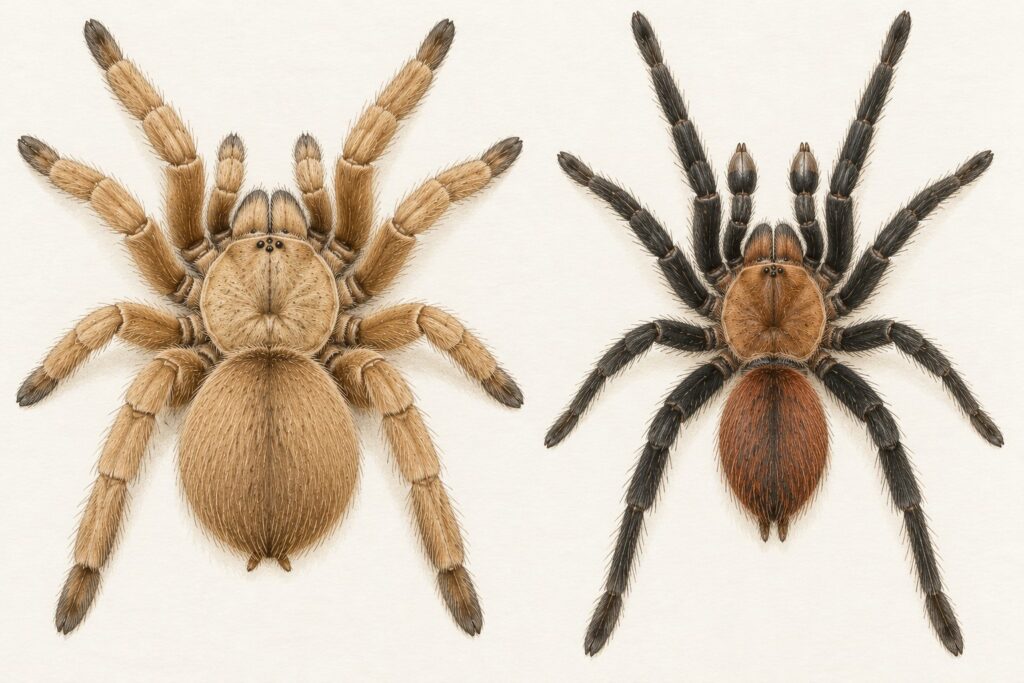
The two sexes look like different spiders as adults.
- Females are a fairly even tan to golden blonde, with a carapace covered in pale hair. That pale carapace is where the “blonde” name comes from.
- Mature males have black legs, a copper or bronze carapace and a reddish abdomen. They are slimmer, with longer legs, and carry the hooks on their front legs and swollen palp tips that mark a mature male in any tarantula.
- Juveniles of both sexes look like small, plain tan females until the male’s final molt.
Females have a body up to about 2 inches long and males somewhat less. Leg span in adults usually sits between 3 and 5 inches.
A 30-Year Spider
Arizona blondes live longer than almost any other tarantula commonly kept. Females are reported to reach 24 to 30 years. Males live 5 to 10 years, and like all male tarantulas, they die within months of their final molt.
That makes the sex of your spider the biggest single factor in how long you will keep it. A juvenile is a gamble. An adult female is close to a lifelong commitment, and worth planning for:
- Choose an enclosure you are happy to look at for decades.
- Arrange a backup keeper for travel and emergencies.
- Keep records. With molts years apart and fasts lasting months, notes are the only reliable history you will have.
The Slowest Grower You Can Buy
Arizona blondes grow extremely slowly. A sling can take several years to reach a couple of inches, and females can take ten years or more to mature. Molts are frequent when young and become yearly, or less often, in adults.
That slow pace is why most Arizona blondes in the trade are sold as adults or large juveniles, and why slings are both less common and a long-term project. Our guide to raising tarantula spiderlings covers the basics if you start small, but expect years, not months, before you have a sizeable spider.
Dry Desert Setup
Arizona blondes come from desert scrub and grassland where they dig deep burrows to escape the heat. In captivity they want a dry, warm, simple setup.
Enclosure: a low, wide container, about 10 by 10 inches for an adult, or a 5 gallon tank. Floor space matters more than height, and the gap between the substrate and the lid should be no more than about 1.5 times the leg span, so a climbing spider cannot fall far.
Substrate: 4 to 6 inches of coconut fibre mixed with additive-free topsoil and a little sand, packed firmly so a burrow holds its shape. Keep it dry. Many keepers moisten a small area once in a while so the spider can dig, then let it dry out.
A hide and a starter burrow: half a cork round pressed into the substrate, with a scrape or short tunnel under it. Many Arizona blondes dig their own burrow and rarely leave it.
A water dish, shallow and always full. This is the main source of moisture in a dry setup.
Ventilation: small holes on two opposite sides. Dry, moving air suits this species.
The general build for burrowing ground dwellers is in our guide to setting up a terrestrial tarantula enclosure, and sizing by leg span is in our tarantula enclosure size chart.
Temperature and the Winter Slowdown
Temperature: 70 to 85F suits it. Normal room temperature works for most of the year. If your home is cold, fix a heat mat to a side wall on a thermostat, never underneath, since a burrowing spider digs down to escape heat.
Humidity: low. Dry substrate and a full water dish are all it needs. Avoid misting.
Seasonal slowdown: many Arizona blondes become much less active through the colder months, eating little or nothing and staying in the burrow. Keepers usually let this happen, with room temperature at the cooler end and water always available. Appetite comes back in spring.
Feeding: Little and Not Often
Arizona blondes eat little and are known for long voluntary fasts.
- What to offer: crickets, dubia roaches, red runners or locusts. Prey no longer than the spider’s body.
- How often: slings every 5 to 7 days, juveniles every 7 to 10, adults every 2 to 3 weeks.
- Judge by the abdomen. A plump abdomen means it does not need to eat.
- Remove uneaten prey within 24 hours.
Fasts of several months are common, especially in adult females and through winter. Provided the abdomen is not shrinking and water is available, a fast is not a problem. The broader rules for feeders and refusals are in our guide to what tarantulas eat.
With fasts this long, it is easy to forget when the last meal was. Logging offers and refusals in InvertMate gives you real dates to check against, which matters most in the months when nothing seems to happen.
Calm, Slow and Rarely Defensive
Arizona blondes are calm and slow to react. They are reluctant to bite, and many tolerate routine maintenance without fuss.
Defence: like most New World tarantulas, they carry urticating hairs on the abdomen and may kick them when disturbed. Arizona blondes are less quick to do this than some species, but keep your face away from an open enclosure and wash your hands after maintenance.
Bite: rare. The venom is mild for people, usually compared to a bee or wasp sting. As with any bite or sting, seek medical advice if you have a strong reaction. The defensive differences between New World and Old World species are explained in our comparison of the two tarantula groups.
Handling: possible with a calm individual, but it adds risk and nothing for the spider. A fall is the real danger. If you handle at all, stay low and over a soft surface.
A Sealed Burrow Usually Means a Molt
Before a molt, an Arizona blonde stops eating, its abdomen darkens, and it may seal itself into its burrow for weeks. Many tarantulas molt lying on their backs, which is normal. Do not disturb it, remove any live prey, and wait a week or two after the molt before feeding again.
Because adults may molt only once a year or less, a long period of inactivity is easy to mistake for a problem.
Wild Caught or Captive Bred?
Many Arizona blondes in the pet trade have historically been collected from the wild, largely because the species is so slow to raise from slings.
Wild-caught adults are cheap and hardy, but their age is unknown, and an adult male may have only months left. Ask the seller whether the spider is male or female.
Captive-bred slings take years to grow but come with a known age and a full lifespan ahead.
Collecting your own: wild tarantulas are protected or regulated in some places, and rules vary by state and on public land. Check local wildlife rules before taking one from the wild. Wandering males seen after the summer rains are looking for mates and are best left where they are.
Arizona Blonde vs Other Beginner Tarantulas
| Arizona blonde | Curly hair | Chaco golden knee | |
|---|---|---|---|
| Scientific name | Aphonopelma chalcodes | Tliltocatl albopilosus | Grammostola pulchripes |
| Adult size | 3 to 5 inches | 5 to 6 inches | 7 to 8 inches |
| Moisture | Dry | Damp corner | Dry |
| Growth | Very slow | Slow to moderate | Slow to moderate |
| Appetite | Low, long fasts | Very keen | Reliable, long fasts |
| Female lifespan | 24 to 30 years | 10 to 15 years, reported past 20 | 20 to 25 years |
| Visibility | Often in its burrow | Often visible | Usually visible |
Choose the Arizona blonde if you want the longest-lived, lowest-maintenance spider and do not mind one that spends time in its burrow. Choose the curly hair for a keener feeder that is out more often.
Five Mistakes With Desert Blondes
- Damp substrate everywhere. This is a desert species. Keep it dry with a full water dish.
- Worrying about long fasts. Months without food are normal.
- Too much open height. A fall can be fatal.
- Buying an unsexed adult without asking. A male may live only months more.
- Disturbing a sealed burrow. It is probably molting.
FAQ
How big do Arizona blonde tarantulas get?
Adults usually reach 3 to 5 inches in leg span. Females have a body up to about 2 inches long, while males are slimmer with longer legs. Growth is very slow, so reaching full size takes many years.
How long do Arizona blonde tarantulas live?
Females are reported to live 24 to 30 years, among the longest of any tarantula. Males live about 5 to 10 years and die within months of their final molt.
Are Arizona blonde tarantulas good for beginners?
Yes. They are calm, hardy, tolerant of a simple dry setup and rarely bite. The main adjustments are accepting long fasts, very slow growth and a spider that may spend much of its time in a burrow.
Do Arizona blonde tarantulas need humidity?
No. They come from deserts and do best on dry substrate with a full water dish. Many keepers dampen a small area now and then to help with burrowing, but the enclosure should be dry most of the time.
Why is my Arizona blonde tarantula not eating?
Most often because it is in pre-molt, already well fed, or in its winter slowdown. Fasts of several months are normal for this species. Keep water available and check that the abdomen is not shrinking.
Is it legal to collect an Arizona blonde tarantula?
It depends on where you are. Rules vary by state and by land ownership, and some areas protect wild tarantulas. Check local wildlife regulations before collecting, and consider buying captive-bred instead.
Three Decades of One Spider
Molts a year apart, fasts lasting a season, and a pet that may outlive your car loan: the Arizona blonde’s history only exists if someone writes it down. InvertMate records every molt with a dated photo, logs feeding and refusal dates through the long winter fasts, and reminds you to refill the water dish. Free on the App Store and Google Play.