Hermit crabs are omnivorous scavengers that eat fruit, vegetables, nuts, seeds, protein, and calcium sources. A good diet rotates several fresh foods rather than relying on commercial pellets, which are often preserved with copper sulphate and ethoxyquin. Calcium from cuttlebone or crushed oyster shell must be available at all times.
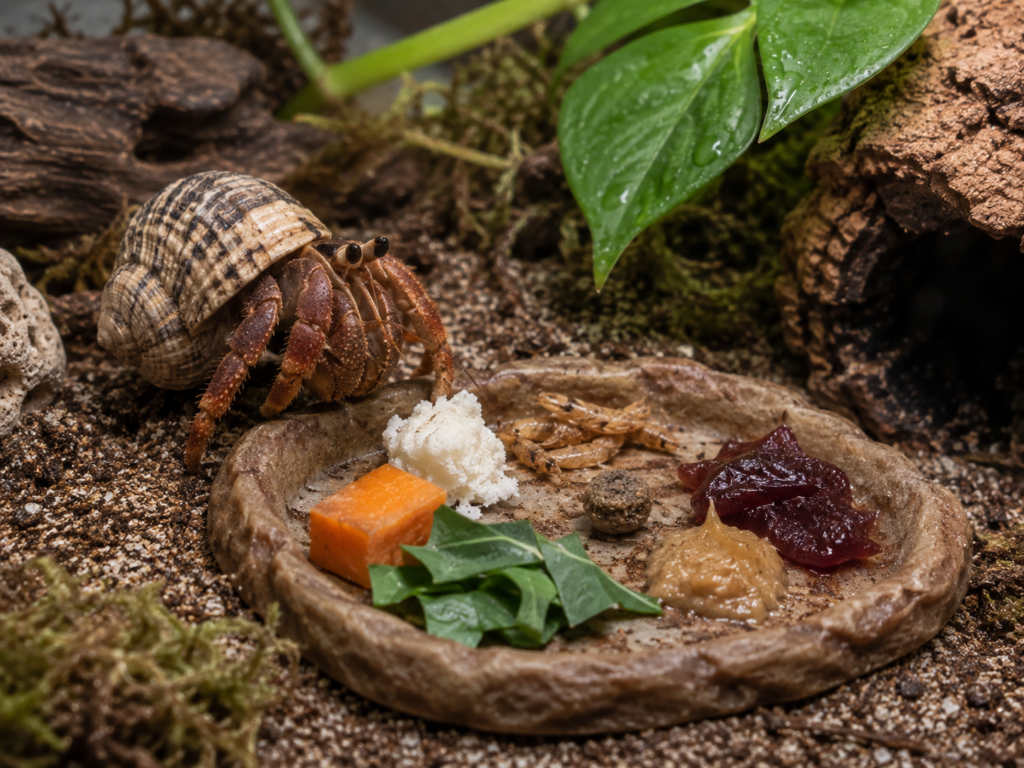
The pet shop answer is a tub of pellets and a corner of the tank, and it is one of the main reasons hermit crabs bought as starter pets rarely reach a fraction of their potential lifespan. This guide covers what they eat in the wild, a safe foods list, what to avoid and why, calcium and protein specifically, and a workable feeding routine.
What Hermit Crabs Eat in the Wild
Land hermit crabs forage along tropical coastlines at night, working the tide line and the vegetation behind it. Their natural diet is genuinely varied: fallen fruit, decaying leaf litter, seeds, dead insects, washed-up fish and shellfish, algae, and scavenged carrion.
Two things follow from that.
Variety is the requirement, not a bonus. An animal adapted to eating whatever the tide brought in does poorly on a single food. Rotation matters more than any individual item on the list.
They are scavengers, not grazers. They eat opportunistically at night and much of what they find is decomposing. This is why food left overnight is normal and food left three days is a mite problem.
The tank environment that supports all this is covered in our guide to building a proper crabitat.
Safe Foods
Offer small amounts of several items and rotate. Everything below is fresh, unseasoned, and free of preservatives.
Fruit: mango, papaya, banana, apple, coconut, melon, berries, grapes, pineapple. Fruit is generally the most readily accepted category.
Vegetables: carrot, sweet potato, squash, courgette, spinach, kale, broccoli, seaweed, and unsalted dried seaweed sheets.
Protein: unseasoned cooked chicken or fish, freeze-dried shrimp or krill, bloodworms, mealworms, crickets, and boiled egg including the crushed shell.
Nuts and seeds: unsalted almonds, walnuts, pecans, sunflower seeds, and unsweetened shredded coconut.
Other accepted items: oats, unsweetened cereal, cooked rice or pasta in small amounts, honey in tiny quantities, and dried leaf litter such as oak and magnolia, which many crabs graze on steadily.
Presentation: small pieces, on a shallow dish or a flat stone rather than directly on the substrate, which keeps sand out of the food and makes leftovers easy to remove.
Calcium and Why It Matters Most
Calcium is the single most important element of the diet and the one most often missing.
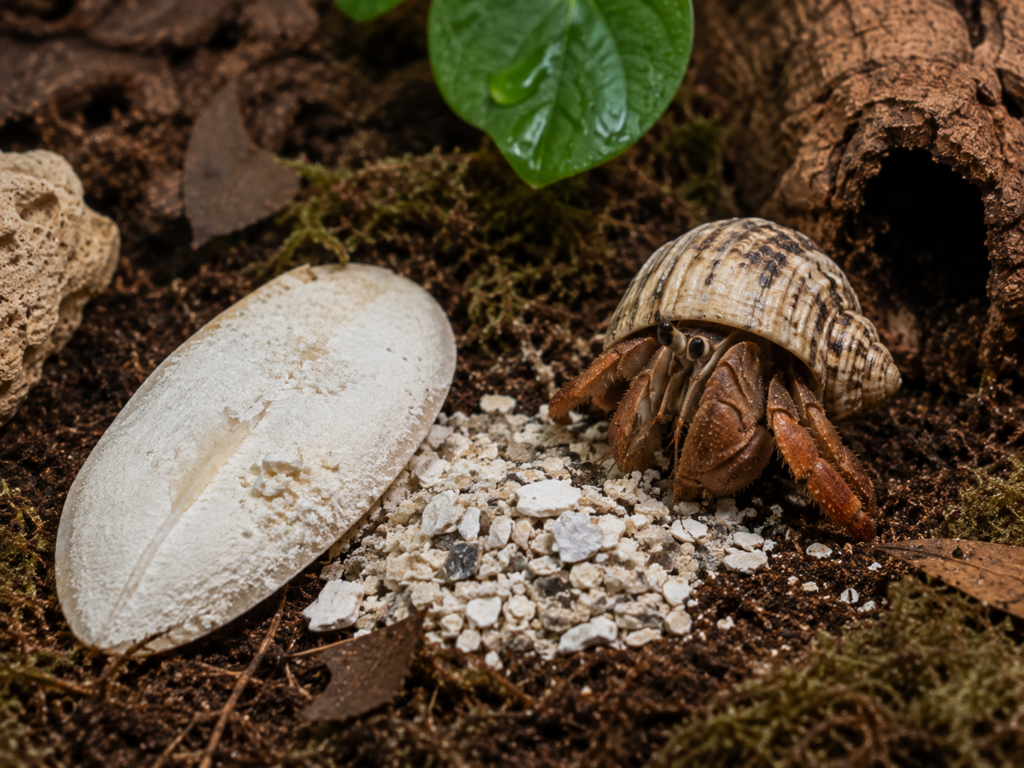
Hermit crabs need calcium carbonate to harden a new exoskeleton after each molt, and demand spikes in the weeks before and after. A crab short on calcium may molt badly or fail to molt at all, and molt failure is the leading cause of death in captive crabs.
Sources to keep permanently available:
- Cuttlebone, the standard choice, sold in any pet shop
- Crushed oyster shell, sold as poultry grit, cheap and effective
- Crushed eggshell, boiled and dried first
- Coral sand or aragonite, in small amounts
Leave a shed exoskeleton in the tank. Crabs eat their own exuvia to recover the calcium in it, and removing it takes away a resource they need at exactly the wrong moment. The whole cycle is covered in our guide to what happens when a crab buries.
Do not rely on a commercial food to supply calcium. Offer a dedicated source and replace it as it disappears.
One thing that does not count is the shell the crab is living in. Borrowed shells are not eaten and supply no calcium, which is one reason a good spread of spares matters separately from diet.
Protein and Feeding Frequency
Protein matters more than most caresheets suggest, particularly around molting and for growing crabs.
Offer protein two or three times a week rather than daily. Freeze-dried shrimp, bloodworms, unseasoned cooked fish or chicken, and mealworms all work.
Signs a crab wants more protein: increased interest in any protein offered, and in a group, crabs scavenging aggressively. Some keepers report reduced shell-related aggression when protein is adequate.
Do not overdo it. Uneaten protein rots quickly in a warm humid tank and attracts mites faster than any other food.
Foods to Avoid
Commercial hermit crab pellets are the contentious one. Many contain copper sulphate and ethoxyquin, both preservatives that keepers widely regard as harmful to crabs over time. The evidence is largely keeper consensus rather than published research, and it is worth being honest about that. What is not in dispute is that a varied fresh diet is better regardless, so the practical answer is to treat pellets as unnecessary rather than to argue about the chemistry.
Anything salted or seasoned. Salt in food is different from a salt water pool and is harmful.
Citrus, which is widely avoided, though keepers disagree on how strictly.
Onion, garlic, and anything from the allium family.
Dairy beyond trace amounts.
Processed human food: anything with preservatives, sugar, artificial colours, or oils.
Produce from a treated garden, which may carry pesticide or herbicide residue.
Wood, leaves, or plants from conifers, whose resins are harmful.
Iceberg lettuce, which is nutritionally close to nothing.
A Workable Feeding Routine
Daily: offer a small selection, two or three items from different categories. A piece of fruit, a piece of vegetable, and a pinch of protein or seed is plenty for a small group.
Remove uneaten fresh food every morning. In a tank at 80% humidity, food left more than 24 hours grows mold and attracts grain mites.
Keep calcium and dried items permanently available. Cuttlebone, leaf litter, and dried seaweed can stay in the tank.
Rotate categories across the week rather than repeating the same items. Crabs show clear preferences and will ignore a food they had yesterday.
Both water pools, always. Fresh dechlorinated water and marine salt water are as much a part of the diet as anything solid, and crabs drink from both. Which salt to use and which to avoid is covered in our guide to salt water for hermit crabs.
A cleanup crew helps. Springtails and small isopods process what the crabs miss, which reduces the mite risk considerably. Setting one up so the crabs don’t eat it first is covered in a springtail and isopod cleanup crew.
Crabs are nocturnal, so much of the eating happens while you are asleep and the only evidence is what has gone by morning. Noting which foods actually disappear in CrabPod, our free isopod and hermit crab care app builds a picture of what your crabs will genuinely eat rather than what they are supposed to.
Preparing and Sourcing Food
Small details that make a practical difference.
Wash everything. Fresh produce carries pesticide residue even when it looks clean, and crabs are far smaller than the animals those residues were assessed against. Organic where affordable, washed thoroughly either way.
Cut small. Pieces the size of a fingernail for a medium crab. Large chunks go uneaten, rot, and attract mites while the crab picks at one corner.
Cook protein plainly. Boiled or baked, no oil, no salt, no seasoning of any kind. Let it cool fully before it goes in.
Dry what you want to keep. Dehydrated fruit, vegetables, and shrimp last indefinitely and can be left in the tank longer than fresh food, since they do not rot at the same rate. Many keepers dry a batch and use it as the base of the rotation, with fresh food on top.
Collect leaf litter carefully. Oak and magnolia are the standards. Take fallen leaves from somewhere away from roads and treated ground, and freeze or bake them before use if you prefer.
Avoid anything from a garden centre unless you can confirm it was untreated. Ornamental plants are routinely sprayed.
Freezing is your friend. Portion protein into small amounts and freeze it, then thaw what you need. A bag of freeze-dried shrimp lasts months and removes the temptation to use something processed because it was to hand.
What Hermit Crabs Actually Prefer
Worth setting expectations, because new keepers often conclude their crabs are unwell when they are simply picky.
Crabs show strong and inconsistent preferences. A food ignored for weeks may suddenly become the favourite, and a group of five crabs will not agree with each other. This is normal for an opportunistic scavenger.
Commonly popular: mango, papaya, coconut, freeze-dried shrimp, bloodworms, and scrambled or boiled egg.
Frequently ignored at first: leafy greens, most vegetables, and anything offered repeatedly.
The practical approach is to offer two or three items nightly, note what disappears, and rotate rather than trying to find one food they all like. There is no single correct diet, and a crab eating a rotating variety is doing better than one eating its favourite every day.
When a Crab Stops Eating
A crab that stops eating is usually not sick.
Most likely: pre-molt. Crabs often eat heavily and then stop before burying. Combined with lethargy, cloudy eyes, or an ashy exoskeleton, this is the normal sequence.
Second most likely: boredom with the food. Rotate the offering and see whether interest returns.
Third: conditions. Temperature below 72F, low humidity, or a fouled water pool all suppress appetite.
Do not panic over a few days. A crab may eat almost nothing for stretches and be entirely fine. Routine care, including the conditions that support appetite, is covered in our hermit crab care guide.
FAQ
What do hermit crabs eat?
Fruit, vegetables, nuts, seeds, protein such as freeze-dried shrimp or unseasoned cooked fish, and a permanently available calcium source. Variety matters more than any single food, since they are opportunistic scavengers adapted to eating whatever they find.
Can hermit crabs eat fruit?
Yes, and it is usually the most readily accepted category. Mango, papaya, banana, apple, coconut, melon, and berries all work. Offer small unseasoned pieces and remove anything uneaten within 24 hours to avoid mold and mites.
Do hermit crabs need calcium?
Yes, and it is the most important part of the diet. They need calcium carbonate to harden a new exoskeleton after each molt. Keep cuttlebone or crushed oyster shell available at all times, and leave any shed exoskeleton in the tank.
Are commercial hermit crab pellets safe?
Many contain copper sulphate and ethoxyquin, preservatives that keepers widely consider harmful over time, though this rests on keeper consensus rather than published research. A varied fresh diet is better regardless, which makes pellets unnecessary either way.
How often should I feed hermit crabs?
Offer a small selection daily and remove uneaten fresh food each morning. Protein two or three times a week is enough. Calcium and dried items such as leaf litter can stay in the tank permanently.
Why is my hermit crab not eating?
Most often an approaching molt, particularly alongside lethargy or cloudy eyes. Other causes are boredom with the same foods, a temperature below 72F, or low humidity. A few days of poor appetite is not itself a concern.
Track Your Crabs with CrabPod
Crabs eat at night, so what you learn about their preferences comes from what has vanished by morning rather than from watching. CrabPod lets you log which foods actually get eaten, set reminders for calcium and water changes, and track each crab through its molt cycle. Free on the App Store.