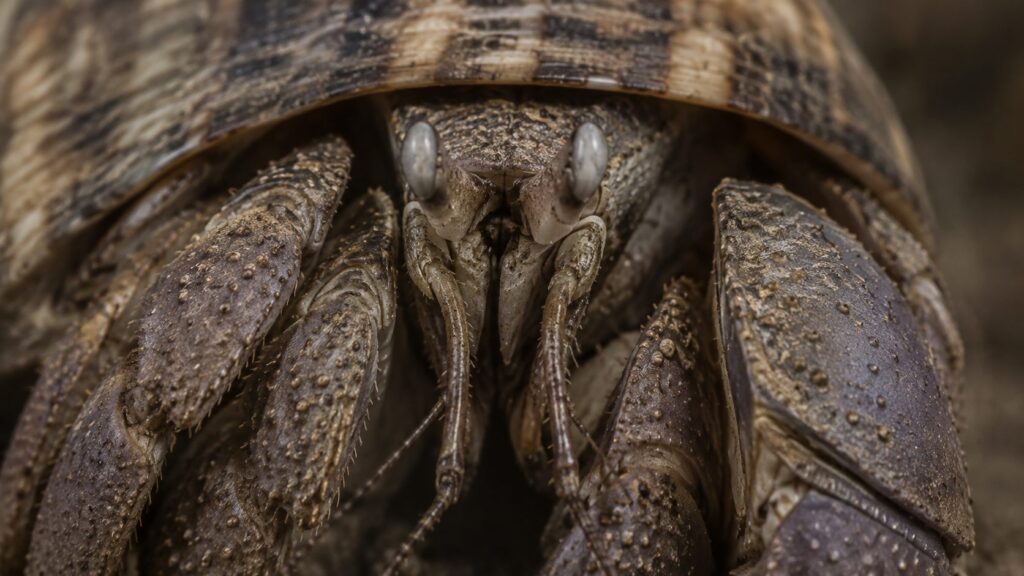
Hermit crab molting takes 4 to 8 weeks for an average crab, and nearly all of it happens underground. The crab buries itself completely, sheds its exoskeleton, eats it for the calcium, then waits for the new one to harden. Digging up a molting crab usually kills it.
Nearly every hermit crab death that gets blamed on a mystery illness is actually a molt that went wrong or a molt that a well-meaning keeper interrupted. This guide covers the pre-molt signs, what happens underground, the realistic timeline by size, how to tell a molting crab from a dead one, and the surface molt situation that does need your attention.
Why Hermit Crabs Molt
A hermit crab’s exoskeleton does not grow. To get bigger, the crab has to build a new, larger one underneath the old one and then shed it, a process called ecdysis. Everything else about molting follows from that constraint.
The crab absorbs water to swell its body and split the old shell, works itself free, then hardens the new exoskeleton over several weeks. During that hardening phase it is soft, defenceless, and completely unable to protect itself, which is why it does the whole thing buried underground.
This is also when regeneration happens. A crab that lost a leg or a claw will regrow it across one or several molts, starting as a small pale limb bud and reaching full size gradually.
Ecdysis works the same way across arthropods, and the comparison is useful if you keep anything else. Isopods shed in two halves rather than all at once, and the intervals and warning signs differ, which isopod care and colony basics covers for the species most people keep alongside crabs.
| Stage | What happens | Duration |
|---|---|---|
| Pre-molt | Lethargy, heavy eating, then digging down | 1 to 4 weeks |
| Underground | Exoskeleton splits, crab sheds and eats it | 2 to 6 weeks |
| Hardening | New exoskeleton firms up, still buried | 1 to 3 weeks |
| Surfacing | Crab emerges, resumes eating, pale at first | Days |
Pre-Molt Signs
Recognising pre-molt matters, because it tells you to stop interfering rather than to intervene.
Common signs, in rough order of appearance:
- Heavy eating and drinking. A crab building reserves may eat noticeably more for a week or two.
- Ashy or dull exoskeleton. The colour goes flat and grey compared to a healthy crab’s tone.
- Cloudy or whitish eyes. One of the more reliable indicators.
- Lethargy. Slow movement, less climbing, long periods sitting still.
- A gel limb. A soft, pale, water-filled bump where a lost limb is regenerating. This is a definite pre-molt sign, not an injury.
- Digging. Repeated tunnelling, sometimes with several false starts before it settles.
- Loose or dragging limbs. The old exoskeleton beginning to separate.
- Hanging out of the shell. Some crabs sit partly out of the shell, which looks alarming and is often normal.
Not every crab shows every sign, and some bury with almost no warning at all. Once a crab is down, treat it as molting regardless of what preceded it.
The Timeline by Size
Size drives duration more than anything else.
| Crab size | Typical total molt time | Frequency |
|---|---|---|
| Small (under 1 inch) | 2 to 4 weeks | Every 2 to 3 months |
| Medium (1 to 2 inches) | 4 to 8 weeks | Every 6 to 12 months |
| Large (2 inches and up) | 8 weeks to 6 months | Every 12 to 18 months |
Those ranges are wide because the variation is real. A large purple pincher can stay buried for months, and keepers routinely panic somewhere around week ten. Temperature, humidity, and how much the crab had eaten beforehand all shift the timing.
Since intervals this long are impossible to hold in your head across several crabs, a dated log is genuinely useful. Recording the day each crab goes down in CrabPod, our free isopod and hermit crab care app means that at week ten you can check the record instead of guessing, which is usually the difference between waiting and digging.
What Not to Do
This section matters more than the rest of the article.
Do not dig up a buried crab. Not to check on it, not to see if it is alive, not to move it. A molting crab that is exposed mid-process usually dies. If you have already started digging, stop and cover it back over gently.
Do not isolate a molting crab. The old advice was to move molters into a separate container. It is now widely regarded as harmful: the move itself disturbs the crab at its most vulnerable, and an isolation tub rarely holds the temperature and humidity of the main tank. Leave it where it is.
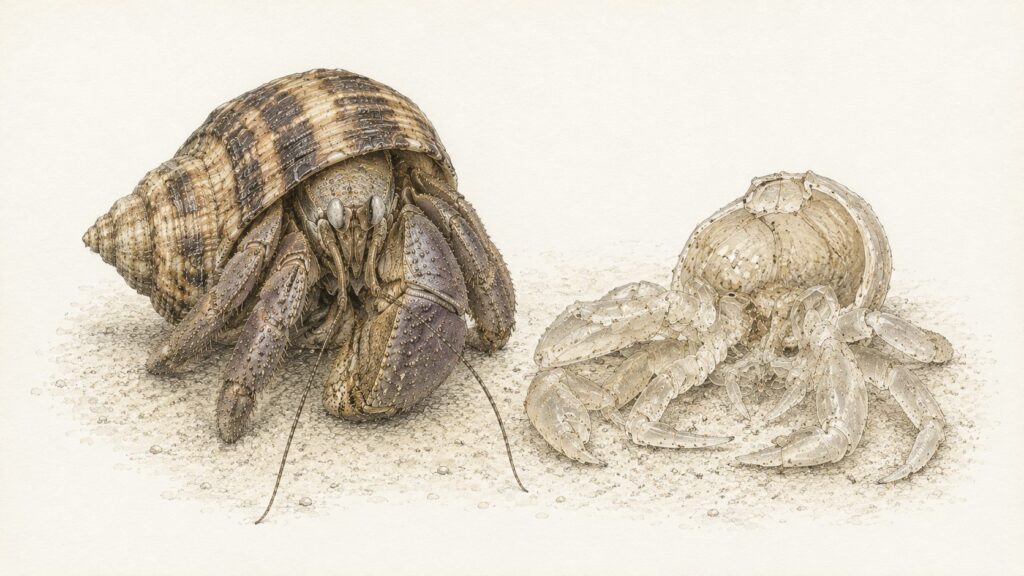
Do not remove what looks like a dead crab. A freshly molted crab lying beside its own shed exoskeleton looks exactly like a corpse next to a living crab. Look closely before removing anything.
Do not mist or flood the substrate above a molter. Water pooling into a molt tunnel drowns the occupant.
Do not rearrange the tank. Decor moved above a buried crab can collapse the tunnel.
Do not feed into the burrow. The crab will eat when it surfaces.
The one thing you should do is keep the rest of the tank running properly: both water pools filled, correct humidity, stable temperature, and food available for the crabs that are up.
Molting or Dead? How to Tell
This is the question people search at 1am, and the honest answer is that patience beats certainty.
Smell is the clearest test. A dead hermit crab produces an unmistakable rotting fish odour within a day or two. A molting crab, even one lying motionless out of its shell, does not smell. If there is no smell, do not remove it.
A shed exoskeleton is not a dead crab. The empty exuvia is a perfect hollow replica, translucent and light, usually split along the back. A dead crab is solid, heavier, and often partly out of its shell in a limp posture.
Leave the exoskeleton in the tank. The crab eats it to recover calcium, and removing it takes away a resource it needs.
When in doubt, wait. There is no cost to waiting another two days and a serious cost to being wrong. If the smell test is negative, cover it and leave it.
If a crab is genuinely dead, remove it along with any fouled substrate around it, and check your temperature, humidity, and both water pools, which is where the cause usually lies. The full setup is covered in our guide to building a proper crabitat.
Surface Molting
Occasionally a crab molts on the surface instead of burying. This one does need attention, because it usually means something is wrong.
Common causes: substrate too shallow to tunnel, substrate the wrong consistency so tunnels collapse, overcrowding, or a temperature or humidity problem making conditions unsuitable underground.
What to do: leave the crab where it is, keep humidity up, and protect it from tankmates, who will harass or cannibalise a soft crab. A barrier of substrate or a carefully placed shelter works better than moving the animal. Then fix the underlying cause: six inches of substrate minimum, mixed to hold a tunnel shape.
A surface molt is survivable, but it is a warning about the tank rather than a quirk of the crab.
Supporting a Healthy Molt Cycle
Everything here is preventative and all of it happens before the crab buries.
Deep, correctly mixed substrate. Six inches minimum, or three times the height of the largest crab’s shell. Five parts play sand to one part coconut fibre, moistened with saltwater until it holds shape like damp sandcastle sand. The squeeze test is the same one used for a moisture-gradient invertebrate bin: it should hold its form without water beading out.
Constant calcium. Cuttlebone, crushed oyster shell, or crushed eggshell available at all times. Crabs consume it heavily before and after molting, and where calcium fits in the wider diet covers the other sources worth rotating in.
Both water pools, always. Dechlorinated fresh water and marine saltwater, both deep enough to submerge in. Crabs need saltwater for the molting process, and a tank with only fresh water produces chronic molt problems, which is explained further in why both pools matter.
Stable warmth and humidity. 75 to 85F and 75 to 85% relative humidity, measured with digital gauges. Drops in either can stall a molt.
Spare shells in a range of sizes. Many crabs change shells after molting, and a crab with nowhere to upgrade may be forced back into a shell that no longer fits. A crab that surfaces after molting is larger and may want an upgrade, which is why a good spread of spare shells matters most in the weeks afterward.
The routine care that keeps all of this stable is covered in day to day hermit crab care.
Common Molt Problems
Stalled molt. A crab buried far longer than expected. Usually temperature, humidity, or a calcium shortfall. There is nothing to do but hold conditions steady and wait.
Incomplete molt. Part of the old exoskeleton remains attached. Often fatal, and usually traced to low humidity or insufficient calcium.
Cannibalism after a surface molt. Tankmates attacking a soft crab. Protect with a barrier rather than by relocating the molter.
Repeated shell changes after molting. Normal. Offer several spares in bracketing sizes.
Loss during the first month after purchase. Frequently a molt that the crab was already due when it arrived, compounded by shipping stress. Keep the tank stable and do not intervene.
FAQ
How long does hermit crab molting take?
Two to four weeks for a small crab, four to eight for a medium one, and anywhere from eight weeks to six months for a large crab. The crab stays buried for nearly all of it. Long absences are normal and not a cause for digging.
How do I know if my hermit crab is molting or dead?
Smell is the reliable test. A dead crab smells strongly of rotting fish within a day or two, while a molting crab does not smell at all. A shed exoskeleton is hollow, light, and translucent, unlike a dead crab, which is solid and heavier.
Should I separate a molting hermit crab?
No. Isolating a molter was standard advice years ago and is now considered harmful, since the move itself disturbs the crab and separate containers rarely hold correct humidity and temperature. Leave it buried where it is.
Why is my hermit crab molting on the surface?
Usually because it cannot molt underground: substrate too shallow, wrong consistency, overcrowding, or unsuitable conditions below. Protect the crab from tankmates, keep humidity high, and then correct the substrate depth and mix.
Do hermit crabs eat their own exoskeleton?
Yes, and you should leave it in the tank. The shed exoskeleton is a significant calcium source that the crab uses to harden its new one. Removing it deprives the crab of a resource it needs during recovery.
How often do hermit crabs molt?
Small crabs every two to three months, medium crabs every six to twelve months, and large crabs perhaps once a year or less. Molting slows considerably as a crab grows, which is why a large crab can appear inactive for long stretches.
Track Molts with CrabPod
A crab that goes down in March and surfaces in June is impossible to track from memory, especially with several crabs in one tank. CrabPod lets you log the day each crab buries, record surfacing dates to build a molt history, and monitor the temperature and humidity trends that determine whether a molt succeeds. Free on the App Store.