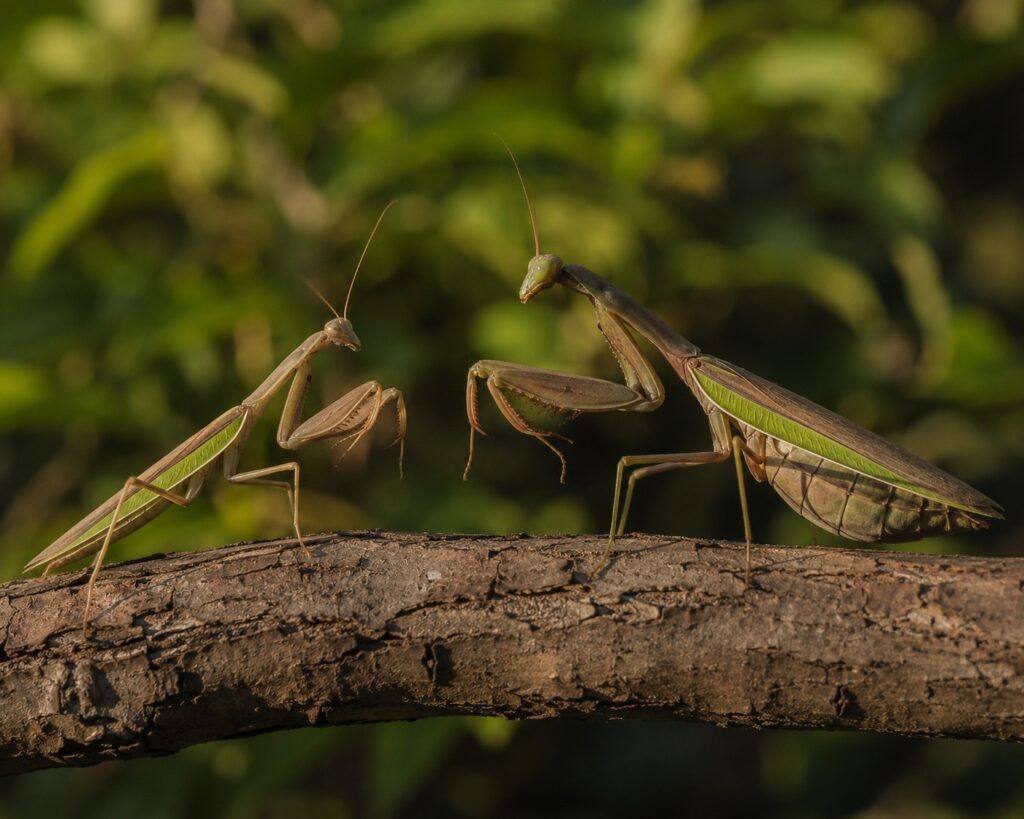
Why do female praying mantis eat the male? It’s one of the most famous (and disturbing) facts about these insects, and it raises an obvious question: what possible advantage could there be to killing your mate? The answer, according to decades of scientific research, is surprisingly practical. Sexual cannibalism in praying mantises isn’t random aggression or a mistake. It’s an evolved reproductive strategy that directly benefits the female’s offspring, and in a strange twist, the male’s genetic legacy too.
This article breaks down the real science behind sexual cannibalism in mantises: why it happens, how often it actually occurs (it’s less frequent than you think), what it means for the offspring, how males try to avoid it, and what mantis keepers should know if they’re planning to breed.
The Short Answer: Nutrition for Eggs
The primary reason female praying mantises eat males is nutrition. Producing eggs is enormously energy-intensive for female mantises. A single ootheca (egg case) can contain 100-300+ eggs, and building all of those eggs requires significant protein and amino acids. The male’s body provides a massive nutritional boost at exactly the moment the female needs it most.
A landmark 2016 study published in Proceedings of the Royal Society B by William Brown and Katherine Barry made this connection concrete. The researchers fed male mantises crickets laced with traceable radioactive amino acids, then allowed the mantises to mate. In pairs where the female ate the male, those radioactive amino acids showed up not just in the female’s body but in her eggs and even in the hatched nymphs. The male’s body was literally being converted into his own offspring.
The numbers are striking. Females who ate their partners produced roughly 88 eggs on average, compared to about 37 eggs from females who didn’t cannibalize. That’s more than double the reproductive output from a single mating event.
From an evolutionary perspective, this creates a strange paradox. The male dies, which is obviously bad for the individual. But his genes get passed on to significantly more offspring, which is good for his genetic legacy. Sexual cannibalism is, in a very real sense, the male’s final act of parental investment.
How Often Does It Actually Happen?
Here’s the part that surprises most people: sexual cannibalism is not the default outcome of mantis mating. It doesn’t happen every time, and in many species, it’s actually the exception rather than the rule.
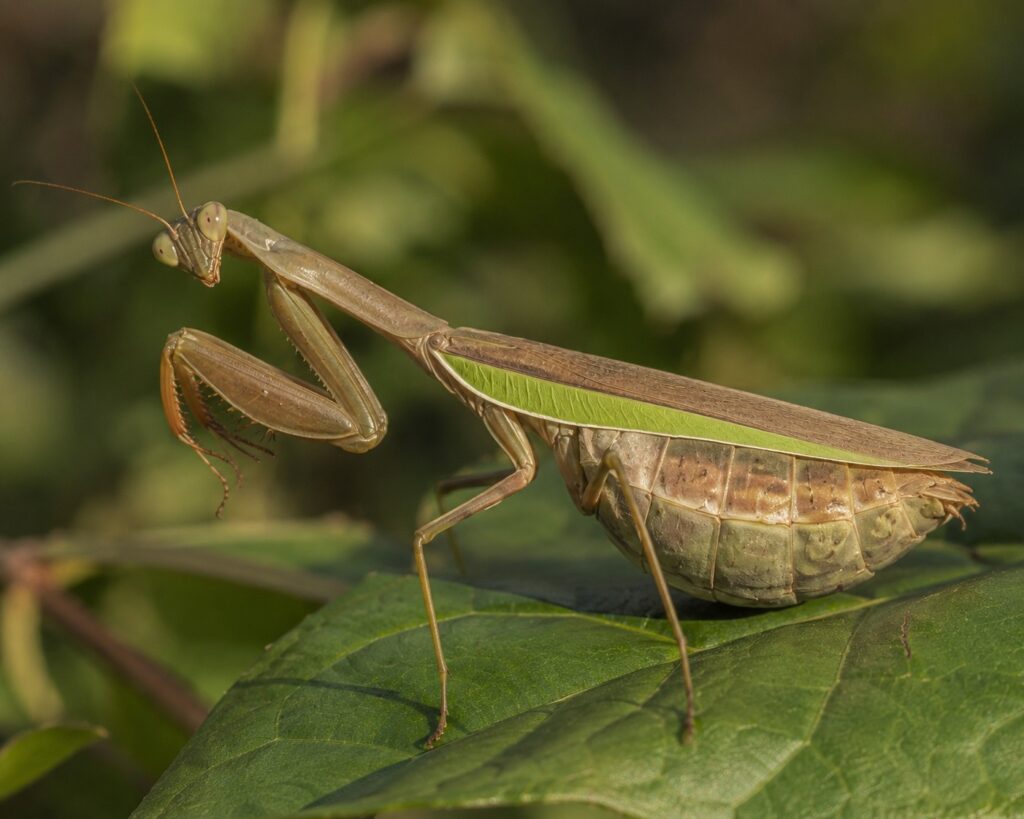
Research estimates suggest that 13-28% of mantis mating encounters in the wild result in the male being eaten. That means the majority of males survive mating and can potentially go on to mate again with other females. The popular image of every female mantis biting her partner’s head off during every encounter is a significant exaggeration.
Several factors influence whether cannibalism occurs:
Hunger level. This is the biggest factor. A well-fed female is far less likely to eat the male than a hungry one. A 1994 study found that well-fed females cannibalized zero males, while food-deprived females ate nearly all of them. In the wild during mating season, males can make up as much as 63% of a female’s diet, suggesting that cannibalism spikes when other food is scarce.
Species. Some species have higher cannibalism rates than others. Chinese mantises show moderate rates. Orchid mantises have significant rates due to the extreme size difference between males and females. Giant Asian mantids sit at the lower end when the female has been fed well beforehand, which is part of why they are a common first breeding project. Some species, like the springbok mantis (Miomantis caffra), cannibalize at very high rates regardless of hunger.
Male behavior. Males that approach cautiously, time their approach correctly (often when the female is eating), and mount quickly are less likely to be eaten. Clumsy or slow males are at higher risk.
Proximity and surprise. If the male gets too close before the female recognizes him as a mate rather than prey, she may strike reflexively. Mantises are ambush predators, and their feeding response is triggered by movement. A male that approaches from behind and avoids sudden movements has better odds.
Can Males Continue Mating After Being Decapitated?
Yes, and this is one of the strangest aspects of mantis biology. When a female bites off a male’s head during mating, the male’s body can continue copulating. In some cases, decapitation actually increases the vigor of mating movements.
This happens because the mating behavior in male mantises is controlled partly by nerve ganglia in the abdomen, not just the brain. Removing the head removes inhibitory signals from the brain, which can actually intensify the reflexive mating movements. The headless male continues to transfer sperm to the female, sometimes for hours after decapitation.
It’s a grim but effective system. From the female’s perspective, she gets both the sperm (for fertilization) and the nutrients (from eating the rest of the body). From the male’s genetic perspective, his reproductive mission is completed regardless of whether he’s alive or dead by the end.
How Males Try to Avoid Being Eaten
Males are not passive participants in this arrangement. They’ve evolved several strategies to avoid becoming dinner:
Cautious approach. Males typically approach females very slowly, freezing whenever the female looks in their direction. This stealthy approach can take minutes to hours. Patience keeps them alive.
Approaching from behind. Males that mount the female from behind, outside her field of vision, have significantly higher survival rates than those that approach from the front or side.
Timing the approach during feeding. Many males wait until the female is actively eating another prey item before approaching. A female occupied with a cricket is far less likely to notice (or care about) a male climbing onto her back.
Quick mounting. Once the male reaches the female, speed matters. Males that mount and begin mating quickly give the female less time to react defensively.
Wrestling. Recent research by Nathan Burke found that in some species, males engage in physical wrestling with females. Males that “win” the struggle (pinning the female down first) are much more likely to mate successfully and survive. Males that lose the wrestling match get eaten.
Nuptial gifts. In some insect species (though less documented in mantises), males offer food items to distract the female during mating. Some mantis breeders replicate this by offering the female a large prey item during mating introductions.
What This Means for Mantis Keepers
If you’re breeding mantises in captivity, understanding sexual cannibalism helps you manage the process and protect your males.
Feed the female heavily before mating. This is the single most effective way to reduce cannibalism risk. A well-fed female with a plump abdomen is far less likely to eat the male. Offer her several large prey items in the days leading up to the introduction. Some breeders feed the female a large cricket or roach immediately before placing the male in the enclosure, keeping her distracted during the approach.
Introduce the male into the female’s enclosure, not the reverse. Placing the male behind the female gives him the chance to approach on his own terms, from behind, at his own pace.
Supervise the encounter. Watch the mating from start to finish. If the female turns aggressively toward the male before mating begins, remove the male and try again another day. After mating is complete, remove the male promptly.
Have multiple males available. Especially for species with high cannibalism rates like orchid mantises or springbok mantises, having 2-3 males gives you backup. Losing a male to cannibalism is disappointing but normal.
Accept that it may happen. Even with precautions, some females will eat their mates. This is natural behavior, not a care failure. If it happens, the bright side is that the female will likely produce a larger, more viable ootheca as a result.
For general mantis keeping advice, see our praying mantis care 101.
Does Sexual Cannibalism Exist in Other Animals?
Mantises aren’t alone in this behavior. Sexual cannibalism has been documented across several arthropod groups:
Spiders are the other well-known group. Black widow spiders (Latrodectus spp.) are famous for it, though like mantises, the rate is lower than popular culture suggests. Redback spiders (Latrodectus hasselti) have among the highest documented rates, with males actually somersaulting into the female’s fangs during mating.
Scorpions exhibit sexual cannibalism in some species, with females eating males after mating. We cover the genus in more depth across our scorpion care guides.
Other insects including some species of crickets, grasshoppers, and beetles also show sexual cannibalism under certain conditions.
The common thread across these groups is that females are larger than males and the act of reproduction is nutritionally demanding. When the cost of egg production is high and the male’s body represents a significant nutritional resource, evolution favors females who take advantage of that resource.
The Myth vs. The Reality
Popular culture has turned mantis sexual cannibalism into a horror-movie trope, but the reality is more nuanced:
Myth: Female mantises always eat the male during mating. Reality: It happens in roughly 13-28% of encounters in the wild. The majority of males survive.
Myth: The female bites the head off first, then mates with the corpse. Reality: In most cases, mating begins normally. Cannibalism, when it occurs, typically happens during or after mating, not before. Pre-mating cannibalism (eating the male before he can mate) does occur but is less common and less evolutionarily advantageous.
Myth: Cannibalism is a sign of aggression or dysfunction. Reality: It’s an evolved reproductive strategy with measurable benefits for egg production and offspring survival.
Myth: Lab studies accurately reflect wild behavior. Reality: Early studies that reported very high cannibalism rates were conducted under artificial conditions (bright lights, confined spaces, stressed animals). Field studies show much lower rates.
FAQ
Why do female praying mantis eat the male after mating?
The primary reason is nutrition. Producing eggs requires enormous energy, and the male’s body provides a significant protein and amino acid boost. Research shows that females who eat their mates produce roughly double the number of eggs compared to those who don’t. The male’s body tissue is directly converted into egg production and passed to offspring.
Do female praying mantis always eat the male?
No. Sexual cannibalism occurs in roughly 13-28% of wild mating encounters. Well-fed females are much less likely to eat the male. Hunger level is the single biggest predictor of whether cannibalism occurs.
Can a male praying mantis survive mating?
Yes, and most do. The majority of males survive mating encounters and can go on to mate with additional females. Males that approach cautiously, mount from behind, and mate quickly have the highest survival rates.
Does the male praying mantis know he might be eaten?
Males show clear behavioral evidence of caution around females: they approach slowly, freeze when detected, and often wait until the female is eating before mounting. Whether this constitutes “knowing” in any conscious sense is debatable, but the avoidance behaviors are real and measurable.
Should I let my female mantis eat the male when breeding?
It’s your choice. If you have multiple males, allowing cannibalism after mating will produce a larger ootheca with more eggs. If the male is your only breeding male or you want to use him again, supervise the mating and remove him promptly after completion. Both approaches are valid.
Track Your Mantis with InvertMate
Managing a breeding project? InvertMate lets you track mating dates, log ootheca production, monitor incubation conditions, and set hatching reminders. Free on the App Store.