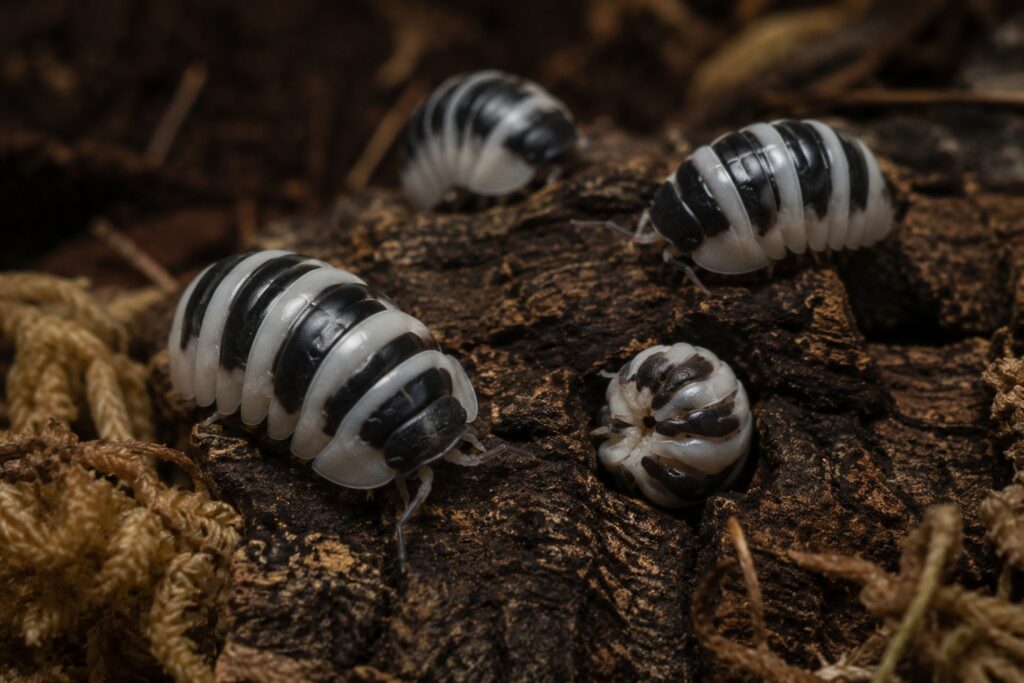
Panda king isopods have become one of the most sought-after species in the isopod hobby, and it’s easy to see why. Their bold black-and-white banding pattern is striking, they breed more readily than many other Cubaris species once established, and they hit a sweet spot between “exotic enough to be exciting” and “hardy enough not to frustrate you.”
If you’ve been keeping beginner species like Porcellio laevis “Dairy Cow” or powder blues and you’re ready to step up to something more interesting, panda kings are one of the best next moves. They do require a bit more care and attention than Porcellio or Porcellionides species, but nothing that a moderately experienced keeper can’t handle.
This guide covers everything you need to keep Cubaris sp. “Panda King” thriving: enclosure setup, substrate, humidity, diet, breeding, and the common mistakes to avoid.
Species Overview
The panda king isopod (Cubaris sp. “Panda King”) is native to caves and humid forest floors in central and northeastern Vietnam. In the wild, they inhabit dark, moist environments where they feed primarily on decaying wood, leaf litter, and organic debris. Their natural habitat is cave-like: consistently warm, humid, and protected from light.
The name comes from their distinctive coloration: a bold pattern of jet-black and clean white bands across their segments. The contrast is sharp and immediately recognizable, making them one of the most visually appealing isopod species in the hobby. Unlike some Cubaris morphs, the panda king pattern is consistent and doesn’t fade with successive molts.
Panda kings are small, compact isopods with a rounded body shape typical of the Cubaris genus. They can roll into a partial ball when disturbed (called conglobation), though not as tightly as Armadillidium species. They’re nocturnal burrowers that spend most of the day hidden under bark, in crevices, or within the substrate, emerging at night to feed.
Compared to the famously slow-breeding Rubber Ducky isopod (another popular Cubaris species), panda kings are considerably more prolific once established. This is one of their biggest selling points: you’re not waiting a year for your first babies.
| Attribute | Details |
|---|---|
| Scientific name | Cubaris sp. “Panda King” |
| Adult size | 1.0-1.5 cm (0.4-0.6 in) |
| Lifespan | 2-4 years |
| Difficulty | Intermediate |
| Temperature | 72-82°F (22-28°C) |
| Humidity | 70-85% |
For more on isopod lifespans across species, check out our isopod lifespan guide. If you’re weighing panda kings against other Cubaris or the more common beginner species, our isopod species comparison lays out the options side by side.
Enclosure Setup
Panda king isopods don’t need a large enclosure. A 6-quart plastic storage bin works well for a starter colony of 10-15 individuals. As the colony grows, you can upgrade to a 15-quart bin. Some keepers use small glass terrariums for display purposes, but plastic bins hold humidity more reliably and are easier to manage.
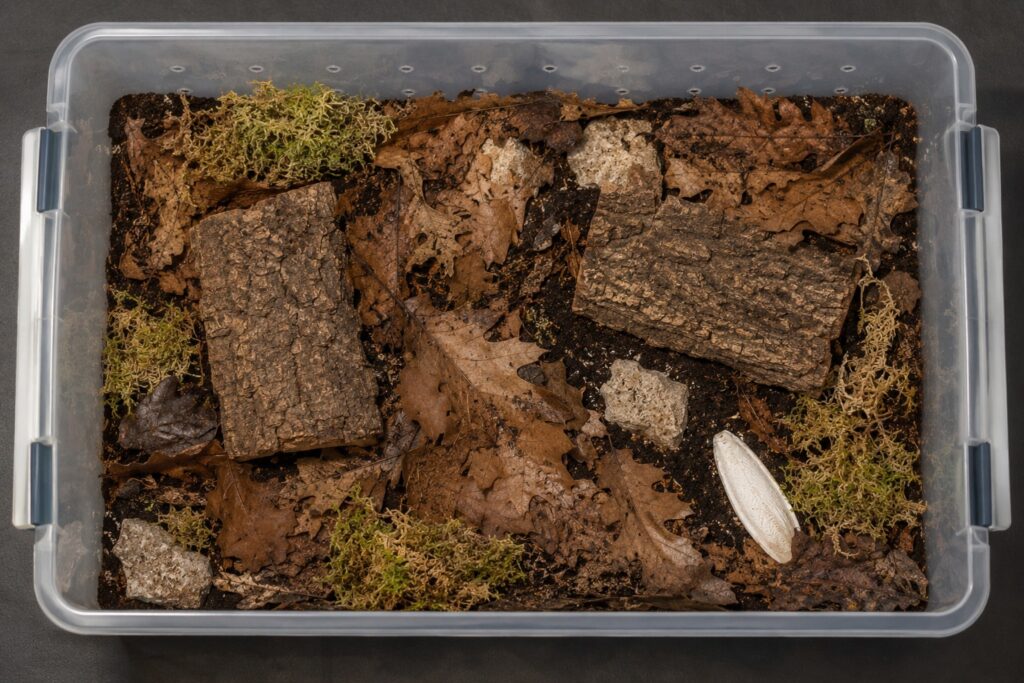
Ventilation should be minimal compared to what you’d use for Porcellio species. Panda kings come from cave-like environments and need high, stable humidity. A few small pin-sized holes in the lid or a very small strip of mesh is enough. Too much ventilation causes humidity to drop too quickly, which is the most common problem keepers have with Cubaris species.
Substrate matters more for panda kings than for most beginner isopods. Use a 3-4 inch deep mix of:
- Coconut coir and organic topsoil (50/50 base)
- Flake soil or decomposed white-rot hardwood mixed in (about 20-30% of total volume). This is important because Cubaris species feed on decaying wood more heavily than Porcellio species.
- A dusting of calcium carbonate powder mixed throughout
Limestone is a commonly recommended addition for Cubaris enclosures. In the wild, panda kings are associated with limestone cave habitats. Adding a few small pieces of natural limestone to the enclosure provides both calcium and a surface the isopods seem to prefer. Limestone chips or crushed limestone mixed into the substrate works well.
On top of the substrate, add:
- Leaf litter (oak, magnolia, or Indian almond). Keep a generous layer; this is both food and cover.
- Cork bark pieces for hides. Panda kings are secretive and need dark retreats. Place flat cork bark directly on the substrate so they can tuck underneath.
- Sphagnum moss spread across portions of the surface to help retain moisture.
- Cuttlebone or crushed oyster shell for additional calcium.
Lighting is not needed and should be avoided where possible. Panda kings are cave-dwelling isopods that actively avoid light. Room lighting from a nearby window (indirect) is fine for a natural day/night cycle, but don’t place the enclosure under direct light.
For a more detailed enclosure walkthrough, see our isopod enclosure setup guide.
Temperature & Humidity
Getting humidity right is the most important factor in panda king care, and the area where most keepers struggle when transitioning from Porcellio to Cubaris species.
Humidity should stay between 70-85% consistently. The enclosure should feel noticeably humid when you open the lid. The substrate should be moist throughout (not just on the surface), and sphagnum moss should be damp to the touch.
Mist the enclosure 2-3 times per week, or more often if humidity drops below 70%. Focus on the substrate and moss rather than spraying directly onto the isopods. If humidity drops too quickly between mistings, reduce your ventilation. Covering part of a mesh lid with plastic wrap or tape is a common fix.
One important balance: the enclosure needs to be humid but not waterlogged. If you see standing water on the substrate surface or the entire bin feels swampy, you’ve overdone it. Excess moisture leads to mold outbreaks and can actually stress the isopods. The goal is “tropical forest floor,” not “puddle.”
Temperature should be between 72-82°F (22-28°C). Room temperature in most homes works fine. Panda kings are somewhat tolerant of temperature fluctuations, but avoid extremes. Extended periods below 65°F or above 85°F can stress or kill the colony. No supplemental heating is usually needed unless your home runs very cold.
Diet & Feeding
Panda king isopods are detritivores with a diet similar to other isopod species, but with a stronger emphasis on decaying wood and protein compared to beginner species.
Primary diet (always available):
- Leaf litter (oak, magnolia, Indian almond)
- Decaying hardwood and flake soil (mixed into the substrate and provided as surface pieces)
- Calcium source (cuttlebone, crushed oyster shell, limestone)
Supplemental foods (2-3 times per week):
- Vegetables: zucchini, carrot, squash, cucumber, mushrooms
- Protein: dried shrimp, shrimp pellets, fish flakes, freeze-dried bloodworms. Panda kings tend to be protein-hungry, so offer protein regularly.
- Nutritional yeast (sprinkled on food, a favorite supplement among Cubaris breeders)
Fruits (sparingly, once per week at most):
- Apple, banana, melon. Remove uneaten portions within 24 hours.
Some experienced breeders recommend shrimp pellets and organic nutritional yeast as the core supplemental diet for panda kings, noting that this combination seems to support robust breeding. The “Goldilocks approach” works best: offer only what the colony can consume within 24 hours to avoid attracting mold and pests.
For a complete breakdown of isopod nutrition, see our isopod feeding guide.
Behavior & Handling
Panda king isopods are shy, nocturnal, and secretive. This is a significant behavioral difference from beginner species like dairy cows or powder blues, which are surface-active and often visible during the day. With panda kings, you’ll see very little activity during daylight hours. They spend the day burrowed into the substrate or tucked under cork bark hides.
The best time to observe your colony is at night, ideally with a dim red light. You’ll find them out on the surface foraging on leaf litter, nibbling on food you’ve placed, and interacting with each other. This nocturnal activity is part of what makes them interesting: the colony feels like it has a secret life you only get glimpses of.
When disturbed, panda kings scatter quickly and seek cover. Some will partially roll into a ball (conglobation), though not as tightly as Armadillidium species. They’re not built for handling, and there’s no real reason to handle them. They’re tiny, fast when startled, and easy to injure. If you need to move individuals, use a soft brush or gently scoop them with a small spoon.
Molting happens regularly in a growing colony. You’ll rarely see it happen because panda kings molt underground or under hides. Shed exoskeletons are eaten by the colony for calcium. If you see small, translucent shells on the substrate surface, that’s a sign of healthy molting activity.
Breeding
Once established, panda king isopods breed more readily than many other Cubaris species. This is one of their major advantages over species like the Rubber Ducky, which can take 6-12 months to show meaningful colony growth.
Females carry developing embryos in a marsupium (brood pouch) on their underside. Brood sizes are small compared to Porcellio species, typically 6-15 mancae (babies) per clutch rather than the 20-50 you’d see from dairy cows or powder blues. However, once the colony is established and breeding regularly, the cumulative growth adds up.
Conditions that encourage breeding:
- Stable humidity at 75-85%
- Temperatures in the 74-80°F range
- Abundant protein (shrimp pellets or dried shrimp offered weekly)
- Calcium always available
- Minimal disturbance (don’t dig through the substrate or constantly lift hides)
- Enough hiding spots and substrate depth for the colony to feel secure
Patience is essential. A newly purchased colony of 10-15 panda kings may take 2-4 months to begin producing mancae. The isopods need time to acclimate, establish territories, and feel secure enough to breed. Resist the urge to check on them constantly. Open the lid for feeding and misting, then leave them alone.
Two to four months of waiting is also exactly the window where a written record beats memory, since you’re watching for a change that happens gradually. That’s the sort of thing CrabPod handles.
Mancae are tiny and translucent when first released, developing their black-and-white panda pattern over successive molts. You’ll often spot them hiding under cork bark or near the edges of the enclosure.
Common Health Issues
Low humidity is the number one killer of Cubaris colonies. If your panda kings are dying, the first thing to check is humidity. It should be 70-85% at all times. A digital hygrometer inside the enclosure is essential, not optional.
Mold is the second most common issue and is usually caused by overfeeding fresh food, excess moisture, or poor ventilation. A thin layer of white mold on leaf litter is normal and harmless. Thick green or black mold needs immediate attention: remove the affected material, reduce misting temporarily, and improve airflow slightly. Adding springtails to the enclosure is the best long-term mold prevention strategy. Springtails feed on mold and fungal spores, keeping populations in check without harming the isopods.
Mites (grain mites) can appear if protein or fresh food is left too long. Remove uneaten food within 24 hours, reduce supplemental feeding temporarily, and add springtails if you haven’t already.
Slow breeding or no breeding is usually caused by one of three things: the colony hasn’t acclimated yet (give it 2-4 months), conditions aren’t optimal (check temperature, humidity, and protein availability), or the colony is too small. Starting with fewer than 10 individuals makes establishing a breeding colony much harder.
Stress from disturbance is a real factor with Cubaris species. Constantly opening the lid, lifting hides, or digging through substrate disrupts the colony and can stall breeding. Check on them during feeding and misting, but otherwise let them be.
FAQ
Are panda king isopods good for beginners?
They’re better suited for keepers who already have some experience with beginner species. If you’ve successfully kept dairy cow isopods, powder blues, or Armadillidium vulgare, you’ll have the humidity and feeding basics down and can transition to panda kings without much difficulty. They’re not recommended as a first-ever isopod colony.
How much do panda king isopods cost?
Prices have dropped significantly as captive breeding has increased. A starter colony of 10-15 typically costs between $30-80 depending on the seller and your region. They’re much more affordable now than they were a few years ago, though still pricier than beginner species.
How fast do panda king isopods breed?
Slower than Porcellio species but faster than Rubber Ducky isopods. Expect 2-4 months for a new colony to begin producing mancae, with broods of 6-15 babies per clutch. Once established and breeding regularly, colony growth is steady and reliable.
Do panda king isopods need limestone?
It’s highly recommended but not strictly required. In the wild, panda kings are associated with limestone cave habitats. Adding small pieces of natural limestone to the enclosure provides calcium and seems to make the colony more comfortable. At minimum, always provide another calcium source like cuttlebone.
Why are my panda king isopods hiding all the time?
That’s normal behavior for this species. Panda kings are nocturnal cave-dwelling isopods. They spend the day burrowed or hiding and only come out at night to feed. If you want to observe them, check the enclosure after dark with a dim red light.
Track Your Colony with CrabPod
Managing a growing panda king colony is easier when you can track everything in one place. CrabPod lets you log population counts, monitor humidity and temperature trends, set feeding reminders, and track your colony’s growth over time. Free on the App Store.