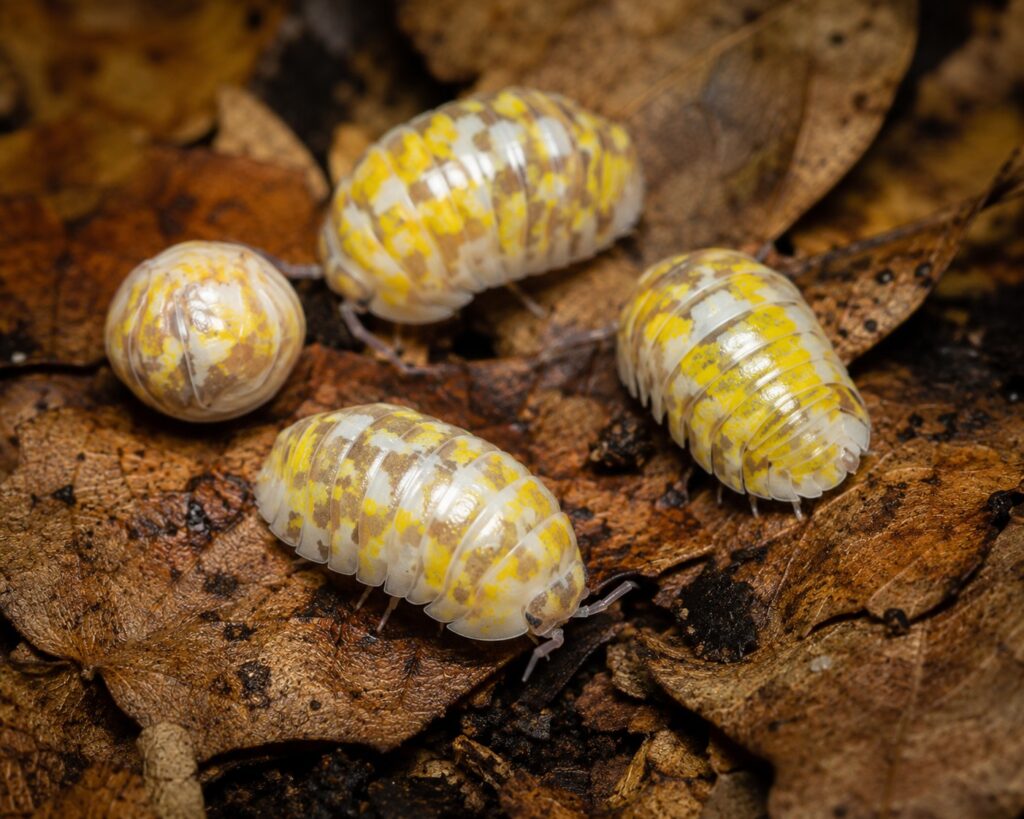
The magic potion isopod is one of those species that stops people mid-scroll. The combination of bright yellow, creamy white, and subtle mottled patterns across each segment gives them an almost hand-painted quality that looks too good to be real. They’re one of the most visually striking morphs in the Armadillidium family, and the good news is they’re not nearly as difficult to keep as their appearance might suggest.
If you’ve kept common pill bugs before (Armadillidium vulgare is the same base species), you already understand most of what magic potions need. They’re hardier than most Cubaris species, they roll into a tight ball when disturbed, and they breed at a moderate, steady pace. This guide covers everything you need to keep your magic potion isopod colony healthy: enclosure setup, substrate, humidity, diet, breeding, and common issues.
Species Overview
The magic potion isopod is a selectively bred color morph of Armadillidium vulgare, one of the most widespread isopod species on the planet. The wild-type A. vulgare is the common gray pill bug (or roly-poly) found under rocks and logs across Europe, Asia, and North America. The magic potion variant was originally developed from Japanese breeding lines and has become hugely popular in the hobby for its striking coloration.
Adults display a vibrant mix of yellow, cream, and white across their segmented dorsal plate, often with a mottled or marbled pattern that varies between individuals. No two magic potions look exactly the same, which adds to their appeal. The coloring is consistent through molts and doesn’t fade with age.
Like all Armadillidium vulgare, magic potions have the classic pill bug body shape: round, heavily armored, and capable of rolling into a perfect ball (complete conglobation) when disturbed. This defensive behavior is one of the defining traits of the Armadillidium genus and distinguishes them from Porcellio species, which cannot fully roll up.
They’re medium-sized isopods, active during the day (more so than Cubaris species), and have a calm, easygoing temperament. They’re not as fast or flighty as dairy cow isopods or powder blues, which makes them easy to observe and manage.
| Attribute | Details |
|---|---|
| Scientific name | Armadillidium vulgare “Magic Potion” |
| Adult size | 1.2-1.8 cm (0.5-0.7 in) |
| Lifespan | 2-4 years |
| Difficulty | Beginner to Intermediate |
| Temperature | 70-80°F (21-27°C) |
| Humidity | 65-80% |
For more on isopod lifespans across species, see our isopod lifespan guide.
Enclosure Setup
Magic potion isopods do well in the same basic setup used for most isopod species. A 6-quart plastic bin is perfect for a starter colony of 10-15 isopods. Upgrade to a 15-quart bin as the population grows.
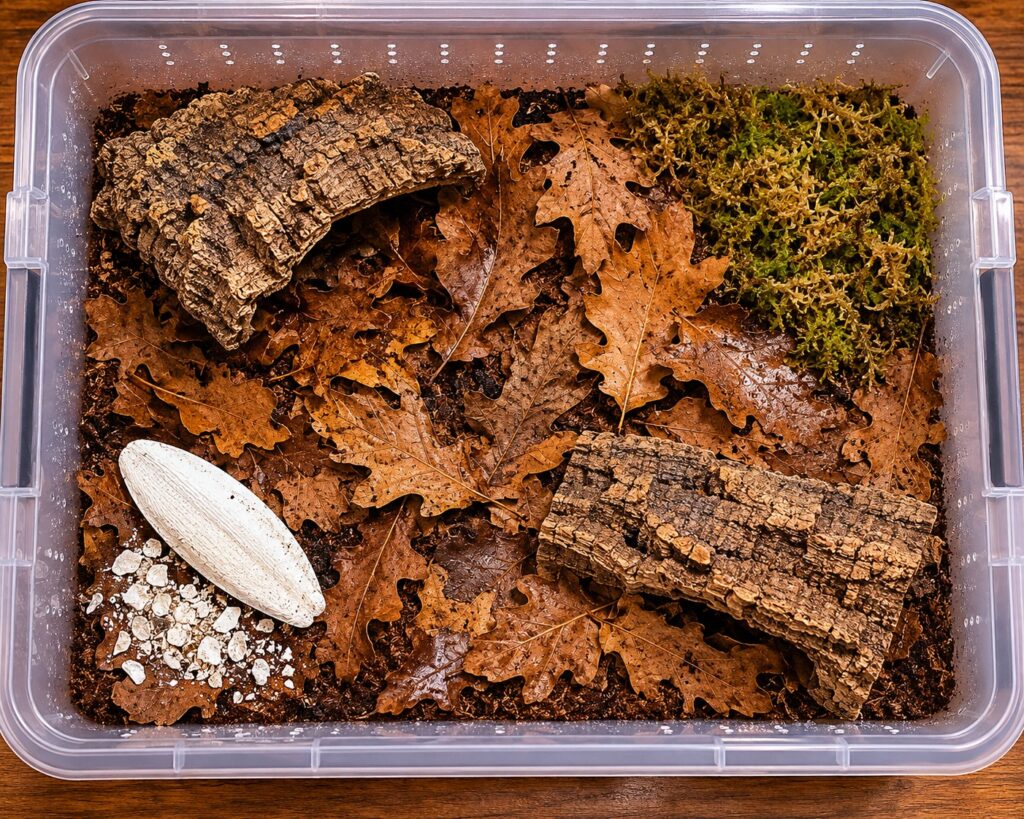
Ventilation should be moderate. Armadillidium species are slightly more tolerant of drier conditions than Cubaris, but they still need humidity. Drill or melt a cluster of small holes in the lid, aiming for roughly 10-15% of the lid surface area. If humidity drops too fast, reduce the ventilation by covering some holes with tape.
Substrate should be 3-4 inches deep. The standard mix works well:
- 60% organic topsoil (pesticide-free)
- 40% coconut coir
Armadillidium species don’t rely on decaying wood as heavily as Cubaris, so you don’t need to add flake soil to the substrate mix (though a small amount doesn’t hurt).
Optional addition: A light dusting of calcium carbonate powder mixed into the substrate gives the colony access to calcium throughout the soil, not just on the surface. This is especially helpful for Armadillidium species, which use large amounts of calcium for their thick, heavily armored exoskeletons.
On top of the substrate, add:
- Leaf litter (oak, magnolia, Indian almond). Thick layer, as always.
- Cork bark pieces for hides. Two or three flat pieces are enough for a small bin.
- Sphagnum moss on one end for the moisture gradient.
- Cuttlebone or crushed oyster shell for calcium.
No special lighting needed. Room light is fine.
For a full enclosure setup walkthrough, see our isopod enclosure guide.
Temperature & Humidity
Magic potion isopods are comfortable in a temperature range of 70-80°F (21-27°C), which is slightly cooler than the ideal range for tropical species like panda king isopods. Normal room temperature in most homes is perfectly suitable. They don’t need supplemental heating unless your house regularly drops below 65°F.
Humidity should be maintained at 65-80% with the standard moisture gradient: one damp side (sphagnum moss end), one drier side. Mist the enclosure 2-3 times per week, focusing on the moss.
One thing that sets Armadillidium species apart from Porcellio and Cubaris is their slightly higher tolerance for drier conditions. Magic potions can handle brief dips in humidity better than most Cubaris species without suffering immediate stress. That said, sustained low humidity will still cause molting problems and dehydration over time. Don’t use their tolerance as an excuse to neglect misting.
Some breeders have noted that magic potions actually benefit from brief dry periods between mistings. The theory is that Armadillidium species evolved in environments with more variable moisture than the consistently humid caves that Cubaris species come from. A cycle of “mist, let it dry slightly, mist again” mimics this natural variability.
Diet & Feeding
Magic potion isopods are detritivores with a diet similar to other Armadillidium species. They’re less aggressive feeders than Porcellio laevis and less protein-hungry than Cubaris, which makes them relatively low-maintenance on the feeding front.
Primary diet (always available):
- Leaf litter (oak, magnolia, Indian almond)
- Cork bark and decaying hardwood (they’ll slowly graze on these)
- Calcium source (cuttlebone, crushed oyster shell, crushed eggshell)
Supplemental foods (2-3 times per week):
- Vegetables: cucumber, zucchini, carrot, squash, sweet potato, mushrooms
- Protein: dried shrimp, fish flakes, freeze-dried bloodworms (once per week is usually sufficient)
- Fruits (sparingly): apple, banana, melon
Calcium is particularly important for magic potions. The Armadillidium exoskeleton is thicker and more heavily calcified than Porcellio or Porcellionides species. Keep cuttlebone available at all times and consider dusting fresh vegetables with a light coating of calcium powder for extra intake.
Remove uneaten fresh food within 24 hours to prevent mold.
For a complete breakdown of isopod nutrition, see our isopod feeding guide.
Behavior & Handling
Magic potion isopods are calm, slow-moving, and fairly tolerant of observation. Unlike powder blues (which scatter at light speed) or Cubaris (which hide all day), magic potions are often visible on the substrate surface during the day, especially around hides and food. This surface activity is one of the things that makes them enjoyable to keep.
Their defining behavioral trait is conglobation: rolling into a tight, seamless ball when threatened. If you touch a magic potion, it will curl up immediately and stay curled for anywhere from a few seconds to several minutes. This is a passive defense mechanism rather than a sign of extreme stress, and it’s completely harmless. It’s also one of the reasons people love Armadillidium species, as the little armor-plated balls are endlessly entertaining.
Handling is possible. Magic potions are slow enough to handle without risk of escape, and their thick exoskeleton makes them less fragile than soft-bodied species like powder blues. Scoop them up gently and let them walk across your hand. They’ll likely curl up initially, then slowly unfurl and start walking once they feel stable.
Molting follows the standard two-stage pattern: back half first, front half a day or two later. You might spot half-colored individuals in the colony. Leave them alone. Shed exoskeletons will be eaten by the colony for calcium. Molting usually happens in the substrate or under hides, so you may not witness it directly.
Breeding
Magic potion isopods breed at a moderate, steady pace. They’re not as explosively fast as dairy cows or powder blues, but they’re significantly faster than slow-breeding Cubaris species. For most keepers, this is actually the ideal tempo: fast enough to see consistent growth, slow enough that overcrowding doesn’t become a problem too quickly.
Females carry developing embryos in a marsupium (brood pouch) and release fully formed mancae. Brood sizes are moderate, typically 10-25 mancae per clutch. Females can produce multiple broods throughout their lifespan.
Conditions that support breeding:
- Stable temperatures in the 72-78°F range
- Consistent humidity with a good moisture gradient
- Calcium always available (especially important for Armadillidium)
- Protein offered at least once per week
- Enough hides and leaf litter for the colony to feel secure
- Minimal disturbance
New colonies typically take 1-3 months to start producing mancae, depending on the age and size of the isopods you started with. Mancae are tiny and light-colored when first released, gradually developing the yellow and white magic potion patterning over successive molts.
A moderate breeding pace is easy to misjudge by eye. Logging population counts every few weeks in CrabPod makes the trend obvious well before the bin looks crowded.
Color consistency: One question many keepers have is whether the magic potion coloring breeds true. The answer is yes, for the most part. Magic potions are a selectively bred morph, and offspring will display the characteristic yellow-white coloring. There can be some variation in the exact pattern and intensity between individuals, which is part of their charm.
Common Health Issues
Low humidity is the most common problem, as with all isopods. If you’re finding curled, desiccated bodies, increase misting frequency and check your ventilation. Armadillidium species are slightly more tolerant of drier conditions than Cubaris, but “more tolerant” doesn’t mean “immune.”
Calcium deficiency shows up as thin, brittle exoskeletons, failed molts, or slower breeding. This is especially relevant for Armadillidium species because their heavily armored exoskeletons demand more calcium than thinner-shelled species. Always keep cuttlebone or another calcium source available.
Mold typically results from overfeeding fresh food, excessive moisture, or poor ventilation. White mold on leaf litter is harmless. Green or black mold on food or substrate should be removed immediately. Adding springtails to the enclosure is the best preventive measure.
Mites (grain mites) can appear if food is left too long. Remove uneaten food within 24 hours and reduce supplemental feeding temporarily. Springtails help here too.
Slow colony growth is usually caused by insufficient calcium, low protein availability, or temperatures that are too cool. Check all three before assuming something is wrong with the isopods themselves.
FAQ
Are magic potion isopods good for beginners?
They’re a good choice for keepers who’ve had at least a little experience with common isopod species. If you’ve kept regular Armadillidium vulgare (common pill bugs), dairy cow isopods, or powder blues, you’ll have no trouble with magic potions. They’re hardier than Cubaris species and more forgiving of minor care mistakes.
How much do magic potion isopods cost?
Prices vary by region and seller, but a starter colony of 10-15 magic potions typically ranges from $25-60. They’re more affordable than premium Cubaris species like panda kings or Rubber Ducky isopods, making them a great entry point into the “fancy isopod” hobby. If you’re comparing options at different price points, our isopod species guide covers what you get for the money across the common morphs.
Do magic potion isopods breed true?
Yes. The yellow-white coloring is a selectively bred trait that carries consistently to offspring. Individual pattern variation (marbling, mottling, color intensity) differs between isopods, but the overall magic potion look remains stable across generations.
Can magic potion isopods live with other species?
You can house them with other isopod species, but there are tradeoffs. In a bioactive vivarium with plenty of space, magic potions can coexist with other species. In a dedicated culture bin, single-species colonies grow faster and are easier to manage. If you mix species, avoid pairing them with fast-breeding, aggressive feeders like Porcellio laevis that may outcompete the magic potions over time.
Why do my magic potion isopods keep rolling into balls?
Conglobation (rolling into a ball) is normal defensive behavior for all Armadillidium species. If it happens only when you open the lid or touch them, it’s just a standard stress response and nothing to worry about. If isopods are constantly curled up and never unrolling, even at night, check for environmental problems like low humidity, temperature extremes, or mites.
Track Your Colony with CrabPod
Keep your magic potion isopod colony thriving with CrabPod. Monitor humidity and temperature trends, set feeding and misting reminders, log population counts, and track your colony’s growth over time. Free on the App Store.