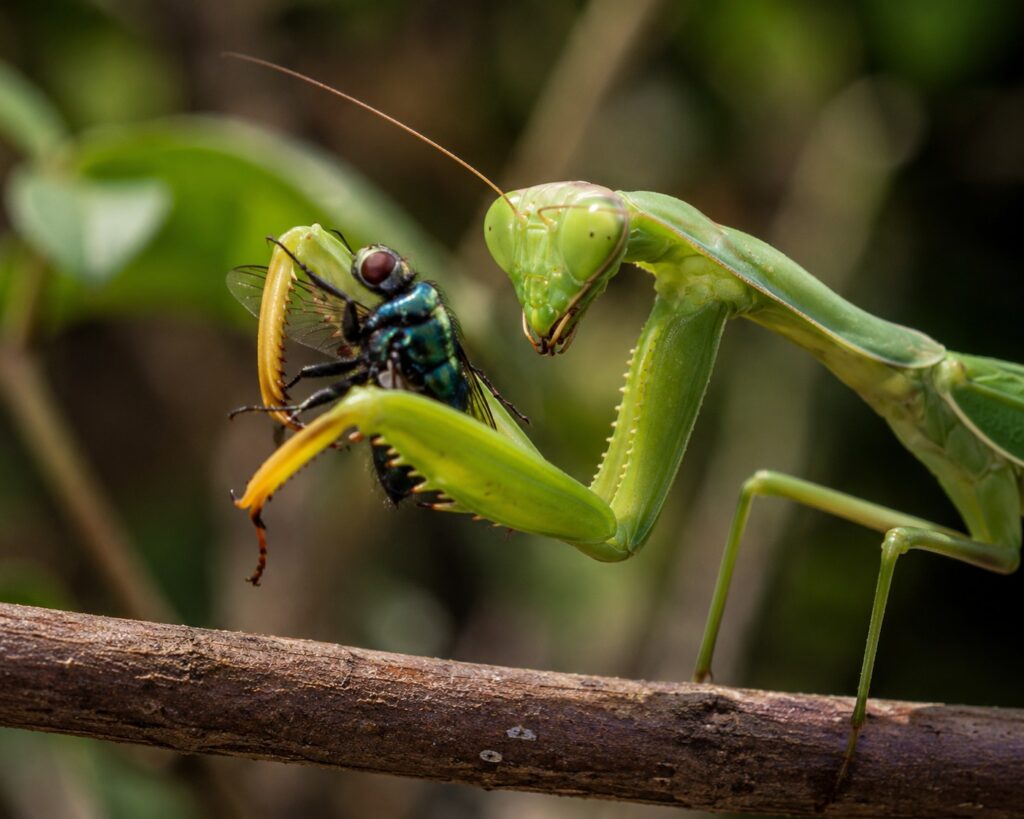
What do praying mantis need to survive? Whether you’ve found one in your garden or you’re thinking about keeping one as a pet, the answer comes down to six essentials: a safe enclosure, the right temperature, adequate humidity, live food, water, and the conditions for safe molting. Get these right and a praying mantis will thrive. Get any of them wrong and even a hardy species can die quickly.
The good news is that mantis care is straightforward once you understand the basics. They don’t need complicated setups, expensive equipment, or constant attention. This guide breaks down each survival requirement clearly, explains why it matters, and gives you the practical details to make it work. For a full step-by-step care guide, see our praying mantis care 101.
1. A Safe Enclosure
A praying mantis needs a contained space that provides security, vertical climbing surfaces, and room to molt. In the wild, they have entire gardens and forests to work with. In captivity, you need to replicate the essentials of that environment in a small space.
Size matters, especially height. Mantises hang upside down to molt, and they need at least 3 times their body length in vertical space to shed their skin safely. Width should be at least 2 times their body length. An enclosure that’s too short is the leading cause of failed molts in captivity.
Good options include:
- Mesh pop-up enclosures (excellent ventilation and grip surfaces)
- Plastic deli cups with ventilation holes (perfect for nymphs)
- Small glass or acrylic terrariums with mesh lids
The enclosure needs:
- Vertical branches or twigs for perching
- A textured ceiling (mesh, rough plastic, or cork) for secure hanging during molts
- Good ventilation to prevent mold and stagnant air
- Some visual cover (artificial plants or leaves) so the mantis feels secure
What a mantis doesn’t need: a water dish (they drink from droplets), substrate (paper towel or bare bottom works fine), UV lighting, or elaborate decorations. Simple setups work just as well as fancy ones.
For a worked example with specific products and dimensions, see our orchid mantis enclosure guide. The build principles apply to most species.
2. The Right Temperature
Praying mantises are ectotherms (cold-blooded), meaning their body temperature matches their environment. Too cold and they become sluggish, stop eating, and eventually die. Too hot and they dehydrate or overheat.
Most pet mantis species thrive between 72-85°F (22-29°C). This is standard room temperature in most homes, which is why mantises are such convenient pets. You usually don’t need any heating equipment.
If your home runs cold (below 70°F), a few simple options can help:
- A small desk lamp with a low-wattage bulb placed near the enclosure
- A heat mat placed on the side (not bottom) of the enclosure
- Moving the enclosure to a warmer room
Important temperature rules:
- Avoid placing the enclosure in direct sunlight. Even a small container can overheat in minutes by a sunny window.
- Avoid locations near drafty windows, air conditioning vents, or exterior doors where temperatures swing.
- Night temperature drops of 5-10°F are fine and actually mimic natural conditions.
Temperature also affects lifespan. Warmer temperatures speed up metabolism, growth, and aging. Cooler temperatures (within the safe range) slow everything down, effectively extending how long your mantis lives. This is a useful tool for keepers who want to maximize time with their pet.
3. Humidity for Molting and Breathing
Humidity is essential for two reasons: mantises drink water from their environment (they can’t drink from a dish), and they need adequate moisture in the air to molt safely.
Target humidity: 50-70% for most species. Some tropical species like orchid mantises need higher (60-80%), while temperate species tolerate lower levels.
How to maintain humidity:
- Mist the enclosure walls and decor with a spray bottle once daily for nymphs, every 1-2 days for adults
- Use a fine mist that creates small water droplets on surfaces
- Let the enclosure dry between mistings (constant dampness causes mold and bacterial infections)
Why humidity matters for molting: When a mantis molts, it splits its old exoskeleton along the back and wriggles out. If the air is too dry, the old skin hardens before the mantis can fully emerge, trapping it. This is called a failed molt, and it’s often fatal or causes permanent limb damage. Maintaining proper humidity is the single most effective way to prevent this.
The ventilation balance: Humidity and ventilation work against each other. More ventilation means drier air; less ventilation retains moisture but can cause stagnant conditions. The sweet spot is enough airflow to prevent mold while holding enough humidity for healthy molts. Mesh enclosures need more frequent misting; glass enclosures with partial mesh lids hold humidity longer.
4. Live Food
Praying mantises are obligate predators. They eat live insects and nothing else. They won’t eat dead prey, pellets, or plant matter. If you keep a mantis, you need to provide live feeder insects appropriate to the mantis’s size.
What mantises eat at each stage:
- Tiny nymphs (L1-L2): Fruit flies (Drosophila melanogaster). These are the only prey small enough.
- Small nymphs (L3-L4): Larger fruit flies (Drosophila hydei) or small houseflies.
- Medium nymphs (L5-L6): Houseflies, blue bottle flies, small crickets.
- Sub-adults and adults: Blue bottle flies, crickets, dubia roaches, moths, waxworms. Prey should be about half the mantis’s body length.
Feeding frequency:
- Nymphs: every 1-2 days
- Sub-adults: every 2-3 days
- Adults: every 3-5 days
Critical rules:
- Always remove uneaten live prey within 24 hours. Crickets left in the enclosure overnight can bite and injure a resting or molting mantis.
- Pre-molt fasting is normal. A mantis that stops eating for 3-7 days is likely preparing to molt, not sick. Wait it out.
- Flying prey (flies, moths) usually triggers a stronger feeding response than crawling prey (crickets). If your mantis ignores food, try a different feeder type.
Where to source feeders: Fruit fly cultures and blue bottle fly pupae are available from online feeder insect suppliers. Crickets are sold at most pet stores. Starting your own fruit fly culture at home is inexpensive and ensures a constant food supply for nymphs.
5. Water
Mantises don’t drink from dishes. They lap up small water droplets from surfaces in their environment. In the wild, this comes from dew, rain, and morning condensation. In captivity, you provide it through misting.
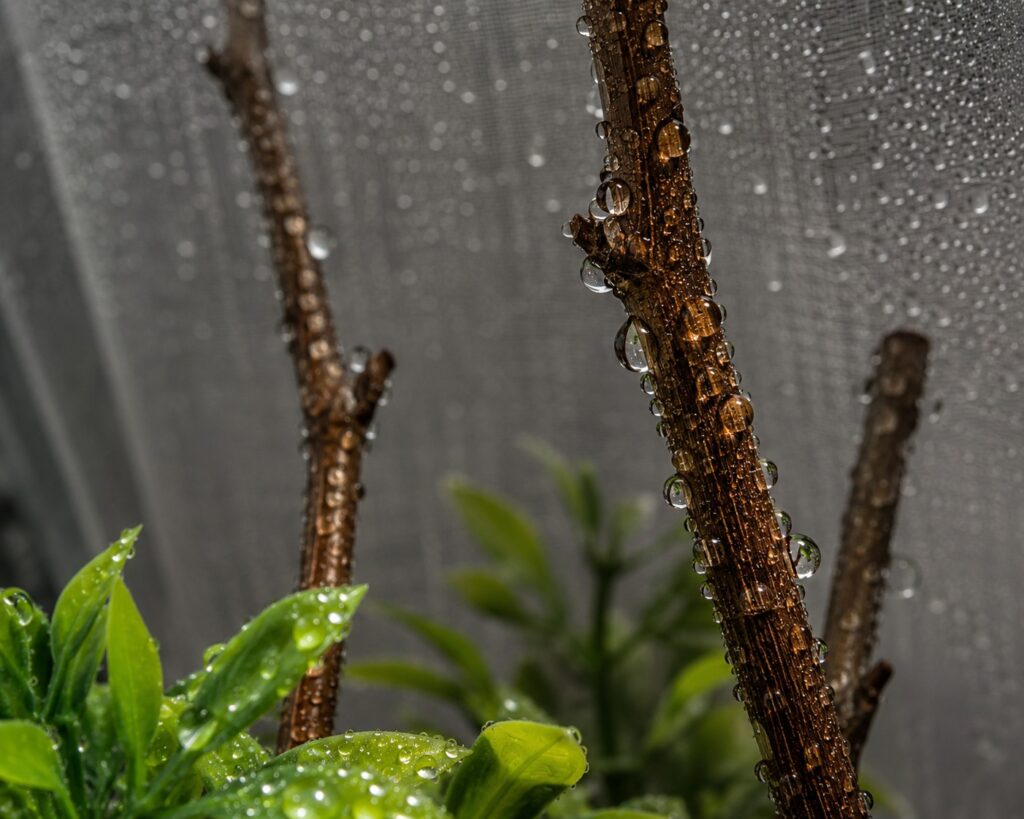
How mantises drink: After you mist the enclosure, tiny water droplets bead up on branches, leaves, and enclosure walls. The mantis walks up to a droplet and drinks it directly. You might see it lower its head and lap for a few seconds. Many keepers never actually witness their mantis drinking because it happens quickly and often at night.
Practical tips:
- Mist lightly and regularly. This provides both drinking water and humidity.
- Don’t use a water dish. Nymphs can fall in and drown, and standing water promotes bacterial growth.
- Tap water is generally fine, though some keepers prefer dechlorinated or spring water.
- If your mantis looks dehydrated (shrunken abdomen, sluggish movement), mist more frequently.
Some keepers offer water directly to their mantis by placing a small droplet on the tip of a finger or a toothpick in front of the mantis’s mouth. Many mantises will drink from this readily. This can be useful if you suspect dehydration.
6. Safe Molting Conditions
Molting is the single most dangerous event in a mantis’s life, and it happens repeatedly throughout the nymph stages. Every requirement listed above (enclosure height, humidity, temperature, food availability) connects back to molting safety.
What a mantis needs to molt safely:
- Vertical space of at least 3 times its body length
- A textured grip surface at the top of the enclosure (mesh lid, rough branch, or cork)
- Humidity of 50-70% (or higher for tropical species) to keep the old exoskeleton flexible
- No live prey in the enclosure during the molt (defenseless mantises can be attacked by crickets)
- Zero disturbance. Don’t touch, spray directly on, or move the enclosure during a molt.
Signs a molt is coming:
- Refusing food for 3-7 days
- Hanging from the ceiling more than usual
- Reduced movement and activity
- Swollen wing buds in older nymphs
- Sometimes a visible whitish film on the body
After the molt: The new exoskeleton is soft and pale. Don’t feed, handle, or disturb the mantis for at least 24-48 hours. The exoskeleton needs time to harden. The mantis will resume normal activity and accept food once it’s ready.
Nymphs molt every 2-3 weeks. Sub-adults take 4-8 weeks between molts. The final molt to adulthood is the riskiest because the mantis is at its largest, and the wings must unfurl and harden properly. After reaching adulthood, mantises never molt again.
Wild vs. Captive Survival
If you’ve found a mantis outside and are wondering whether to bring it in, here’s the comparison.
In the wild, mantises face predators (birds, frogs, lizards, spiders), weather extremes, inconsistent food supply, and parasites. Most wild mantises live a single season, dying with the onset of cold weather. Their eggs overwinter in protective oothecae and hatch the following spring.
In captivity, those threats are eliminated. A pet mantis has consistent food, stable climate, no predators, and a keeper watching for health problems. This is why captive mantises routinely outlive their wild counterparts by months. The trade-off is that the keeper must provide everything the mantis would find naturally: warmth, humidity, prey, and appropriate space.
If you do bring a wild mantis indoors, the same care requirements apply. Identify the species if possible, set up an appropriately sized enclosure, and start offering prey. Wild-caught mantises are often adults, which means they may only have a few months of lifespan remaining regardless of care quality.
If you’re still deciding whether to keep one at all, our guide to praying mantises as pets covers the practical realities, including the live feeder commitment.
FAQ
What do praying mantis need to survive in captivity?
Six essentials: a ventilated enclosure with vertical space and climbing surfaces, temperature between 72-85°F, humidity of 50-70%, live feeder insects appropriate to their size, water from misting, and safe molting conditions (textured ceiling, adequate humidity, no disturbance during molts).
Can a praying mantis survive without food?
An adult mantis can survive 1-2 weeks without food, though this isn’t recommended. Nymphs are less resilient and should be fed every 1-2 days. Pre-molt fasting of 3-7 days is normal and not a cause for concern. If a mantis refuses food for more than two weeks outside of a molt cycle, check enclosure conditions.
Do praying mantis need water?
Yes, but not from a dish. Mantises drink water droplets from enclosure surfaces after misting. Mist the enclosure once daily for nymphs and every 1-2 days for adults. Never use a standing water dish, as nymphs can drown in it.
Can praying mantis survive in cold weather?
Most pet species need temperatures above 65°F to remain active and healthy. Sustained cold below 60°F can be lethal for tropical species. Temperate species (like the Chinese mantis) tolerate cooler conditions but will become sluggish and stop eating. In the wild, adult mantises die in winter and the species survives through overwintering egg cases.
What kills pet praying mantis most often?
Failed molts (from low humidity or inadequate climbing surfaces), dehydration, starvation in nymphs, injury from live prey left in the enclosure, and bacterial infections from poor ventilation. Nearly all premature mantis deaths are preventable with proper setup and basic care.
Track Your Mantis with InvertMate
Give your mantis the best chance at a long, healthy life with InvertMate. Track molts, log feedings, monitor enclosure conditions, and set reminders for misting and care tasks. Free on the App Store.