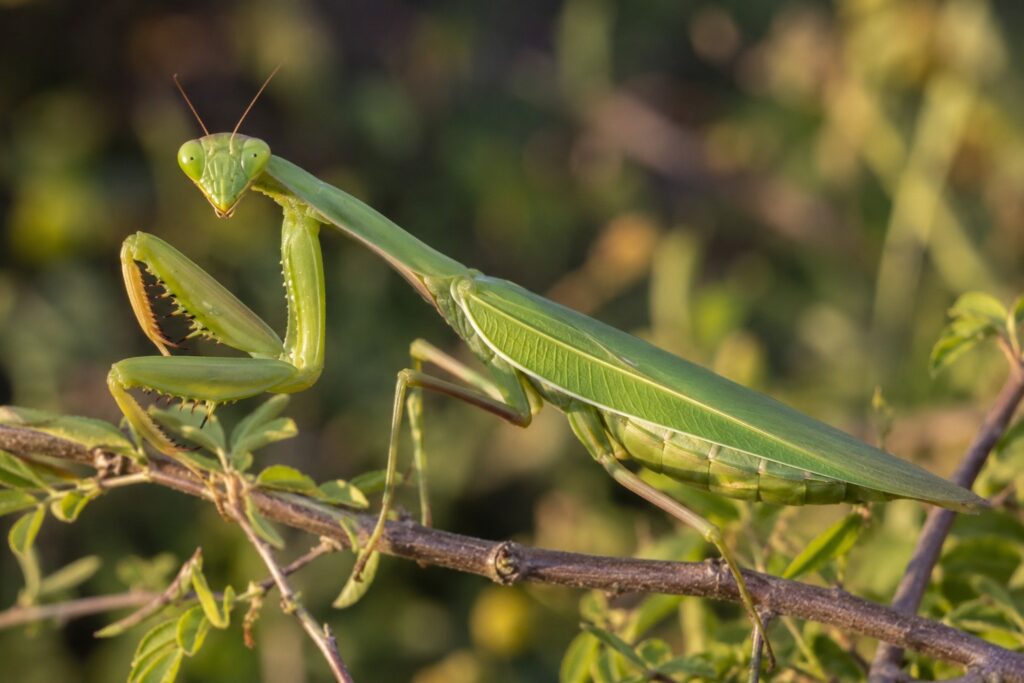
How long do praying mantis live? For most commonly kept pet species, the answer is 6 to 18 months from hatching to death. That’s shorter than many people expect when they first get interested in mantis keeping, and it’s worth understanding upfront so you can set realistic expectations and make the most of the time you have with your mantis.
The good news is that lifespan varies significantly between species, and the choices you make around temperature, feeding, and care can meaningfully extend (or shorten) your mantis’s life. This guide breaks down mantis lifespans by species, explains the factors that affect longevity, walks through the life stages from egg to adult, and covers what you can do to help your mantis live as long as possible.
Mantis Lifespan by Species
Not all mantis species live the same length of time. Larger species generally live longer than smaller ones, and females almost always outlive males. Here’s a breakdown of the most commonly kept pet species.
Ghost Mantis (Phyllocrania paradoxa)
Total lifespan: 7-12 months Adult lifespan: 4-8 months after final molt
The ghost mantis is one of the longer-lived beginner species. Their relatively small size is offset by a naturally slower metabolism. Females consistently outlive males by several months.
Orchid Mantis (Hymenopus coronatus)
Total lifespan: 6-12 months Adult lifespan: 3-6 months (females); 2-3 months (males)
The orchid mantis has one of the most dramatic sex-based lifespan differences. Males mature much faster and die significantly sooner than females. Keeping temperatures moderate can help extend the male’s limited adult lifespan.
Chinese Mantis (Tenodera sinensis)
Total lifespan: 10-14 months Adult lifespan: 4-8 months
One of the largest and longest-lived commonly kept species. Chinese mantises are hardy, easy to care for, and their larger body size correlates with a longer overall lifespan. Females can live up to a year as adults in cooler conditions.
Giant Asian Mantis (Hierodula membranacea)
Total lifespan: 10-14 months Adult lifespan: 4-8 months
Another large, long-lived species. Giant Asian mantises are robust and relatively low-maintenance, making them a good choice for keepers who want more time with their pet.
Carolina Mantis (Stagmomantis carolina)
Total lifespan: 8-12 months Adult lifespan: 3-6 months
A North American native species. Smaller than Chinese mantises but with a comparable lifespan. Hardy and adaptable.
Spiny Flower Mantis (Pseudocreobotra wahlbergii)
Total lifespan: 6-10 months Adult lifespan: 3-5 months
A beautiful, small species with a shorter overall lifespan. Their rapid development means less time as nymphs but also a shorter adult phase.
Giant African Mantis (Sphodromantis viridis)
Total lifespan: 10-14 months Adult lifespan: 4-7 months
The giant African mantis is large, bold, and one of the easiest mantises to keep. Their size and hardiness contribute to a longer lifespan than many smaller species.
Lifespan Comparison Table
| Species | Total Lifespan | Adult Lifespan | Size | Difficulty |
|---|---|---|---|---|
| Ghost Mantis | 7-12 months | 4-8 months | 5 cm | Beginner |
| Orchid Mantis | 6-12 months | 3-6 months | 3-7 cm | Intermediate |
| Chinese Mantis | 10-14 months | 4-8 months | 8-11 cm | Beginner |
| Giant Asian Mantis | 10-14 months | 4-8 months | 8-10 cm | Beginner |
| Carolina Mantis | 8-12 months | 3-6 months | 5-7 cm | Beginner |
| Spiny Flower Mantis | 6-10 months | 3-5 months | 4-5 cm | Intermediate |
| Giant African Mantis | 10-14 months | 4-7 months | 7-10 cm | Beginner |
Males vs. Females: The Lifespan Gap
Across nearly every mantis species, females live longer than males. This isn’t just a slight difference. In some species, females outlive males by 50% or more.
There are two reasons for this. First, males develop faster. They go through fewer molts to reach adulthood (typically one or two fewer instars than females), which means they reach maturity sooner and start their adult “clock” earlier. Second, males have smaller bodies with faster metabolisms, which burns through their energy reserves more quickly.
In species with extreme sexual dimorphism like the orchid mantis, the gap is dramatic. A male orchid mantis may live only 2-3 months as an adult, while a well-cared-for female can live 6 months or more after her final molt.
For keepers, this means females are the better choice if you want a pet that lasts. Males are essential for breeding but are inherently shorter-lived regardless of how well you care for them.
Life Stages of a Praying Mantis
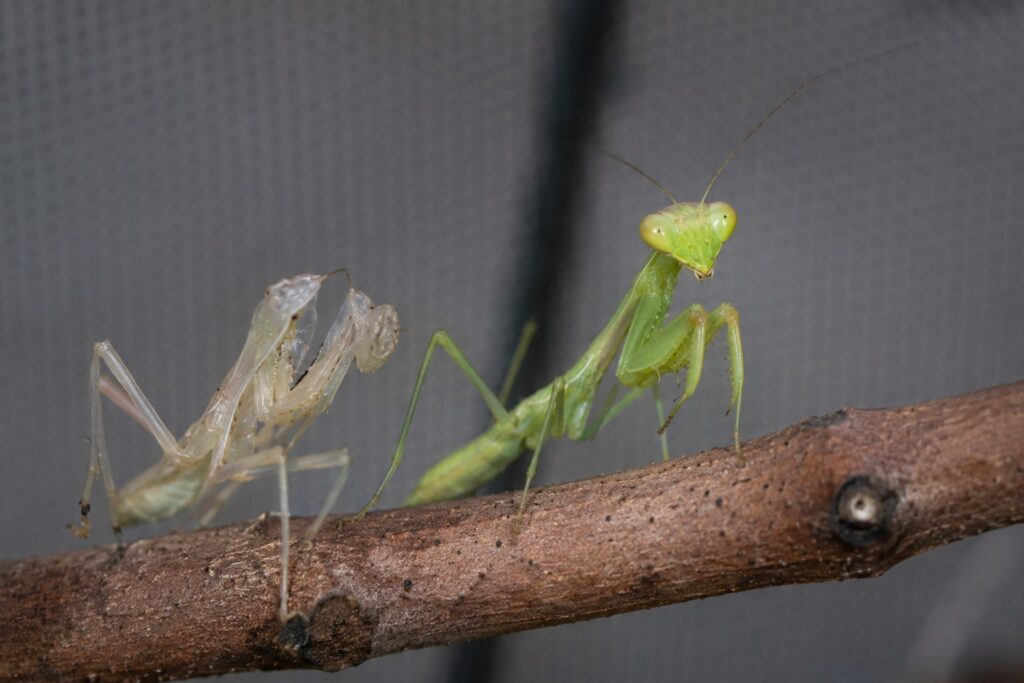
Understanding the mantis life cycle helps you appreciate where your pet is in its lifespan and what to expect next.
Egg (Ootheca)
Female mantises lay their eggs inside a foamy protective casing called an ootheca. Each ootheca can contain anywhere from 20 to over 200 eggs, depending on species. The foam hardens into a tough shell that protects the eggs from weather, predators, and parasites. In the wild, oothecae overwinter and hatch in spring. In captivity, hatching occurs 4-8 weeks after laying at room temperature.
Nymph (L1 through Sub-Adult)
Mantis nymphs hatch as tiny versions of the adults (without wings). They go through 6-9 molts (called instars, labeled L1, L2, L3, etc.) before reaching adulthood. Each molt produces a slightly larger, more developed nymph. The nymph stage is the longest phase of a mantis’s life, typically lasting 4-8 months depending on species and temperature.
During this stage, mantises grow rapidly and are most vulnerable. Nymph mortality is highest in the first two instars (L1-L2), when the tiny animals can drown in water droplets, fail to catch appropriately small prey, or die from humidity issues during molting.
Adult
The final molt (called the ultimate molt or imaginal molt) transforms the sub-adult into a fully winged adult. This is the moment most keepers look forward to: the mantis emerges with functional wings and reaches its full adult coloration. Males develop longer, more elaborate wings; females are larger and broader.
Once a mantis reaches adulthood, it does not molt again. Its size is fixed. The adult phase is when breeding occurs, and it’s also the beginning of the end. Adult mantises live 3-8 months depending on species, sex, and conditions. Activity gradually decreases, feeding becomes less frequent, and eventually the mantis dies of old age.
Death
Unlike many insects that die suddenly, mantises often show gradual decline. In the final weeks, you may notice reduced appetite, less movement, difficulty gripping surfaces, and occasionally falling from perches. Some mantises die peacefully in their sleep; others may fall and be unable to right themselves. This is a natural process. Mantises are not long-lived animals, and even perfect care cannot extend their lifespan beyond their biological limits.
Factors That Affect Mantis Lifespan
Temperature
This is the single biggest controllable factor. Warmer temperatures speed up metabolism, which accelerates growth, development, and aging. A mantis kept at 85°F will develop faster, reach adulthood sooner, and die younger than one kept at 72°F.
If you want your mantis to live as long as possible, keep temperatures in the lower half of the recommended range for that species. The mantis will grow more slowly and take longer to reach adulthood, but total lifespan increases. This is a direct trade-off: slower development equals longer life.
Diet
A well-fed mantis lives longer than a starved one, but overfeeding can actually shorten lifespan. Excess fat puts strain on the body, can complicate molting, and accelerates the reproductive cycle in females (which drains energy faster).
Feed on a regular schedule appropriate to the species and instar. Don’t leave the mantis permanently stuffed, but don’t let it go hungry either. For most adults, feeding every 3-5 days is the right balance.
Humidity
Incorrect humidity kills mantises primarily through failed molts. If the air is too dry during a molt, the old exoskeleton hardens before the mantis can fully emerge, trapping it. Failed molts are often fatal or cause permanent damage. Maintaining proper humidity for your species, especially during the nymph stages when molting is frequent, is one of the most important things you can do.
Species
You can’t change genetics. Larger species tend to live longer. Some species are simply hardier than others. If lifespan is a priority for you, choose a large, robust species like a Chinese mantis or Giant African mantis rather than a small, fast-developing species.
Handling and Stress
Excessive handling, frequent disturbance, and enclosure vibrations all cause stress. Stressed mantises eat less, may refuse to molt, and are more susceptible to health problems. Mantises are observation pets. Watch them, enjoy them, but minimize physical interaction.
How to Help Your Mantis Live Longer
Based on the factors above, here are the most effective steps:
- Keep temperatures in the lower-comfortable range for your species
- Feed a varied diet on a regular schedule without overfeeding
- Maintain proper humidity, especially before and during molts
- Provide adequate vertical space and a textured ceiling for safe molting
- Minimize handling and disturbance
- Remove uneaten prey within 24 hours (prey can injure a molting or resting mantis)
- House individually to eliminate cannibalism risk
- Most of the preventable causes come down to getting the basics right. See what praying mantises need to survive for the full checklist.
None of these can make a mantis live for years. They’re naturally short-lived animals. But proper care consistently gets you to the upper end of the expected range rather than losing your mantis prematurely to a preventable cause, Our praying mantis care guide covers each of these in more depth.
FAQ
How long do praying mantis live as pets?
Most pet mantis species live 6-18 months total, with the adult phase lasting 3-8 months depending on species and sex. Larger species like Chinese mantises and Giant African mantises tend to live the longest. Females consistently outlive males.
How long do praying mantis live in the wild?
Wild mantises typically live 6-12 months, roughly one growing season. They hatch in spring, develop through summer, breed in late summer or fall, and die with the onset of cold weather. Captive mantises live longer because they’re protected from predators, weather, and food scarcity.
Can a praying mantis live for 2 years?
It’s possible but uncommon. Some large species (Chinese mantis, Giant Asian mantis) kept at cooler temperatures with careful feeding have been reported to reach or exceed 18 months. Reaching a full 2 years would be exceptional and limited to the largest, longest-lived species under ideal conditions.
Why did my praying mantis die so young?
The most common causes of premature death are failed molts (from low humidity or inadequate climbing surfaces), dehydration, starvation (especially in nymphs that can’t catch prey), overheating, and injury from live prey left in the enclosure. If a mantis dies within the first few weeks of ownership, shipping stress or pre-existing health issues may also be factors.
Do male or female praying mantis live longer?
Females live longer in virtually every species. The gap ranges from modest (a few weeks) to dramatic (months). Males develop faster, mature sooner, and have shorter adult lifespans. This is true regardless of whether breeding occurs.
Track Your Mantis with InvertMate
Make the most of your mantis’s lifespan with InvertMate. Log every molt, track feeding schedules, monitor enclosure conditions, and keep a photo timeline of your mantis from nymph to adult. Free on the App Store.