Tarantula food is live insects, usually crickets or roaches, offered every 3 to 5 days to slings, about weekly to juveniles and every 1 to 3 weeks to adults. Prey should be no longer than the spider’s body. A full water dish matters more than the schedule, and fasting for weeks is normal.
That covers most of what a keeper needs, and the rest is detail: which feeders are worth buying, how to judge whether a spider is well fed, why it might refuse food for months, and what never to put in the enclosure. Tarantulas are not fussy eaters. Most problems with feeding come from overfeeding, prey left in too long, or worrying about a fast that the spider has planned all along.
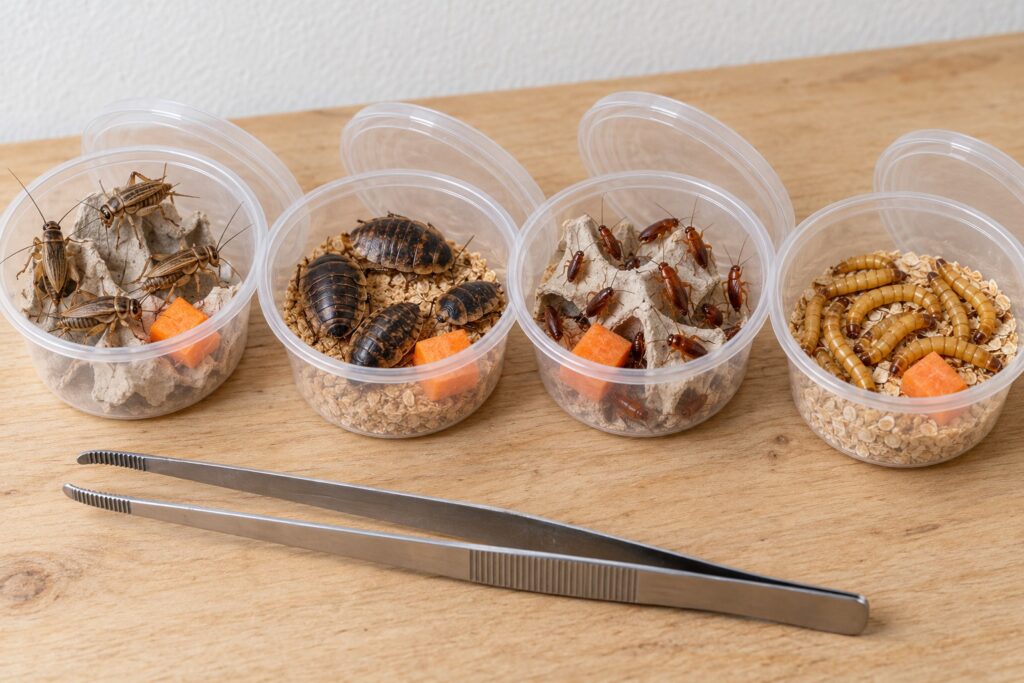
Tarantula Food: The Feeder List, Ranked
Every commonly kept tarantula, from a quarter-inch sling to a 9 inch adult, follows the same basic tarantula diet: live insects, scaled to the spider’s size.
| Feeder | Good points | Drawbacks | Verdict |
|---|---|---|---|
| House or banded crickets | Cheap, sold almost everywhere, active enough to trigger a feeding response | Noisy, smelly, can chew on a molting spider, die quickly | The standard. Remove leftovers |
| Dubia roaches | Meaty, quiet, cannot climb smooth plastic, easy to breed | Slow, can burrow out of sight, restricted in some places including Florida | Excellent staple |
| Red runner roaches | Fast, active, cheap to breed, cannot climb smooth surfaces | Can escape a loose lid, may hide in substrate | Excellent, especially for slings |
| Locusts | Large, active | Mainly sold in the UK and Europe | Good where available |
| Blue bottle and house flies | Arboreal species take them well | Hard to keep in an open enclosure | Good for arboreals |
| Mealworms | Easy to store | Burrow in substrate and can emerge during a molt | Pre-kill or crush the head first |
| Superworms | Large and filling | Strong jaws, can injure a molting spider | Crush the head, never leave loose |
| Waxworms | Spiders love them | Very fatty | Occasional treat only |
| Pinkie mice and lizards | None that insects do not cover | Messy, bacterial risk, no nutritional benefit | Skip |
| Wild-caught insects | Free | Pesticides and parasites | Skip |
A varied tarantula food rotation is good practice but not strictly necessary. Plenty of tarantulas live 20 years on crickets and water. Rotating two or three feeders mostly helps you, because when one supplier runs dry you have a backup.
Tarantula Crickets and Other Prey: Getting the Size Right
The usual rule is prey no longer than the spider’s body, measured without the legs. For slings, go smaller still: no larger than the carapace, the plate on the front half of the body.
Too small is never dangerous. The spider eats two small crickets instead of one big one. Too large is a real risk. A big cricket or roach can fight back, injure a small spider, or simply be ignored and left to wander, stressing the animal for days.
If you are unsure, offer the smaller size.
How Often to Feed a Tarantula
| Life stage | How often | Typical prey |
|---|---|---|
| Sling, under 1.5 inches | Every 3 to 5 days | Pre-killed cricket pieces, pinhead crickets, small red runner nymphs, fruit flies |
| Juvenile, 1.5 to 3.5 inches | Every 5 to 7 days | Small to medium crickets, roach nymphs |
| Adult, 3.5 inches and up | Every 7 to 21 days | Adult crickets, medium dubia, locusts |
| Mature male | When he will take it | Small to medium prey. He may refuse most meals |
Slings eat more often because they have tiny reserves and grow fast. Adults of slow species, particularly the Grammostola and Aphonopelma ground dwellers, need far less than new keepers expect.
Read the Abdomen, Not the Calendar
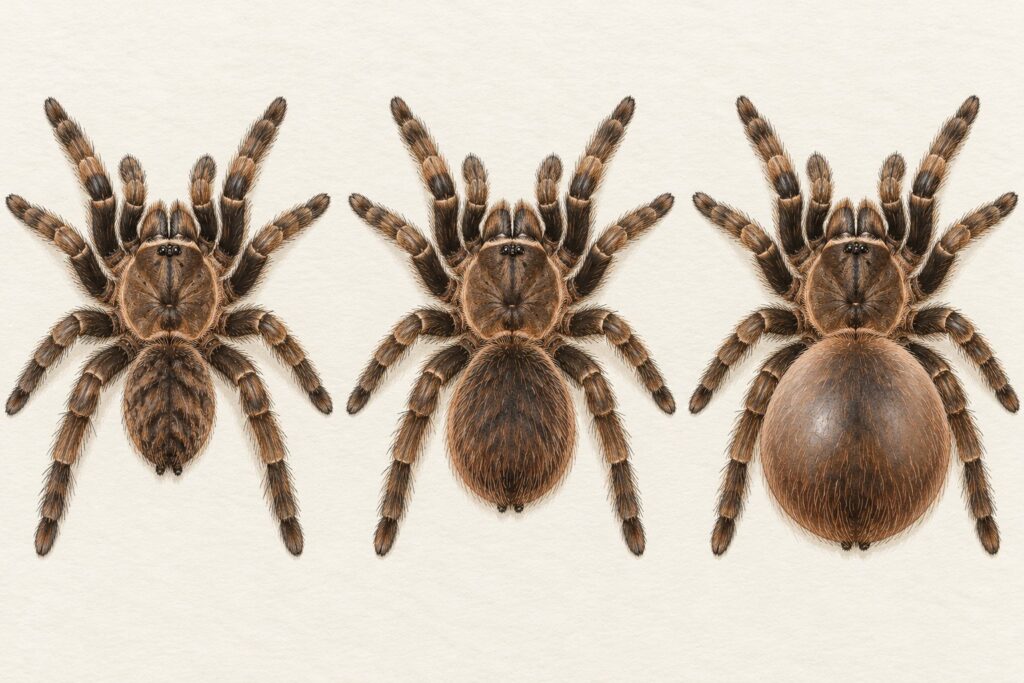
The schedule is a starting point. The abdomen tells you whether to follow it.
- Abdomen about the size of the carapace: offer food.
- Abdomen one and a half to two times the carapace: well fed. Skip a feeding.
- Abdomen tight, swollen and much larger than the carapace: overfed. Stop until it shrinks.
- Abdomen shrivelled or wrinkled: short of water first, food second.
Overfeeding is the more common mistake of the two. An obese tarantula is not healthier. A heavy abdomen is more likely to rupture if the spider falls, and faster growth from constant feeding shortens a male’s life.
A month of refusals feels shorter than it is, and the reverse. Setting InvertMate’s feeding reminders and logging each offer, with a note when it is refused, gives you the real interval to compare against the abdomen.
Water Comes Before Food
A tarantula can go months without eating and recover. It cannot go long without water. Dehydration is the most common preventable cause of death in captive tarantulas, and it shows first as a shrinking abdomen and then as legs drawn tightly beneath the body, the posture keepers call the tarantula death curl.
- Every spider over about 1.5 inches gets a shallow water dish, kept full.
- Slings get droplets on the wall or a damp corner of substrate instead, since a tiny spider can drown in a dish.
- No sponges or water gel. Sponges grow bacteria, and gel is not a substitute for clean water.
If your tarantula is refusing food and its abdomen is shrinking, check the water before anything else.
When a Tarantula Refuses Food
Food refusal is the question new keepers ask most, and the answer is usually that nothing is wrong.
- Pre-molt. The most common reason by far. A spider preparing to molt stops eating, sometimes for weeks or months, and its abdomen often darkens and tightens. Our guide to the tarantula molting cycle shows the signs. Stop offering food, keep the water dish full, and wait.
- It is full. A plump abdomen means it does not need to eat. This is not a problem to solve.
- It was just rehoused. Many tarantulas refuse food for a week or two in a new enclosure while they settle and build a retreat.
- It is cold. Below about 70F, metabolism slows and appetite drops.
- It is a mature male. After the final molt, males wander constantly looking for a mate and may eat very little.
- Seasonal fasting. Some species, the chaco and other Grammostola in particular, refuse food for weeks or months with no clear reason, often over winter.
What to do: offer food once. If it is ignored for a few hours, remove it and try again in a week or two. Do not keep dropping crickets in. A refusing spider with live prey wandering its enclosure is stressed, and a cricket left with a spider that is about to molt is a genuine risk.
When to worry: a shrinking, wrinkled abdomen together with a refusal, a spider that is weak or cannot right itself, or long refusals in a sling. Those point to dehydration or illness rather than a normal fast.
Feeding After a Molt
A freshly molted tarantula is soft, including its fangs, which are pale white or reddish at first and darken over several days. Feeding too early risks injury from prey that fights back.
| Size | Wait before feeding |
|---|---|
| Sling | 3 to 5 days |
| Juvenile | About a week |
| Adult | 1 to 2 weeks, until the fangs are fully black |
Leave the water dish full throughout, and remove the shed exoskeleton once the spider has walked away from it.
Getting Food to Burrowers, Climbers and Slings
Terrestrial species. Drop the prey near the spider or its hide and step back. Most will strike within minutes, others at night.
Burrowers. Place the prey at the burrow entrance. Some fossorial species only feed at night, so check for leftovers in the morning.
Arboreal species. Drop prey near the base of the retreat or onto the web. Climbers such as the Antilles pink toe take flies particularly well, along with crickets that walk up the cork.
Slings. Pre-kill the prey by crushing its head, and leave it beside the sling or at the burrow mouth. Many keepers pre-kill everything until the spider passes half an inch. Sling feeding is covered in more detail in our guide to feeding and housing spiderlings.
Tongs. Long feeding tongs keep your fingers out of the way, which matters with fast or defensive species. Old World tarantulas, in particular, strike hard and fast at anything that moves near them, and the reason they are handled so differently is explained in our comparison of Old World and New World temperaments.
Remove leftovers within 24 hours. That includes uneaten prey and the bolus, the dry ball of chewed remains a tarantula leaves after feeding. Both grow mold and attract mites in a warm enclosure.
A spider that cannot find its food is often in a box that is too big. If prey keeps hiding for days, check the size against the tarantula enclosure size chart.
Gut-Loading Yes, Dusting No
Gut-load your feeders. Feed crickets and roaches fresh vegetables, oats or a commercial cricket diet for a day before offering them. A well-fed insect is a better meal than a starved one. Keep water crystals or vegetable pieces in the feeder tub so they stay hydrated.
Skip calcium and vitamin powders. Dusting is standard for reptiles, but tarantulas do not need it, and a coated cricket can leave powder on the spider’s mouthparts and in its water dish. Keeper consensus is to leave it out.
What Never Goes in the Enclosure
- Fruit, vegetables and meat. Tarantulas are obligate carnivores. They cannot use plant matter, and raw meat rots in the enclosure.
- Pinkie mice and small lizards. Messy, a bacterial risk, and they add nothing that insects do not provide.
- Wild-caught insects. Garden bugs can carry pesticides or parasites.
- Prey bigger than the spider. It is a fight, not a meal.
- Dead prey that has been lying around. Pre-killed prey should be freshly killed. Old dead insects spoil.
FAQ
How often should I feed my tarantula?
Slings every 3 to 5 days, juveniles every 5 to 7 days, and adults every 1 to 3 weeks. Adjust by the abdomen. If it is about one and a half times the size of the carapace or larger, the spider is well fed and you can skip a meal.
How long can a tarantula go without eating?
Adults can go weeks to months without food, especially before a molt or over winter, and some females fast for several months without harm. Slings have smaller reserves. Water is the limit that matters, so keep the dish full during any fast.
Can tarantulas eat fruit or vegetables?
No. Tarantulas are obligate carnivores and cannot digest plant matter. Feed fruit and vegetables to your crickets or roaches instead, a day before you offer them, so the insects themselves are a better meal.
Are mealworms good tarantula food?
They are acceptable but not ideal. Mealworms burrow into substrate, where they can turn up during a molt. Crush the head before offering one, or use tongs. Superworms carry the same risk with stronger jaws.
What can I feed my tarantula if I run out of crickets?
Dubia roaches, red runners, locusts or a pre-killed mealworm work. Avoid wild-caught insects, which may carry pesticides or parasites. Missing a meal is not a problem for an adult, so it is fine to wait a few days for the right feeder.
Should I remove uneaten crickets?
Yes, within 24 hours. A cricket left in the enclosure can chew on a molting tarantula, and dead prey grows mold. Remove the bolus, the ball of leftover remains, at the same time.
When Did She Last Accept a Cricket?
If you have to think about it, the answer is probably longer ago than you would guess. InvertMate keeps a feeding history for every tarantula with refusals marked, logs each molt so you can tell a pre-molt fast from a problem, and sends feeding reminders tuned to each spider. Free on the App Store and Google Play.