What do millipedes eat? Mostly dead plant matter: rotting leaves, decaying wood and the fungi growing on them. Pet millipedes eat their substrate, so a mix built on rotten hardwood and leaf litter is their main food, topped up once or twice a week with vegetables and fruit and a constant source of calcium.
That is the key difference between millipedes and almost every other invertebrate pet. A tarantula sits on its substrate. A millipede eats it. This guide covers the wild diet, why the substrate matters most, safe vegetables and fruit, calcium, protein, how much and how often to feed, and the foods to avoid.
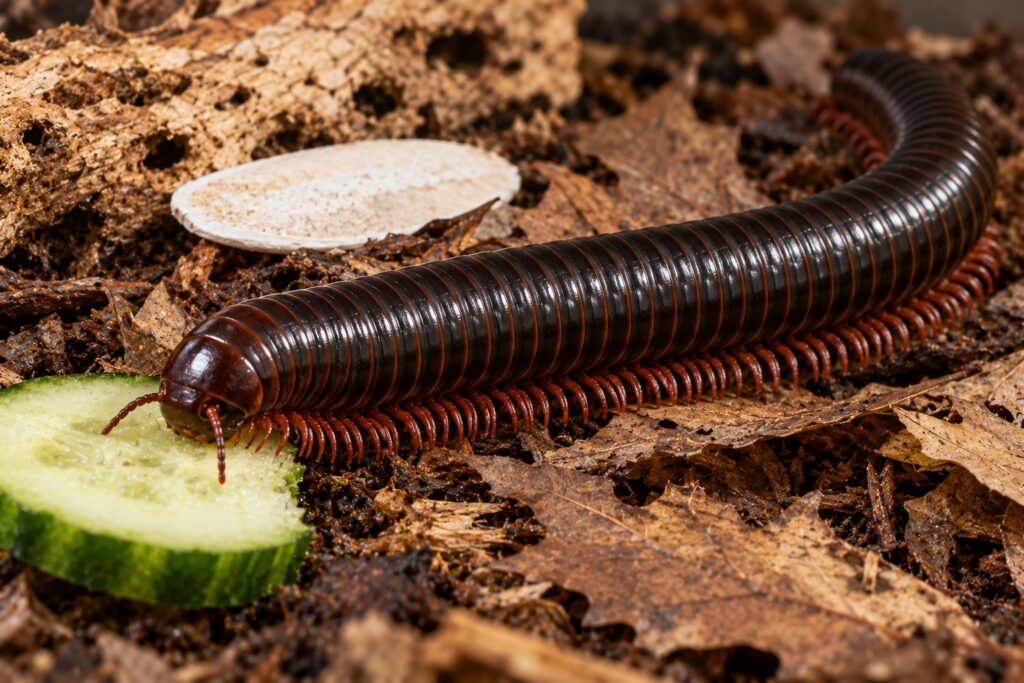
What Millipedes Eat in the Wild
So what do millipedes eat outside a tank? They are detritivores, feeding on decaying organic matter on the forest floor and in the soil, which means:
- Fallen leaves, especially once they have softened and started to break down.
- Rotting wood, soft enough to crumble.
- Fungi and bacteria growing on that wood and leaf litter.
- Algae, moss and decaying fruit, where they find them.
- Occasionally dead animal matter, such as dead insects, which some species eat when it is available.
By breaking down dead plants, millipedes return nutrients to the soil. They are part of the forest’s clean-up crew, alongside woodlice, springtails and fungi.
Most millipedes do not eat healthy living plants. A few garden species nibble seedlings or soft fruit lying on damp ground, but the pet species are fundamentally recyclers of dead material.
The Substrate Is the Main Meal
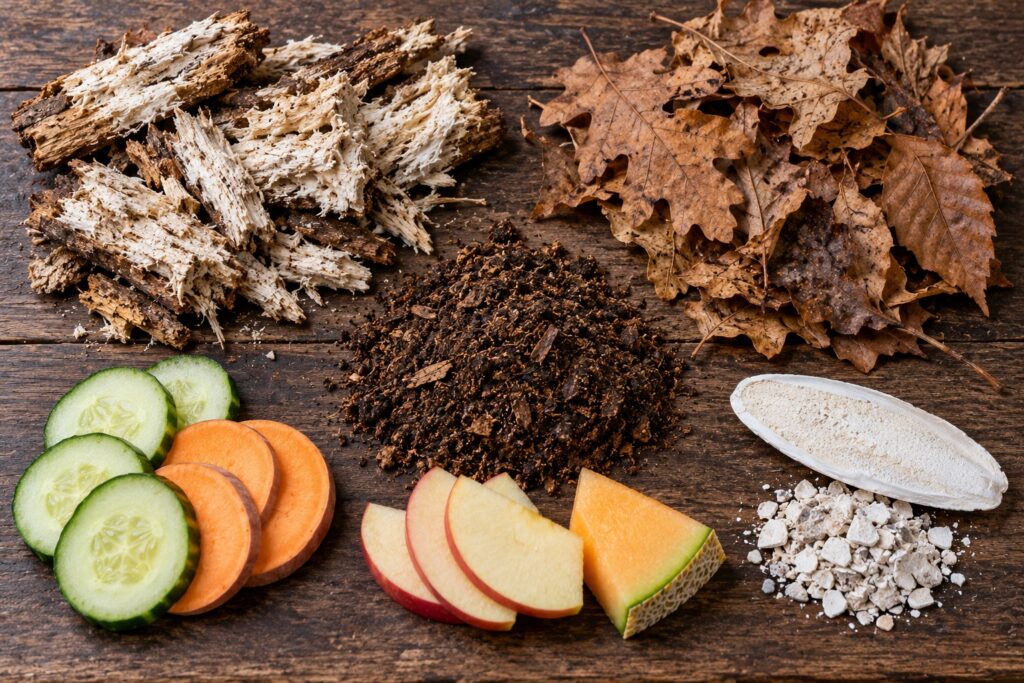
For a pet millipede, the substrate is not bedding. It is the diet.
A good millipede substrate is built around:
| Ingredient | Role |
|---|---|
| Crumbling rotten hardwood | The main food. Soft, white-rotted wood that breaks in your hand |
| Hardwood leaf litter | Food and cover. Oak, beech, maple and magnolia work well |
| Flake soil (fermented hardwood) | Optional food source, used in place of some of the wood |
| Coconut fibre or topsoil | Structure and moisture. Little food value on its own |
A millipede kept on plain coconut fibre or potting soil is in an enclosure with almost nothing to eat, however much fruit it is given. The full recipe, depth by species and safe wood sourcing are in our millipede enclosure guide.
Signs the substrate is working: leaf litter steadily disappears, and the substrate fills with small, round droppings called frass. When the substrate is mostly frass, replace about a third of it at a time.
Preparing Leaves and Wood
Collected leaves and wood are the cheapest millipede food there is, provided they are safe.
- Choose hardwoods. Oak, beech, maple, magnolia and fruit-tree leaves are all good. Skip conifers and anything aromatic.
- Collect away from roads, lawns and farmland, where sprays and salt build up.
- Pick leaves that are already brown and dry on the ground, not green ones from the tree.
- Choose wood that crumbles when you press it. Wood that still feels like timber has not decayed enough to eat.
- Freeze collected material for two days if you want to kill hitchhikers such as mites or spiders. It is the gentlest option and keeps the useful microbes.
- Soak dry leaves briefly before adding them, so they soften and start breaking down faster.
Bagged leaf litter, rotten wood and flake soil from invertebrate suppliers work just as well if you have nowhere safe to collect.
What Do Millipedes Eat Besides Substrate?
Fresh food is a supplement, not the main diet. Offer small portions once or twice a week.
Vegetables (good staples):
- Cucumber and zucchini
- Squash and pumpkin
- Sweet potato and carrot, sliced thin or lightly cooked to soften
- Leafy greens such as romaine lettuce, kale or spinach in small amounts
Fruit (smaller amounts):
- Apple and pear
- Banana
- Melon and mango
- Soft berries
How to offer it:
- Cut it small, in pieces a millipede can reach and push through.
- Place it on the surface, on a leaf or a flat piece of bark, not buried.
- Remove leftovers within 24 to 48 hours, before they mold.
- Wash produce to remove pesticide residue. Organic is better where possible.
Overfeeding fresh food is the most common cause of mites and mold in a millipede tank. If food keeps going uneaten, offer less.
Calcium: The Requirement Most Keepers Miss
Millipedes need calcium to harden their exoskeleton after each molt. Without it, molts can fail, and a failed molt is often fatal.
- Keep a piece of cuttlebone in the enclosure at all times. Replace it as it is eaten.
- Or add crushed oyster shell or crushed, cleaned eggshell to the substrate surface.
- Do not dust food with calcium powder. Many millipedes refuse food that has been dusted. Keep the calcium source separate.
After a molt, millipedes also eat their own shed exoskeleton to recover calcium, so leave it in the enclosure.
Do Millipedes Need Protein?
A little, occasionally, and only for some keepers. Millipedes are fundamentally detritivores, and a good substrate covers most of their needs.
- Optional extras: a pinch of fish flakes or a small piece of commercial invertebrate diet once every week or two.
- Keep it sparing. Protein spoils fast, and excess quickly attracts mites.
- Skip meat and pet food. Cat food, dog food and raw meat rot in the enclosure.
Breeding groups and growing juveniles are where a small protein boost is most often used.
How Much and How Often
| Food | How often | How much |
|---|---|---|
| Substrate (wood and leaves) | Always available | Top up leaf litter monthly or as it disappears |
| Vegetables and fruit | Once or twice a week | A small piece per few millipedes, eaten within a day or two |
| Calcium | Always available | A piece of cuttlebone, replaced as it is used |
| Protein | Every week or two, optional | A pinch |
Groups of millipedes share food well, and you rarely see the squabbling over meals that predators show. They are not territorial, so you can feed a group from one spot. Make sure smaller millipedes also reach the food.
Feeding Baby and Juvenile Millipedes
Young millipedes eat the same things as adults, in finer form.
- They live in the substrate and feed on well-decayed wood, soft leaf fragments and the frass left by adults, which helps them pick up the gut microbes they need.
- Do not change all the substrate in a breeding enclosure. Replace small sections at a time so eggs and young are not thrown out.
- Keep flake soil or very soft rotten wood available, since tiny juveniles cannot tackle firm wood.
- Crumble fresh food into small pieces, or grate it, so juveniles can reach it.
A Sample Weekly Routine
| Day | Task |
|---|---|
| Monday | Offer a small piece of cucumber, squash or sweet potato |
| Tuesday | Remove anything uneaten |
| Thursday | Offer a small piece of fruit or leafy greens |
| Friday | Remove anything uneaten, check cuttlebone |
| Weekly | Check substrate moisture and leaf litter depth |
| Monthly | Top up leaf litter, add fresh rotten wood |
Adjust to your millipedes. If food keeps going uneaten, feed less often.
Feeding by Species
Most kept millipedes eat the same things, with a few differences in how much and how the substrate is kept.
- Giant African millipedes are large and eat a lot of substrate and fresh food. Our giant African millipede care guide covers the quantities for an animal that can reach 8 to 12 inches.
- Desert millipedes live in drier conditions but still need decaying plant matter and a damp section of substrate. See our desert millipede care sheet.
- Smaller tropical species such as the bumblebee millipede eat the same mix in smaller amounts and breed readily when the substrate is rich.
General care that applies across all of them is in our millipede care guide.
Six Foods to Keep Out
- Citrus, onion, garlic and spicy foods. Acidic and strongly flavoured foods are best left out.
- Salted, seasoned or processed foods, including bread, crackers and cooked leftovers.
- Meat, cat food and dog food. They rot quickly and attract mites and flies.
- Conifer wood and leaves, such as pine and cedar. The resins are harmful.
- Anything sprayed or from roadsides. Pesticide and herbicide residues go straight into an animal that eats its bedding.
- Treated or painted wood.
When a Millipede Stops Eating
Long breaks in feeding are usually normal.
- Molting. Millipedes bury themselves to molt and may stay underground for weeks without eating. Do not dig them up.
- Too dry. Dehydrated millipedes become sluggish and eat less. Check that the substrate is damp throughout.
- Too cold. Below about 68F, activity and appetite drop.
- Spent substrate. If the bedding is mostly frass, there is little left to eat. Refresh part of it.
A millipede that has been buried for three weeks and one that has stopped eating on the surface need different responses. Recording surface sightings and feeding in InvertMate makes the difference easy to see.
Millipedes and Isopods: Similar Diets, Shared Bins
Millipedes and isopods eat many of the same things: rotting wood, leaf litter, vegetables and calcium. That is why small isopods are often added to millipede enclosures as a clean-up crew, eating leftovers before they mold. The isopod side of the menu is covered in our guide to what isopods eat.
FAQ
What do pet millipedes eat?
Mainly their substrate: rotting hardwood and leaf litter. Supplement this once or twice a week with small amounts of vegetables and fruit, such as cucumber, squash, sweet potato and apple, and keep cuttlebone in the enclosure for calcium.
Do millipedes eat living plants?
Rarely. Pet millipede species mostly eat dead and decaying plant matter. A few wild species nibble seedlings or soft fruit in damp gardens, but pet millipedes will not usually damage healthy live plants.
What fruit can millipedes eat?
Apple, pear, banana, melon, mango and soft berries in small amounts. Offer fruit less often than vegetables, since it is sugary and molds quickly. Avoid citrus.
How often should I feed my millipede?
Fresh food once or twice a week, with substrate, leaf litter and calcium available all the time. Remove uneaten fresh food within 24 to 48 hours.
Do millipedes need calcium?
Yes. Calcium hardens the new exoskeleton after each molt, and a shortage can cause fatal molting problems. Keep cuttlebone or crushed oyster shell in the enclosure permanently, separate from the food.
Can millipedes eat cucumber?
Yes. Cucumber is one of the most popular millipede foods. It is soft, juicy and easy to eat. Wash it, cut it into small pieces and remove leftovers within a day or two.
When Did the Leaf Litter Last Go In?
Slow changes are the ones that matter with millipedes: litter disappearing over weeks, a millipede buried for a month, a substrate slowly turning to frass. InvertMate logs feedings, molts and surface sightings, and reminds you when the leaf litter and calcium are due for a top-up. Free on the App Store and Google Play.